


Middle East: China, an incomplete power
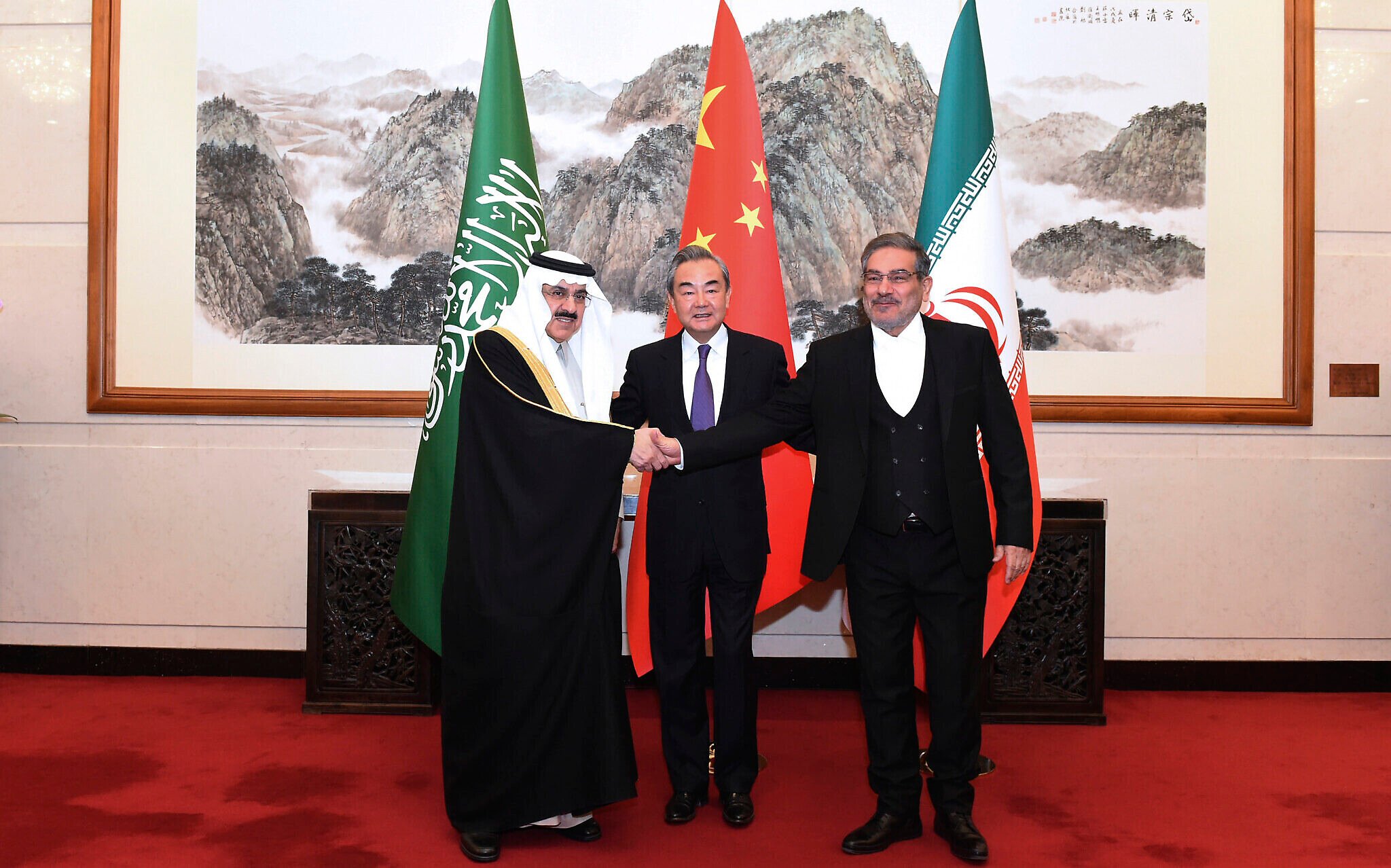
When Beijing announced in March 2023 that it had facilitated the renewal of diplomatic relations between Saudi Arabia and Iran, it was presented as a historic turning point:
China became the mediator of a regional conflict, a role “filled” by Washington. The agreement seemed to show “the” beginning of “desoccidentalization” of the regional order. This event was more an image of success than a reorientation of power relations. For a decade, China has established itself as a key player in the Middle East. (Massive investments, proliferation of the Belt and Road Initiative (BRI): everything seemed to indicate that Beijing advanced its pawns at the heart of geopolitical crossroads. Yet, despite this visible rise in power, China remains, for the moment, a geopolitical power limited to the Middle East, a prudent and calculating actor, and still far from challenging the primacy of the United States in the region.
China: An unavoidable economic power
In economic terms, the facts are indisputable: China has become the main trading partner of most of the Gulf countries. Beijing absorbs nearly half of the oil exports of Saudi Arabia, Oman, or Iraq and constitutes for these states a stable, essential source of revenue. For its part, China is securing a vital energy supply for its growth.
Beyond oil, it is the BRI that symbolizes Chinese ambition: industrial zones built in Oman or Egypt, port modernization in the Emirates, and investments in telecommunications, petrochemical, or railway projects.
This dynamic seduces because it is transactional. China imposes neither political reforms nor human rights requirements nor conditions related to governance. It offers contracts, technology, and loans. For Riyadh, for Abu Dhabi, for Tehran, this approach without ideology is particularly attractive.
However, its geopolitical power is still restrained. This economic force does not translate into strategic power. The Chinese presence remains limited by deep structural factors.
The first is obvious: the Middle East remains the privileged area of influence of the United States. Despite perceptions of US withdrawal, the facts are there: Washington maintains military bases in Qatar, deploys naval fleets in the Gulf and Mediterranean, and provides advanced defense systems for its strategic ally: Israel
China has virtually no military presence. Its only base in the Red Sea, in Djibouti, is far from being sufficient to weigh in on regional crises.
Second limit: China refuses to engage in regional conflicts. Whether it is the Iranian-Saudi rivalry, the Israeli-Iranian conflict, the tensions in Lebanon, or the war in Yemen, Beijing adopts a posture of “neutrality” (often perceived as a strategic distance).
Third obstacle: the persistent mistrust of several states. Israel has limited Chinese investment in sensitive infrastructure. The Emirates and Saudi Arabia appreciate the commercial relationship but do not envisage a break with Washington. In other words, everyone wants to trade with China; few want to entrust their security to it.
And finally, an often underestimated factor reinforces this limit: the Chinese vision of the Middle East is not the Western vision. Beijing looks at the region through a strictly utilitarian prism: energy supply, strategic ports, lines of communication, and technological agreements. He is not “involved” with ideology, religious tensions, or political symbolism. Yet, in the Middle East, religious identity and security issues are central. The fact that China treats them as secondary reduces its ability to become a fully influential diplomatic actor.
In the face of successive crises—Houthi attacks, threats on maritime routes, Israeli-Iranian tensions—it is still Washington that secures the region and Beijing that observes.
China is an important power, but it is not dominant.
China is today a major economic player, even essential, in the Middle East. But it remains a limited geopolitical power, by choice as much as by constraint. The United States remains the security “sponsor” of the region, and the Middle Eastern states, despite their growing interest in Beijing, are not ready to replace Washington with China.
China’s economic integration is undeniable, but its capacity to shape the regional strategic balance remains limited.