

Military Chaplains
In the ninth weekly biblical portion, Matot (30:2-32:42), in chapter 31, the Israelites take vengeance against the nation of Midian for their attempt, described in the previous portion, to destroy the Israelites.
In 31:6, “Moses sent a thousand from each (of the twelve) tribes together with Pinchas the son of Eleazar the priest to the war.”
Ever sensitive to the Torah wording, Arnold Ehrlich notes that 31:6 appears to refer to Eleazar as a priest, whereas 25:7 and 11 do not. They state, “Pinchas, the son of Eleazar, the son of Aaron the priest.”
He explains that (1) the term “priest” here does not refer to the temple duty, (2) the translation “to the war” is incorrect, and (3) the correct translation should be, “Eleazer the priest for the war,” which is what is called today a military chaplain. He points out that the Israelites had military chaplains in Deuteronomy 20:2, where one of his functions is described, and in other wars.
He adds that 31:6 continues, stating that the Israelite army went to war also with the ark, the golden plate with the divine name, to inspire and encourage the soldiers, and trumpets for alarms.
Verses 31:7 and 8 state that the Israelites fought “and they slew every male,” the five kings of Midian, and Balaam the seer.
The brilliant Bible commentator Arnold Ehrlich interprets these verses in a manner I dislike. He understands that the Israelites killed every male after the battle ended, and leaves a question mark after the phrase “slew every male” to indicate he did not know why they did so.
I recognize that the Torah style exaggerates to indicate the significance of what occurred, and the exaggeration should not be taken literally. It occurs frequently. An example is the tenth plague against the Egyptians, who enslaved the Israelites, where the Torah states that “all” firstborns among Egyptian human males and animals were killed. There, like here, “all” means “many.” I understand that many Midianite deaths happened to soldiers during the war; it was a significant victory.
Many nations used military chaplains before and after the time of Moses. Military chaplains provided spiritual and moral support to soldiers. The US Chaplain Corps was established on 29 July 1775 when the Continental Congress authorized one ordained Chaplain, serving at the rank of Captain, for each regular regiment of the Continental Army. The 250th anniversary of the American chaplaincy is scheduled to occur in July 2025. The Continental Army needed clergy to provide religious support for the volunteers fighting for our Nation’s independence. The first chaplains were Protestants only.
Their role evolved from primarily providing religious support to offering counseling and guidance to all personnel, regardless of their faith. Today, they offer worship services, confidential counseling, assistance in finding clergy for service personnel who are not of their religion, and also serve as advisors to commanders on religious, ethical, and morale-related issues.
Since the American Civil War. the US Army Chaplain Corps expanded to include chaplains of various faiths, such as Catholic, Jewish, and African American. When I was serving in the Pentagon, I suggested including Muslims, and my advice was accepted.
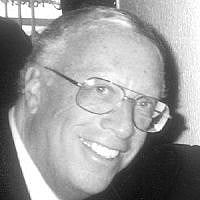
I served on active duty in the Army as a military chaplain from 1957, at the age of 21, until several years later, then transitioned back to civilian life while remaining in the Army reserves. I rose in the reserves from First Lieutenant to Colonel. During these years, the Army paid for me to acquire two Master’s Degrees, a PhD, and a Law Degree. My primary role during the reserve years was working for the civil government as a lawyer, the head of Medicare’s Civil Litigation Staff. Additionally, in the reserves, I taught legal matters at the Chaplain school.
In 1979, two Harvard University law students filed a lawsuit against the United States Army for employing military chaplains as part of its personnel. They argued that the chaplaincy violated the Constitution’s mandate of separating church and state: “Congress shall make no law establishing religion or prohibiting the Free Exercise thereof.” The Army Chaplaincy noted that the Army JAG officers and U.S. attorneys assigned to the case at that time lacked an understanding of the chaplaincy.
I made a positive impression on the military as both a chaplain and a lawyer, and the Army recognized that I understood the issues in the case against it. The Army requested that I take leave from the Civil Service, return to active duty to assist in winning the lawsuit, and then return to the Civil Service after contributing to the case. I agreed. It was the most exciting years of my life.
I served four years at the Pentagon and did much more than work on the case. For example, I handled all matters involving religion and law, wrote documents for President Reagan and the Chief of Staff of the Army, and even settled a dispute between the Vatican and the US government. When we won the case, the president promoted me to Brigadier General in recognition of the work I had done, and I transitioned from Active Duty to Civil Service and the Army reserves.
However, during my four years as a general in the reserves, I was frequently called back to active duty to handle various matters, such as serving on a committee to address many issues where soldiers wanted to observe religious duties prohibited by the military, to argue the chaplaincy position regarding cutting the chaplaincy numbers with The Chief of Staff of the Miliary, to serve on boards that promote generals, and more. In the last instance, I ensured that the next Chief of Chaplains would be black, the first and, so far, the last time this had happened.
In my book For God and Country, I describe how I helped save the chaplaincy. Our key argument was that only military chaplains, due to their specialized training, could provide for the service members’ “Free Exercise of Religion” guaranteed in the First Amendment to the Constitution. My friend Dr. Cecil Curry, a historian, added a history of the chaplaincy to the book.