MIRA – A Delightful Alternative to Photo Paris
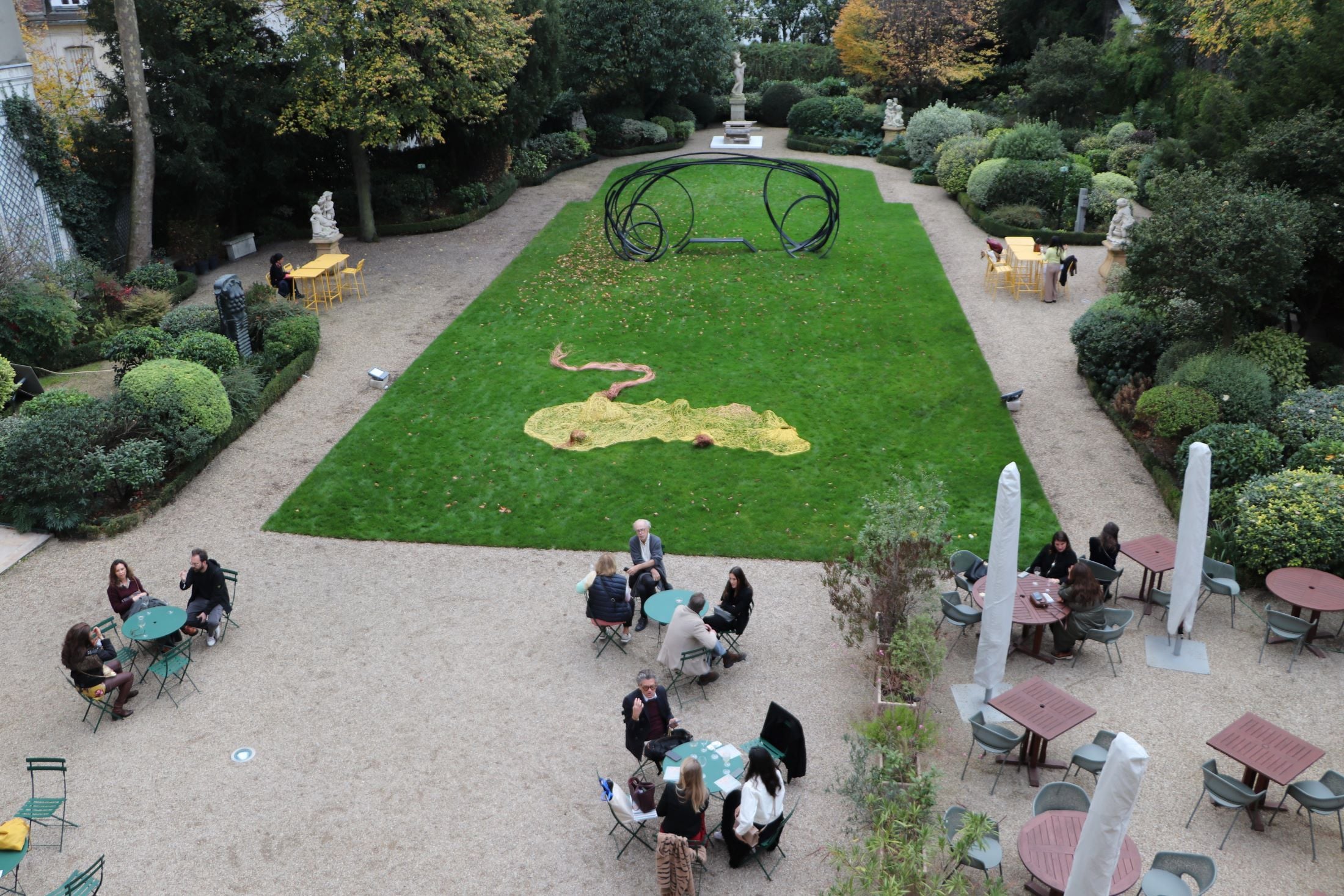
Skipping Photo Paris this year, which returned to the Grand Palais after its restoration, gave me the chance to discover MIRA, the contemporary Latin American art fair, now in its second edition at the Maison de l’Amérique Latine, running from November 13 to 16, 2025. Under the direction of Manuela Rayo, the fair unfolds within an elegant Parisian venue with twin 18th-century townhouses and a serene garden, offering a space where history, culture, and art intertwine.
The Maison itself has a rich historical past and a distinguished mission. Created after World War Two to honor Latin America’s support for France during its liberation, it moved into these two buildings in 1965 and continues to foster cultural, artistic, and diplomatic ties across the Atlantic. MIRA carries on this spirit, drawing inspiration from the poetic language of the late Mexican writer and diplomat Octavio Paz and the revolutionary vision of Simón Bolívar, El Libertador. Bolívar, a Venezuelan military and political leader, led the independence movements that freed much of northern South America from Spanish colonial rule, including Venezuela, Colombia, Ecuador, Peru, and Bolivia.
Here, art is not a conveyor belt of quick glances but a space to linger, to converse, and to think a little deeper.
This year, twenty-three galleries offer a rich spectrum of works, including painting, sculpture, photography, video, and mixed media. Some pieces are elegant and minimalist, others more playful, with a strong social, political, and cultural message.
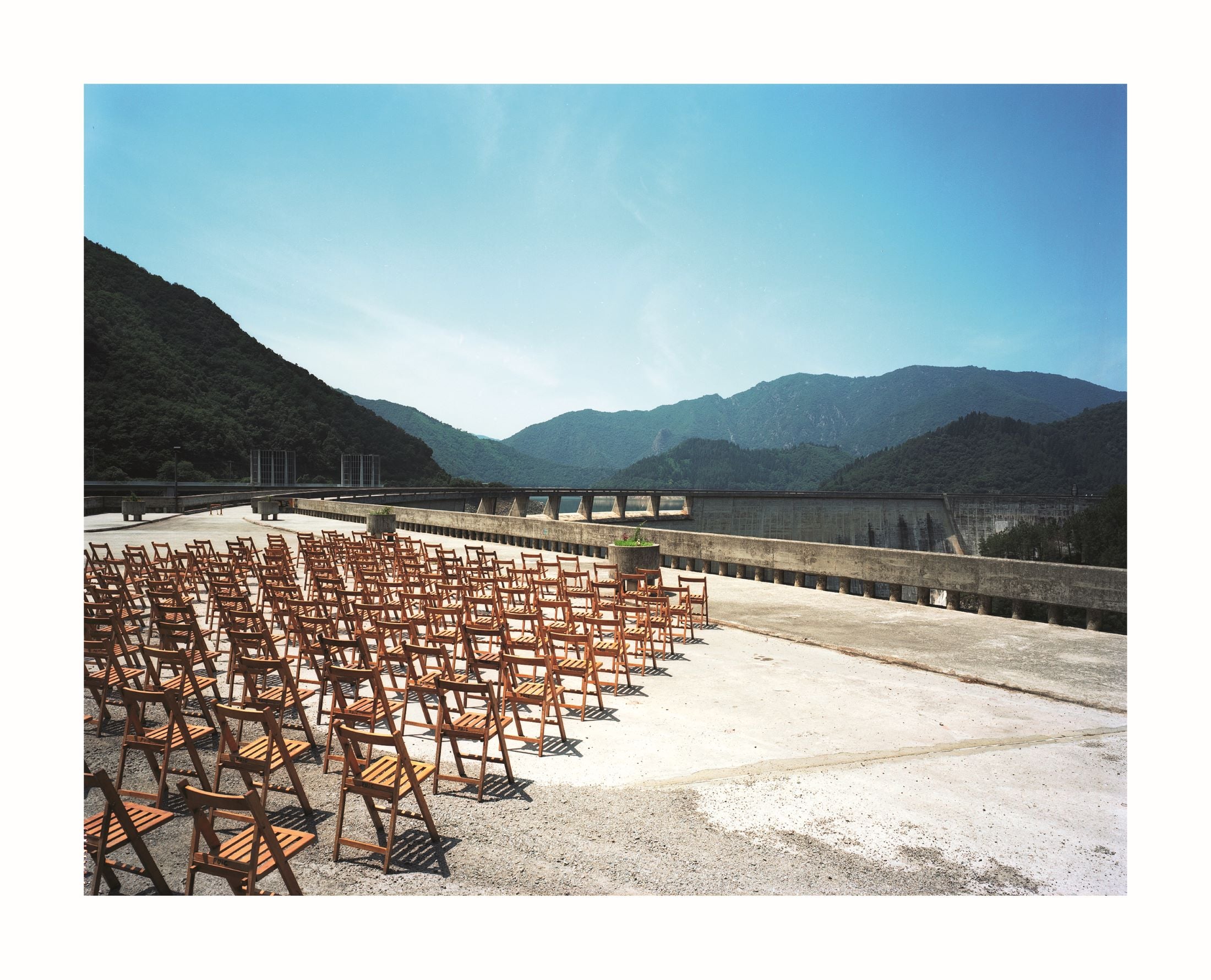
One highlight is the collective project “Drawing the Territory”, curated by art historian Dayneris Brito, featuring ten contemporary photographers exploring Latin American spaces and how they are imagined, shaped, and reinterpreted. In Espectadores #13, an image of empty chairs by Alex Plademunt (2006) in a vast mountainous landscape invites reflection, evoking absence and presence—a tension between what has been lost and what remains.
Carlos Jacanamijoy, presented by Almine Rech in Paris, offers vibrant canvases drawn from his Inga Indigenous heritage. Deep blues contrast with fiery reds and glowing yellows, suggesting hidden energies and spiritual influences. The British surrealist Leonora Carrington (1917–2011), presented by the Parisian gallery DURAZZO, reminds us of how Mexico influenced her, where she lived for nearly seventy years, offering sculptures rich in folklore and feminist perspectives.
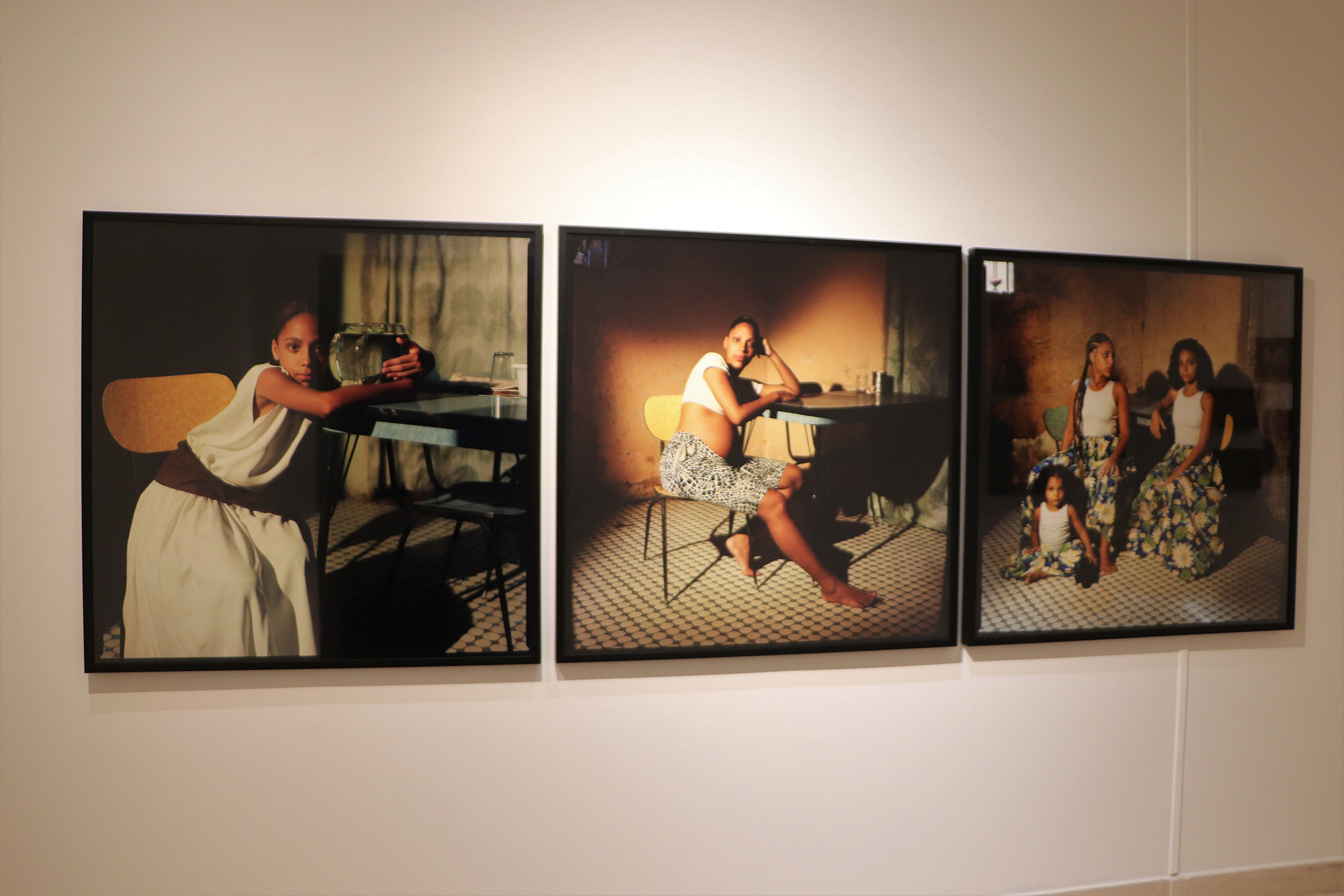
Ana Stewart, presented by Galeria da Gávea in Brazil, captures the social shifts in Rio’s peripheries with intimate and thoughtful photographs. In Cinara da Serrinha 1 (2003), a young girl in a white dress with a brown scarf wrapped around her hips clutches a glass bowl as if it were a person. Seated at a table, she looks straight into the camera with a gaze that is serious beyond her years, reflecting the weight of her environment. The background, divided between a darker and lighter area, introduces a subtle duality that enhances the composition. One can sense the artist’s background in film in the careful framing, attention to narrative, and the cinematic sensibility of the image.
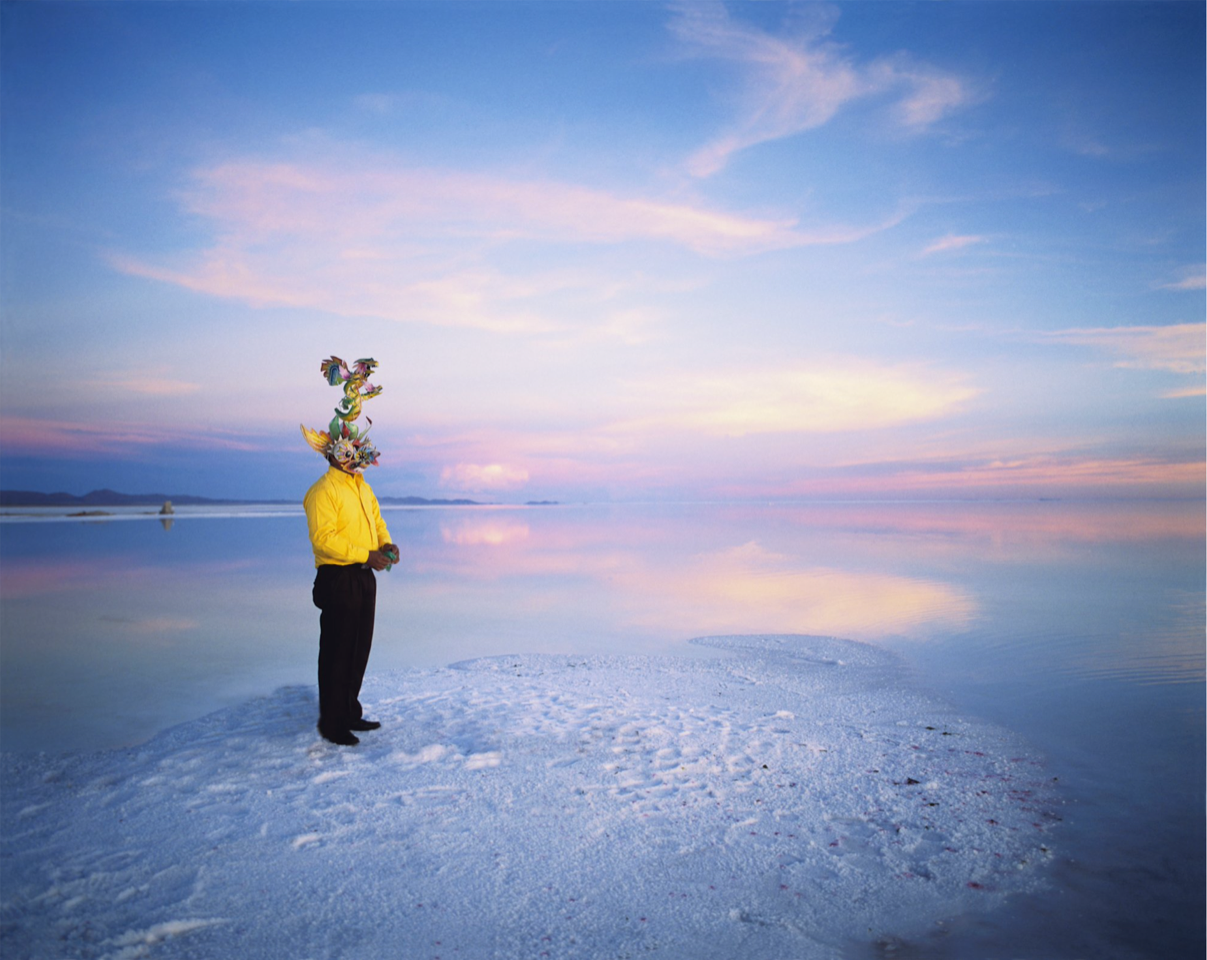
Galeria Leyendecker, based in Tenerife on the Canary Islands, showcases Enrique Ramírez from Santiago, Chile. In Un hombre frente al horizonte (2011), a solitary figure wears a traditional Indigenous mask and stands against a vast landscape in Bolivia, symbolizing resistance to colonial forces. The gallery also presents Puerto Rico–born, London-based José Jun Martínez, whose poetic and socially conscious work evokes reflection on ecological, political, and social tensions.
Leyla Cardenas, Bogotá-born and UCLA-educated, experiments with photography and materiality by printing images on textiles and layered surfaces, which she manipulates to reveal hidden histories and urban memories. Her oeuvre, presented by Hélène Lacharmoise of Galerie Dix9 in Paris, transforms photography into a tactile, sculptural, and conceptual experience, inviting viewers to engage with the layers of memory embedded in space.
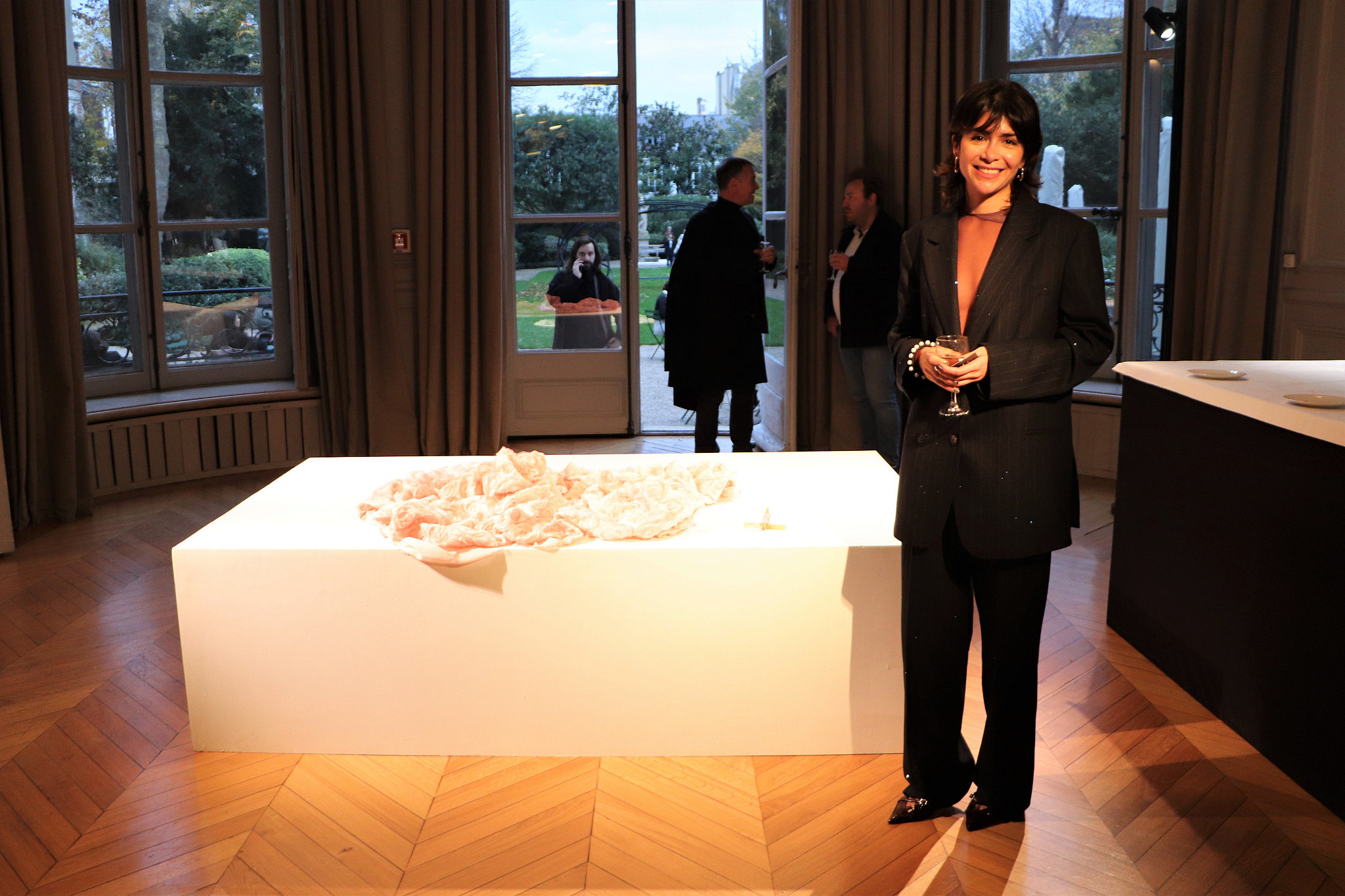
Among the Special Projects, Liliana Porter’s Untitled The Weaver (2018), installed in the main hall leading to the terrace and garden, stands out. A soft pink fabric rests loosely on a pedestal, coiled in gentle folds. A miniature female figurine, also dressed in pink, sits on a wooden bench beside it. The fabric’s relaxed, unstructured form creates a subtle beauty, like a rose inviting the viewer into a poetic dialogue with the material.
Performance art also had its moment. During the preview, Paola Estrella presented The Cenote Ring, drawing audiences into an immersive and sensorial experience. This was just one facet of MIRA’s public program, which also includes family workshops and talks, reflecting the fair’s mission to engage, educate, and inspire.
Thus, MIRA keeps its promise of offering a space to gather, discover, and foster meaningful connections among people across the European and Latin American art worlds. It encourages informed collecting rather than high-volume sales or commercial spectacle. What also makes MIRA particularly delightful is its emphasis on a more female gaze in the art world: the fair is organized by an all-women committee, a refreshing contrast to institutions such as the Neue Nationalgalerie, Berlin, which has had only male directors since its opening in 1968. The committee includes Paola Creixell (collector and founder of PAC Art), Chloé Trivellini (collector and founder of Island Cultura), Patricia Marshall (advisor to the Jumex Collection), and Maritza M. Lacayo (associate curator at Pérez Art Museum Miami).
A new addition to the fair is the MAZE/Art Awards F.P. Journe. Conceived as a context-driven prize, it will be awarded at selected international art fairs with a strong focus and identity, whether established or emerging.
Thus, I hope that MIRA will continue to be an art fair that feels morally conscious, gender-sensitive, and vibrantly alive.
Manuela Rayo, Founder of MIRA Art Fair | artfairmag