
Published author, Jewish educator and scholar
Mishpatim and Terumah: Justice and Compassion before the Mishkan
ChatGPT
The transition from the revelation at Sinai in Parashat Yitro to the detailed civil legislation of Parashat Mishpatim is both deliberate and profound. At Sinai, the people encounter God in overwhelming majesty — thunder, lightning, divine voice. But revelation, the Torah teaches, cannot remain suspended in transcendence. It must descend into the texture of daily life. The experience of God must be translated into responsibility.
This movement is captured beautifully in the familiar phrase, “God is in the details,” or, as Rabbi Jonathan Sacks expressed it:
“God is in heaven, but we honor Him here on earth… It is precisely through the instrumentality of law that we enact spiritual truths in physical circumstances, creating fragments of heaven in our interactions on earth” (Covenant and Conversation: Exodus, 177).
Parashat Mishpatim does exactly that. It grounds the fire of Sinai in the ordinary realities of society — damages, liability, employment, loans, courts, and power. It teaches that spirituality is not in the purity of heaven, but in the complex realities of life on earth.
If so, the transition from Yitro to Mishpatim is understandable. But a new question now emerges: How do we explain the transition from the dense and technical civil code of Mishpatim to the radiant beauty of the Mishkan described in Parashat Terumah — gold and silver, sacred vessels, and a dwelling place for the Divine Presence?
The answer may be found in a careful reading of Parashat Mishpatim. What emerges from the many laws and their details is that the Torah is outlining a vision of a society: one in which families are protected, property rights are respected, compensation is paid when harm is done, judges act with integrity, and power is restrained. Above all, it insists on protecting those most easily overlooked — the weak and the vulnerable.
The Torah’s language here is unusually harsh: “You shall not ill-treat any widow or orphan. If you do mistreat them, I will heed their outcry as soon as they cry out to Me, and My anger shall blaze forth…” (Exodus 22:21–22).
This is not merely a moral recommendation. It is a divine warning. God identifies Himself with those who have lost their protectors. Their cry pierces heaven.
Only after establishing this moral foundation does the Torah command: “Make Me a sanctuary that I may dwell among them” (Exodus 25:8).
The sequence, then, is unmistakable. Before constructing a sacred space, one must construct a just society. Without the ethical infrastructure of Mishpatim, the gold and splendor of Terumah become hollow. To attempt to create a dwelling place for God while neglecting justice and compassion is not to sanctify God — it is to profane Him.
This message feels especially urgent today.
We are witnessing strains in the very principles Mishpatim seeks to establish. Public discourse — political, media, and social — has grown increasingly harsh. Opponents are no longer simply debated; they are delegitimized. Ideological loyalty too often eclipses fairness and truth. The Torah’s demand to “keep far from falsehood” and to uphold judicial integrity feels fragile in an atmosphere of polarization.
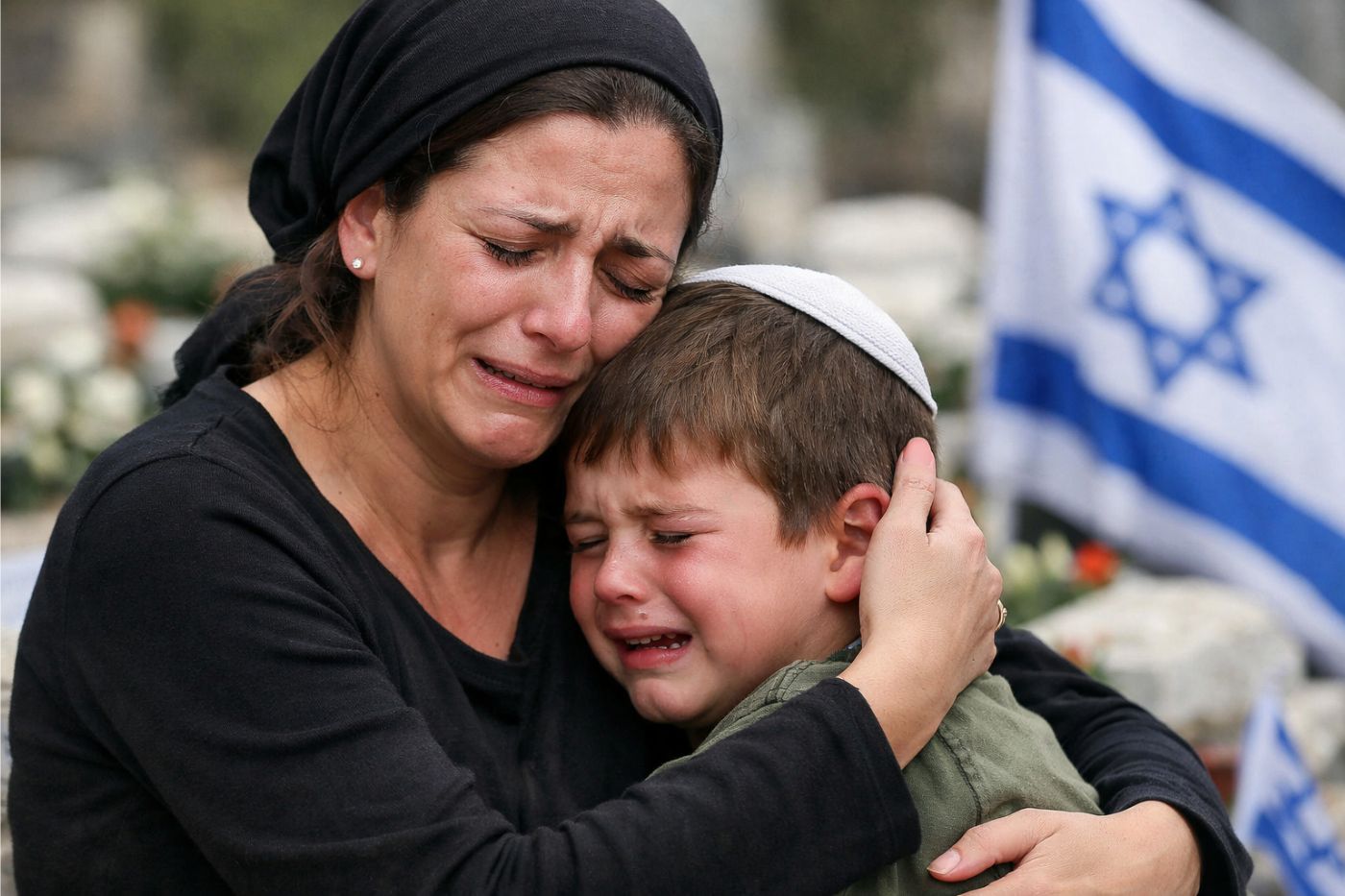
Yet perhaps the most searing challenge lies in the cry of the widows and orphans among us.
Since October 7, many women have buried husbands. Many children will grow up without fathers. Their grief is immeasurable. Their loss irreparable. Their cry unmistakable.
The Torah tells us that God hears that cry immediately. The question is whether we do.
A society worthy of the divine presence cannot remain indifferent to such suffering. It cannot compartmentalize spirituality from shared responsibility. It cannot speak in the name of Torah while turning away from the human cost borne by others.
The order of Mishpatim and Terumah is a test. It demands that before we speak of sanctity, we ask whether we have upheld justice. Before we build sanctuaries, we must ensure that we have built solidarity. Before we invoke God’s name, we must ask whether we have heard the cries of those who have lost everything.
Let us hope that we, as a society, will rise to that challenge — that we will recommit ourselves to the moral vision of Mishpatim so that we may truly merit the promise of Terumah:
“Make Me a sanctuary that I may dwell among them.”
Shabbat Shalom.
For an abridged video version of these parasha thoughts: https://youtu.be/pzF2Khc-aBo
For more articles on the parasha and current events, or to sign up for my newsletter, visit my website: https://davidharbater.com/
Follow me on Facebook: https://www.facebook.com/Rabbi.Dr.David.Harbater
Visit my YouTube channel: https://www.youtube.com/@rabbidrdavidharbater
Join my WhatsApp group: https://chat.whatsapp.com/DQbucbRPtX5EseesZgymzo
Invite me to speak at your synagogue or community: davidharbater.com/contact
Related Topics