


Nationalist-religious rabbis are missing in action
“Anyone who can protest the sinful conduct of the members of his household and does not, he himself is apprehended for the sins of the members of his household and punished. If he is in a position to protest the sinful conduct of the people of his town, and he fails to do so, he is apprehended for the sins of the people of his town.”—Babylonian Talmud, Shabbat 54b
On July 11, a group of Israeli settlers killed two Palestinians during an attack north of Ramallah. According to PA’s health ministry, Annas Abu El Ezz, 23-year-old Saif al-Din Kamil Abdul Karim Musalat “died after being severely beaten all over his body by settlers in the town of Sinjil.” A second man, 23-year-old Mohammad Shalabi, was fatally shot by settlers. Both Shulabi and Musalat were residents of al-Mazra’a ash-Sharqiya, and Musalat was a dual Palestinian-American citizen
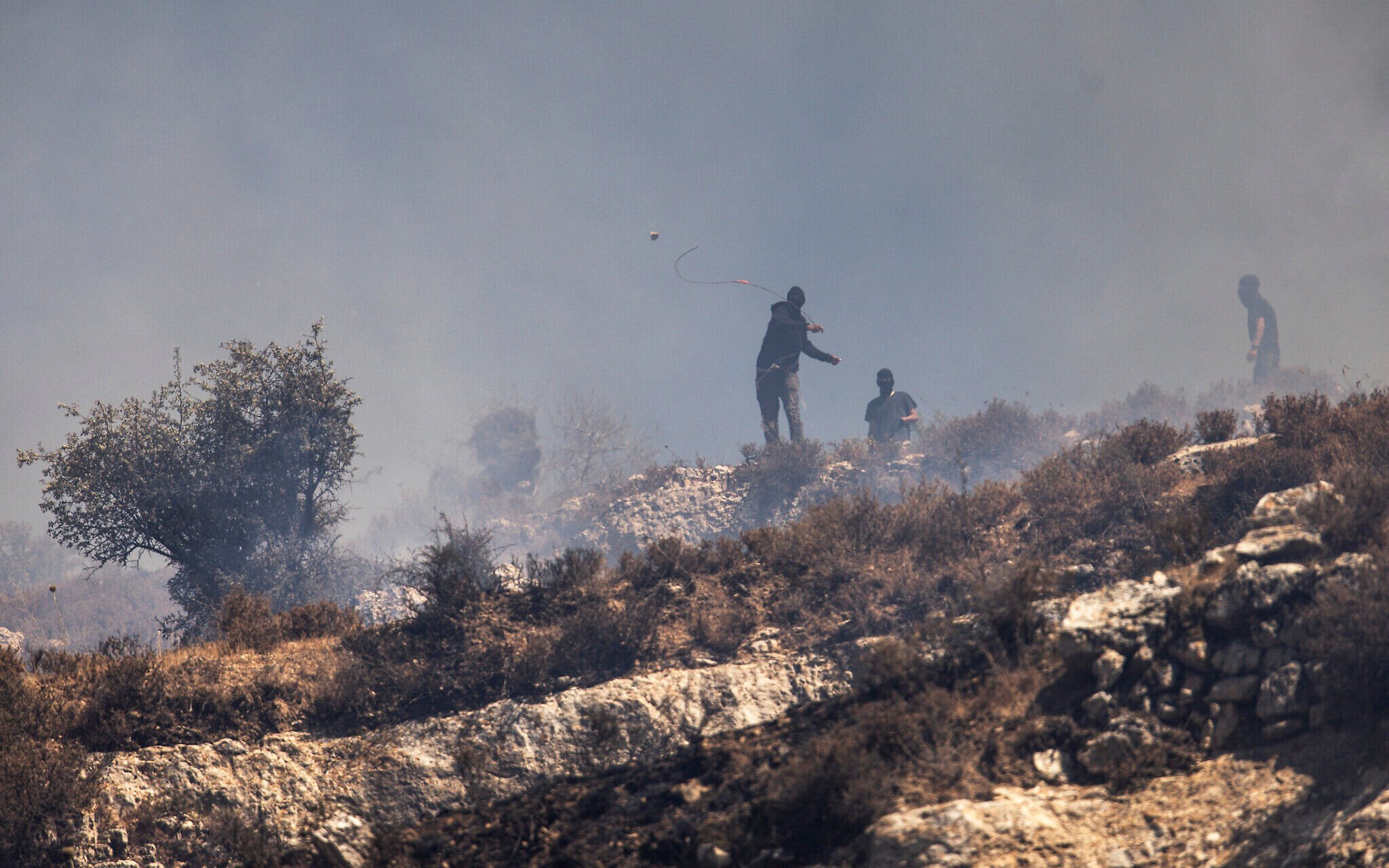
This murderous episode is not a one-off. Recent attacks by settlers and hilltop youth have increased dramatically in the past year. The violence includes murdering innocent Arabs living in proximity to Israeli settlements, torching their homes and cars, and slashing their tires. There is also footage of settlers expelling Palestinian farmers from their fields in the village of Shuqba, near Ramallah, on June 28, 2025. On June 25 three Palestinians were shot dead and seven more were injured during a settler rampage in the West Bank village of Kafr Malik. Over 100 settlers took part in the attack, according to the Yesh Din rights group.
These Jewish vigilantes have also clashed with the IDF and its facilities. On the evening of June 27 (Shabbat), several dozen Israelis attacked IDF reserve soldiers who were dispatched due to fresh rioting in Kafr Malik near Ramallah. A Kan public broadcaster reported that the settlers also slashed the tires of a police cruiser. When the troops arrived on the scene, they were attacked by the settlers, according to an IDF spokesman. The IDF said Saturday that the attackers also attempted to ram the soldiers with a car. According to Hebrew media reports, the Israeli assailants beat, choked, and hurled rocks at the troops
Settler violence is so alarming that the IDF has set up a separate unit to deal with Jewish violence in Judea and Samaria, but IDF Chief of Staff Eyal Zamir is highly frustrated by the lack of arrests and convictions of the extremists who perpetrate violence against Palestinians and the IDF.”
This is no local scandal; it has caught the eye of most of Israel’s allies. According to the US Treasury Dept., “Hilltop Youth have devastated Palestinian communities and carried out killings, mass arson, and ‘price tag’ attacks to exact revenge and intimidate Palestinian civilians.”
No doubt, the settlers who perpetrate this lethal violence are extremists, radicals who represent neither the majority of settlers nor the dati-leumi community. Every group has extremists, and the moral health of communities should not be measured by these radicals in their midst. The true index is how the majority and their leaders respond to extremist violence. It is telling that in the last national election, 49% of the residents in the moderate dati-leumi settlement of Efrat voted for the parties led by the extremists Bezalal Smotrich or Itamar Ben Gvir. Has extremism become the new norm in dati-leumi communities?
And how have the dati-leumi rabbis responded to this murder and violence? Mostly, only with acceptance and silence.
Rav Ya’akov Meidan is one exception that proves this truth. In a July 6 article in Makor Rishon, he unequivocally condemned the ongoing settler violence on innocent Palestinians and admitted that condemnation by the settler leadership was merely “a faint voice – and a voice that focuses more on harm done to the IDF and security personnel… and a firm condemnation of the desecration of Shabbat. But the voice of condemnation over what was done to ordinary Arabs is much weaker. Compared to the condemnation over what was done to the IDF and to Shabbat, it was virtually absent, faded, and forgotten.”
Why is there no outcry by the nationalist-religious community and its rabbis? If there were a rumor of withdrawal from even one kilometer from Judea or Samaria, hundreds of dati-leumi rabbis would emerge the very next day and aggressively protest, yet when murder is committed, they are silent. Are they so seduced by the idea of settling the land that they are willing to overlook murder, arson, and theft, and descend to be little more than real estate promoters?
Why do these rabbis ignore the Torah admonitions, “Innocent blood shall not be spilled in the midst of your land…” (Deut. 19:10), and “You shall not pollute the land in which you live; for blood pollutes the land…” (Numb. 35:33)? Having lost their moral compass, they appear as servile water carriers for extremist right-wing political leaders and the machinations of coalition politics.
I am hard pressed to think of greater desecrations of Torah and hillulei ha-Shem than the murderous settler vigilantes and the moral deafness of their rabbinic leaders. These actions not only earn the opprobrium of the world community, they undermine the security and vital interests of the Jewish State, of the settler movement itself, and of the Jewish people.
We have just entered bein ha-metzarim, the three weeks leading up to the Ninth of Av, the date on which both Temples and our Jewish Commonwealths were destroyed. In the famous story of Kamza bar Kamza, the Talmud (Gitin 56a) recounts for us that the Second Jewish Commonwealth was destroyed because of passivity toward sin by Rabbi Zekharya ben Avkolas. He was unwilling to protest the host’s sin because it was socially and politically incorrect. Due to his failing, R. Yochanan tells us, “our Temple was destroyed, our Sanctuary was burned, and we were exiled from our land.”
The security of Am Yisrael in our land is not merely a matter of real estate. As the Torah and the talmudic rabbis repeatedly remind us, it also depends on the Jewish nation being a holy people, one that stays far away from murder and one that is morally responsible enough to stop the wanton violence in our midst.