

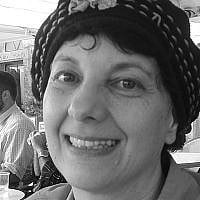
Teacher and activist in Jerusalem
Missing Oren Nahari
It is a tradition to take a shabbas schluff – a small nap in the early afternoon on Saturday. I used to try to avoid falling asleep, tried to stay awake reading a good novel or playing Scrabble, because even a couple of hours in the daytime made it difficult to fall asleep at a reasonable time on Saturday night.
All of that changed when I discovered Oren Nahari. Now, I wanted to stay awake in the early hours of Sunday morning to hear the repeat broadcast of the program that he presented on Shabbat morning.
For background, you need to know that I have always been a radio addict. Australian public radio is still among the best if not the best in the world, with a diverse range of news, intellectual, spiritual and cultural content. I was lucky to grow up with it.
I have often said that anything I know about science came from radio programs, having dropped out of science at school at age 15. I was fascinated by the subject matter – but, sadly, it was very badly taught. I can talk about films I have not seen and books I have not read after hearing them reviewed on the radio. I even know a little about sport because I have not stepped away. History was brought alive by good radio programs. And, of course, I have always kept myself up-to-date on current affairs.
When I returned to Israel to study in 1989, I turned on public radio here. I knew that my aural comprehension of Hebrew was lacking and that I would, at first, miss a lot of what was being broadcast. However, as I knew would happen, having the radio on was a form of “ulpan” – immersive language acquisition. At first, I could only follow with certainty the advertisements – repeated frequently – and the weather reports. Gradually, I was understanding more of the other programming and eventually I found myself listening intensely and only missing the occasional word or phrase.
The radio was a constant companion during the Gulf War and I will never forget the broadcast of Operation Solomon, which we listened to in awe as soon as shabbat was out on May 25th, 1991. The drama and emotion of bringing the Ethiopian Jews home will stay with me always, thanks to the radio broadcast of the loading and take-off of those planes.
The habit of listening stayed with me when I was in Australia again and when I returned here. For over a decade, I was a journalist myself, doing a weekly report of the news from Israel for one of the branches of Australian public radio that is focused on providing relevant reports for the diverse communities there. Sadly, that changed after October 7th, when the station concocted a reason not to have a report in English from Israel, which had served the needs of the Jewish community – (perhaps the subject of another post in the future.)
To return to my radio habits here, I was very worried about the changes to public broadcasting, proposed and implemented a decade ago, because I loved what I had. My fears were unfounded and I was able to keep listening to Aryeh Golan in the morning and then Keren Neubach, and Guetta in the evenings.
The Shabbat morning programming was unknown to me until 4 or 5 years ago. Having succumbed to sleep one shabbat afternoon, I was lying awake after midnight and turned the radio back on. The program was wonderful. It was a re-broadcast of Oren Nahari’s morning show and I listened to the full two hours! He interviewed fascinating guests, drawing out skillfully both the information he wanted from them and some of their personal, endearing qualities and experiences. I was hooked!
The highlight for me was his “A Year in an Hour” segment, reviewing each year of the 20th Century and taking us back there, with its highs and lows, mysteries and revelations, people and events. Sometimes, one year took several programs because Nahari didn’t just want to pass on dry information. He wove story into story and showed connections that other historians might not see. Sometimes he would have guests and sometimes he would use recordings from the year he was describing. He always had music from the year in question.
I was in awe of the way he dealt with the years 1936-1948, the Shoa and the founding of the State of Israel. The series ended in 1961, the year Oren turned 6.
A listener could hear in the last few programs that his voice had weakened and that he was talking more slowly.
In March, he had announced that he was suffering from an aggressive form of ALS.
Oren Nahari passed away at age 70. It was a terrible loss for those of us thirsty for knowledge, curious about the world and eager to hear history presented with new takes on events we think we know.
I am going to try not to take a shabbas schluff – there is no reason to stay up into the early hours of Sunday morning. I miss you, Oren.