NAnews - Nikk.Agency Israel News
Mitzvah Tanks in Kyiv: Jewish Community Prepares for Another Winter of War
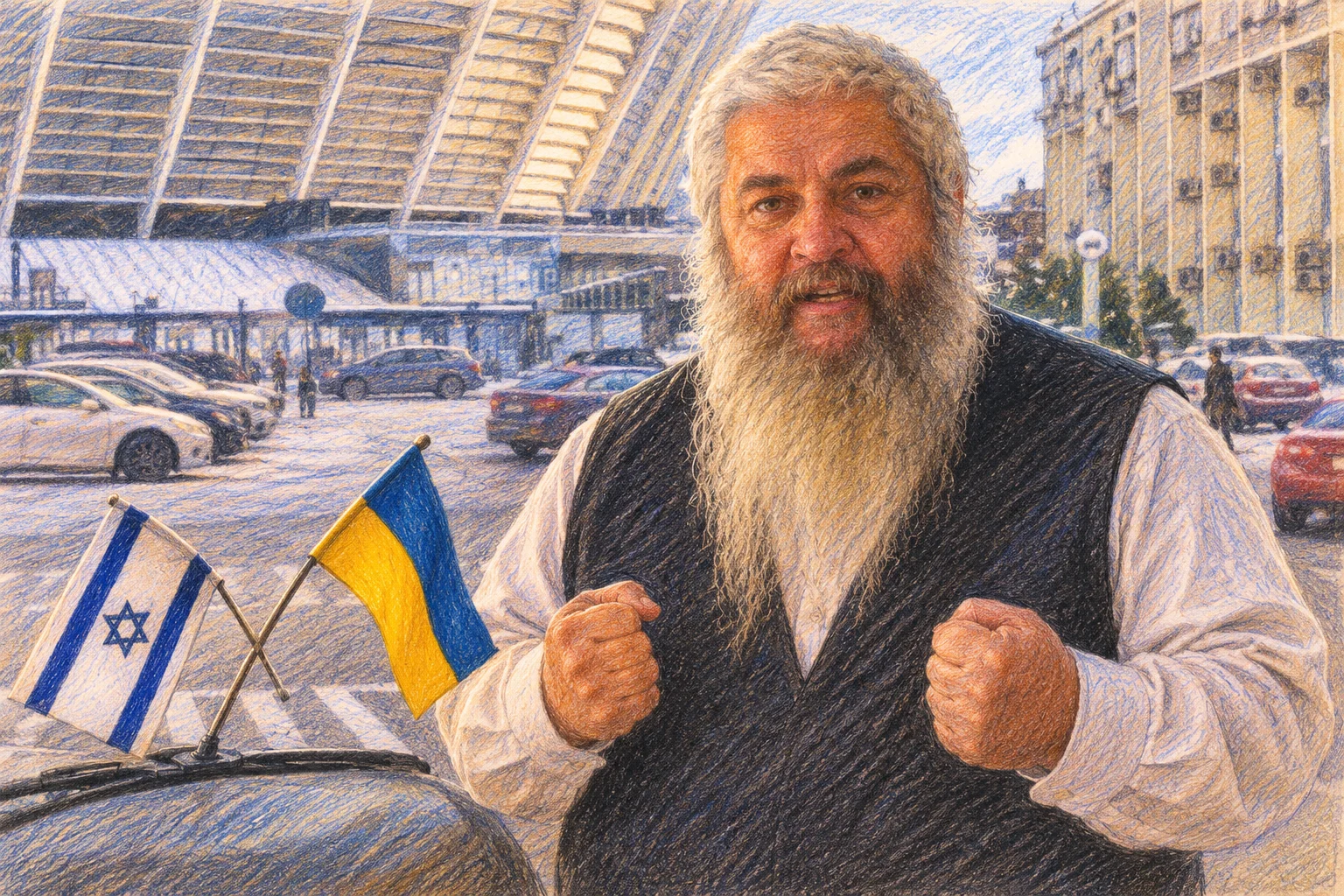
Mitzvah Tanks in Kyiv: Jewish Community Prepares for Another Winter of War. The image was created using AI.
On November 8, 2026, Ukraine’s Chief Rabbi Moshe Reuven Asman appealed to his Jewish community and anyone willing to help: one of the three Mitzvah Tanks that served Kyiv during last winter’s blackouts had broken down, and money was needed to repair it. Two vehicles were almost ready for the coming cold. The third, worn out by demanding relief work, might not return unless the community could finance the repairs.
An appeal as the power fails again
The timing was hardly abstract. On the same day, Ukrainian energy company DTEK reported emergency electricity cuts in Kyiv, the surrounding region and Dnipro; the capital’s left bank was especially affected before scheduled outages resumed. Russian attacks on energy facilities have made the prospect of unheated apartments a recurring wartime emergency.
In his November 8 appeal, Asman described older residents sitting in cold homes and mothers unable to heat food for their children. He asked for donations to restore the third vehicle; readers seeking the latest instructions can also consult his official Facebook page. He did not disclose the mechanical fault, repair estimate or amount raised, so there is no verified target or return date to report.
What the missing vehicle means
A Mitzvah Tank is not an armored vehicle. Chabad traditionally uses these buses or vans as mobile centers for Jewish outreach; mitzvah means a religious commandment or good deed. In wartime Ukraine, Asman’s volunteers have adapted the format into free mobile relief stations open to people of any faith.
Inside, residents can warm up, drink tea, eat or reheat food, charge phones and use Starlink satellite internet when ordinary connections fail. Losing one of three units reduces the neighborhoods volunteers can serve simultaneously. The November 9 NAnews report described precisely that logistical problem, not merely a damaged bus.
What happened on Kyiv’s streets last winter
In January 2026 the vehicles stopped at 18 Velyka Vasylkivska Street, 125 Antonovycha Street and 33/1 Harmatna Street, among other locations. Residents could request a visit to addresses without heat or electricity for days. On January 19, Media Center Ukraine reported volunteers taking assistance to areas hit by Russian strikes, including carrying water upstairs for elderly residents when elevators stopped.
On January 21, the rabbi’s aide David Milman told researcher David Fishman that two buses were operating around Kyiv every day, with Starlink aboard both. Teams delivered water, food, medicines, blankets and warm clothing; some elderly congregants were moved to Anatevka, where independent heating and power were available. Our January coverage of the Mitzvah Tanks also documented how requests reached volunteers directly through messages and comments.
This network did not begin yesterday
The community’s mobile winter relief predates the latest appeal. On December 22, 2022, a warming bus provided by the Jewish community began operating in Irpin, according to its mayor, Oleksandr Markushyn. In January 2023, The Jewish Chronicle reported that London’s Chabad community had sent a vehicle carrying batteries, chargers, clothing and hygiene supplies through France and Germany to Ukraine, where it received a military escort; organizers also obtained permission for nighttime trips.
By November 2025, Mitzvah Tanks were already assisting residents of Kyiv neighborhoods damaged by attacks. Years of practical experience help explain why Asman’s community wants to restore its third vehicle before temperatures fall further, rather than wait until another prolonged blackout exposes the shortage.
The Israeli connection
Israeli readers may know Asman as a Ukrainian Jewish leader, but his own route crosses both countries: born in Leningrad in 1966, he moved to Israel in 1987 and has worked with Jewish communities in Ukraine since 1995. He is associated with Kyiv’s Brodsky Synagogue and Anatevka, the settlement established to shelter Jewish people displaced after fighting began in eastern Ukraine in 2014.
Ukraine’s government-backed Points of Invincibility provide heat, water, electricity and communications during outages; the Mitzvah Tanks offer some of those services on the move. In March 2026, Asman also described comparable vehicles assisting people in northern Israel during Hezbollah attacks. NAnews covered that connection: different wars, but the same practical question of how to reach civilians before ordinary services recover.
Repairing a vehicle, preserving a lifeline
Asman invoked pikuach nefesh, the Jewish obligation to protect human life. That principle makes sense of the work without romanticizing it: when there is no power, a working bus, a charged phone and someone to deliver water can matter more than an impressive declaration of solidarity. The rabbi ended his appeal with a wish for more light in Ukraine this winter, even when the electrical grid cannot provide it.
Writing about this for NAnews — Israel News, I see a community preparing to help neighbors before the next Russian strike, rather than waiting to be asked afterward. Whether the third vehicle returns depends on resources Asman is now trying to raise. The other two are being prepared to go back to work.
Related Topics