


Moldova Heads to the Polls
As Moldova Heads to the Polls, Western Powers Clash Over Democracy’s Future
Biden-era aid program draws fire from new administration while EU doubles down on support
Vice President JD Vance took aim at European allies earlier this year with a blunt assessment: If a democracy can be toppled by a few hundred thousand dollars in foreign Facebook ads, maybe it wasn’t that strong to start with.
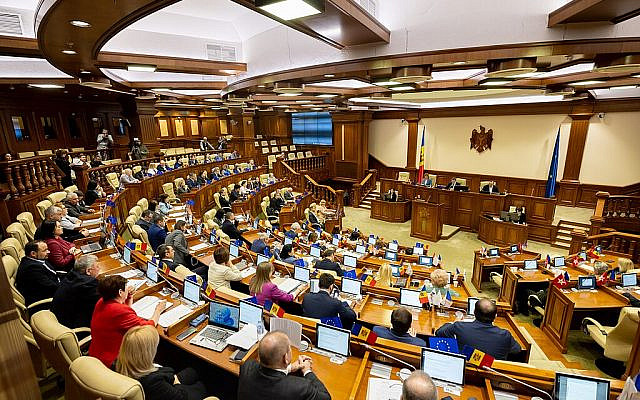
His comments, initially about Romania, are getting fresh attention as Moldova gears up for parliamentary elections that have become a flashpoint between Washington and Brussels over how best to support fragile democracies.
The tiny ex-Soviet nation sandwiched between Romania and Ukraine is watching European leaders fly in to campaign for President Maia Sandu’s pro-EU party while the Trump administration questions whether American taxpayers got their money’s worth from millions in aid redirected there under President Biden.
“We made unprecedented investments,” former USAID chief Samantha Power said in recent remarks about the agency’s Moldova programs. Originally earmarked for Ukraine, the funds were shifted to shore up Sandu’s government — a move that’s now drawing scrutiny from Secretary of State Marco Rubio.
Election Day Turmoil
With just hours before polls open, Moldova’s electoral commission barred two opposition parties from Sunday’s ballot, citing court rulings over illegal financing and voter bribery allegations. The Heart of Moldova party, part of the Patriotic Electoral Bloc coalition, was removed Friday following a Chisinau Court of Appeal decision restricting the party’s activities for 12 months.
“This is a political spectacle, concocted a long time ago,” Heart of Moldova leader Irina Vlah said, hours after being banned from entering three EU countries that accused her of helping Russian interference efforts.
The commission also excluded Moldova Mare party, whose leader Victoria Furtuna was sanctioned by the EU in July for receiving “significant support” from fugitive oligarch Ilan Shor.
The last-minute exclusions come after authorities arrested 74 people last Sunday on suspicion of planning to incite mass riots. The detainees, aged 19-45, had allegedly undergone training in Serbia disguised as religious pilgrimages.
High-Stakes Vote
For Moldova’s 2.6 million people, Sunday’s election is about more than choosing between Sandu’s Party of Action and Solidarity and its opponents. It’s a referendum on whether this country — Europe’s poorest — will continue its westward push or chart a different course.
German Chancellor Friedrich Merz, French President Emmanuel Macron and Polish Prime Minister Donald Tusk all showed up in the capital Chisinau last month to stump for Sandu. They’re betting EU membership talks will help solve everything from Moldova’s economic woes to its frozen conflict in Transnistria, where Russian peacekeepers have been stationed since a 1992 separatist war.
But polls suggest no party will win an outright majority, with Sandu’s PAS projected to capture anywhere from 25% to 48% of the vote. The Patriotic Electoral Bloc, uniting former presidents Igor Dodon and Vladimir Voronin, could emerge as the largest force with up to 36% support. Remarkably, over one-third of voters remain undecided just days before the election.
Critics argue the administration is using the Transnistria situation — where Russian troops remain stationed — as leverage over voters, with the implicit threat of renewed conflict if the pro-Western government loses power.
Trump’s UN Silence
President Donald Trump delivered a nearly hour-long address to the UN General Assembly on Tuesday but made no mention of Moldova, Eastern Europe’s democratic challenges, or foreign election interference — topics central to the crisis unfolding just days before Moldova’s vote.
Instead, Trump lambasted the UN itself, asking “What is the purpose of the United Nations?” and complaining that “all they seem to do is write a really strongly worded letter.”
On European governance, Trump warned bluntly: “Your countries are going to hell” — a reference to migration policies he opposes.
The president did emphasize sovereignty themes, declaring that “what makes the world so beautiful is that each country is unique” and that “every sovereign nation must have the right to control their own borders.”
The American Angle
Moldova barely registered in Washington until USAID dramatically scaled up its presence there during the Biden years. Power indicated tens of millions were involved — money originally budgeted for Ukraine that critics characterize as wasteful spending with little to show for it.
The Trump administration hasn’t said whether it’ll maintain that support. But Vance’s earlier comments suggest skepticism about pouring resources into what some see as Europe’s problem to solve.
Still, there’s speculation that Trump might see Moldova as another potential win for his self-styled role as dealmaker-in-chief. Several leaders recently nominated him for the Nobel Peace Prize, and adding Moldova to any list of diplomatic achievements could boost that case.
For now, the country remains caught between competing visions of its future — and competing Western strategies for how to get there.
Election Infrastructure
Sunday’s vote will unfold across 2,274 polling stations — 1,973 within Moldova, 301 abroad, and 12 for Transnistrian residents. The vast diaspora presence, with 75 stations in Italy alone and significant numbers across Western Europe, could prove decisive. Historically, diaspora voters favor pro-European parties by overwhelming margins.
The Central Electoral Commission reports 3,299,396 registered voters, though the diaspora — expected to comprise 8% of turnout — remains difficult to poll accurately. Twenty-three electoral contestants registered for the race, including 15 parties, four electoral blocs, and four independent candidates.
International observers from the OSCE have deployed 15 core experts and 30 long-term observers, with 200 short-term observers planned for election day. The U.S. Embassy in Chisinau issued a security alert Tuesday, urging American citizens to “exercise heightened caution” and avoid large gatherings during the election period.
The Electoral Numbers Game
A stark disparity has emerged in Moldova’s electoral infrastructure that critics say reveals the true priorities of Sandu’s government. For the 300,000+ Moldovan citizens living in Transnistria , authorities have allocated just 12 polling stations for Sunday’s vote — down from 42 in 2021 and 30 in 2024.
Meanwhile, for Moldovan citizens living in the European Union, the government has authorized 301 polling stations abroad, with 75 in Italy alone, 36 in Germany, 26 in France, and 24 in the United Kingdom. This represents a 70-station increase from the last presidential election.
The math is revealing: Transnistria’s residents get one polling station per 25,000 potential voters, while the diaspora in Western Europe — which historically votes 82% for pro-EU parties — enjoys vastly expanded access. In Russia, where hundreds of thousands of Moldovans work, only two polling stations will operate.
“This isn’t about security — it’s about engineering the outcome,” said one OSCE observer who requested anonymity. “When you make it easy for your supporters to vote and difficult for your opponents, that’s not democracy, it’s manipulation.”
The Central Electoral Commission capped each Transnistrian polling station at 3,000 ballots, meaning a maximum of 36,000 votes can be cast — barely 10% of the region’s Moldovan passport holders. Opposition parties note that Transnistrian voters backed their candidates by 80% margins in the 2024 presidential election.
This electoral geometry could prove decisive in preventing any settlement of the frozen conflict, ensuring continued tensions that Brussels can leverage to maintain Moldova’s western trajectory — regardless of what peace deals Trump might negotiate for the broader region.
What’s Next
European officials maintain they’re supporting democratic choice and that Moldovans deserve the same opportunities as other Europeans. The EU has committed €1.9 billion for 2025-2027, its largest-ever package for Moldova.
Critics counter that heavy-handed Western involvement risks backfiring, potentially pushing voters toward populist alternatives or reinforcing narratives about foreign meddling.
The parliamentary elections will test whether Moldova’s democracy — whatever its flaws — can navigate these pressures. As Vance might put it, we’re about to find out just how strong it really is.
With polls showing no clear winner emerging Sunday, Moldova faces the prospect of prolonged coalition negotiations that could paralyze reforms just as the country attempts to open EU accession chapters. The technical negotiations on membership were supposed to launch after the elections, EU Council President António Costa said September 3, “provided that the outcome reaffirms the Republic of Moldova’s commitment to its European course.”
That commitment now hangs in the balance.