


Money, Networks, and a Blueprint: The Long Game of the Israeli Right
How wealthy American donors are helping cultivate future leaders and advance an ambitious agenda to reshape Israel’s borders, military doctrine, and political future.
Americans, remember Project 2025? Israelis, remember the Kohelet Policy Forum and its role in the judicial overhaul?
Well, there’s something else going on in Israel that you should know about. It involves tens of millions of dollars, a network of right-wing organizations, and a remarkably ambitious plan to reshape Israel’s future, particularly its security establishment and policy.
Among the proposals: extending Israeli sovereignty over the West Bank, encouraging Palestinian emigration, revising the IDF’s ethical code, and holding territory in Gaza, Syria and Lebanon as long-term security buffer zones.
And this isn’t simply a group of ideologues publishing manifestos. There are substantial resources being invested in developing the institutions, ideas, and people who could eventually help turn these proposals into government policy.
I stumbled onto this story while listening to a recent Haaretz podcast. The more I looked into it, the more intrigued I became.
An investigation by Haaretz journalists Yarden Michaeli and Nettanel Slyomovics traces, as the paper puts it, the Tikvah Fund’s “money, network and vision of Palestinian expulsion and forever war.” The more I looked into it, the more intrigued I became.
I’m not an investigative journalist. Much of what follows comes from the Haaretz investigation, supplemented by the organizations’ own publications and financial records, all publicly available through Israel’s GuideStar and American IRS filings.
Remember Project 2025? And Kohelet?
Project 2025 was an ambitious initiative coordinated by the conservative Heritage Foundation to prepare for a Republican administration in Washington. It went far beyond publishing policy recommendations. It included identifying, recruiting, and training thousands of prospective government appointees who could implement those policies.
Israel’s Kohelet Policy Forum offers another example. Founded in 2012 and supported by wealthy American donors, the conservative think tank spent years developing legal and constitutional proposals and cultivating relationships with politicians. Its substantial role in developing and promoting the judicial overhaul pursued by Netanyahu’s government in 2023 brought it considerable public attention.
These are examples of a political strategy that operates over years, sometimes decades: invest in ideas, establish institutions, cultivate influential people, and prepare for opportunities to translate those investments into political power.
The Tikva Fund: Meet the People and Follow the Money
Tikvah is an American 501 (c)(3) organization established in 1992 by Zalman Bernstein, a wealthy investment businessman. Its mission explicitly includes developing future Jewish, Zionist, and American leaders through educational programs, fellowships, publications, and institutions promoting conservative ideas.
Today, Tikvah is led by CEO Eric Cohen and chaired by Elliott Abrams, the veteran Republican foreign-policy official who served in multiple GOP administrations.
We’re talking about serious money.
According to Tikvah’s 2024 IRS filings, the foundation held $87 million in assets, received $18.8 million in annual revenue, and spent $25.7 million that year.
Who provides the money?
Among the largest donors are the Adelson Family Foundation, established by the late Sheldon Adelson and his wife, Miriam ‒ $3 million; and the Kansas-based Robert M. Beren Family Foundation – $1.66 million.
Tikvah has longstanding connections with Kohelet, including through Moshe Koppel, Kohelet’s founder and chairman, who was also listed as a Tikvah trustee in its 2024 IRS filing.
The Israeli Connection
The principal Israeli organization involved is Herut, the Center for Israeli Liberty, which oversees the Argaman Institute and several other conservative educational, legal, and policy initiatives.
Herut’s CEO, Amiad Cohen, previously headed Tikvah’s operations in Israel. The Argaman Institute is headed by Ronen Shoval, a co-founder of the right-wing Im Tirtzu movement.
According to its official filings, Herut’s annual revenue rose from approximately NIS 1.2 million in 2023 to NIS 30.5 million in 2025. That’s more than a 25-fold increase in just two years.
In both 2024 and 2025, approximately 85 percent of the organization’s revenues came from foreign donations.
Herut’s audited 2024 financial statement documents an agreement under which Tikvah committed up to $10 million in support, with $5 million transferred during 2024.
Building a Network of Future Leaders
So what is all this money helping to build?
One of the most interesting initiatives is Argaman’s Churchill Program for Statecraft and Strategy, which brings together military officers, security professionals, government advisers, and others seeking to influence Israel’s national-security and foreign-policy decisions.
Each year, approximately 18 participants take part in an intensive eight-month program, studying strategic and political thought, debating policy, and preparing briefs that might be presented to government ministers.
But the objective goes well beyond educating individual participants. The idea is to build a network.
Think of the alumni networks familiar to graduates of American universities, except that here the participants are deliberately drawn from the ranks of people already working in, or aspiring to influence, government, the military, intelligence, politics, and public policy.
They study together, develop relationships, and then return to their respective institutions. Over time, these networks can become increasingly influential as their members advance professionally, consult with and support one another, and develop common approaches to national policy.
And the connections don’t end with graduation. Argaman operates an advanced alumni seminar, bringing together graduates from different programs and different years for continuing discussions and networking. Nor is Churchill its only training initiative. The institute operates additional programs focused on economics, political philosophy, and public policy.
The ambition is to help create a critical mass of people, connected to one another, who may eventually occupy important positions throughout Israel’s public institutions.
“The elite taking shape here is what the State of Israel will look like in 15 or 20 years.”
— Amiad Cohen, CEO of Herut
Consider some of the Churchill Program’s graduates:
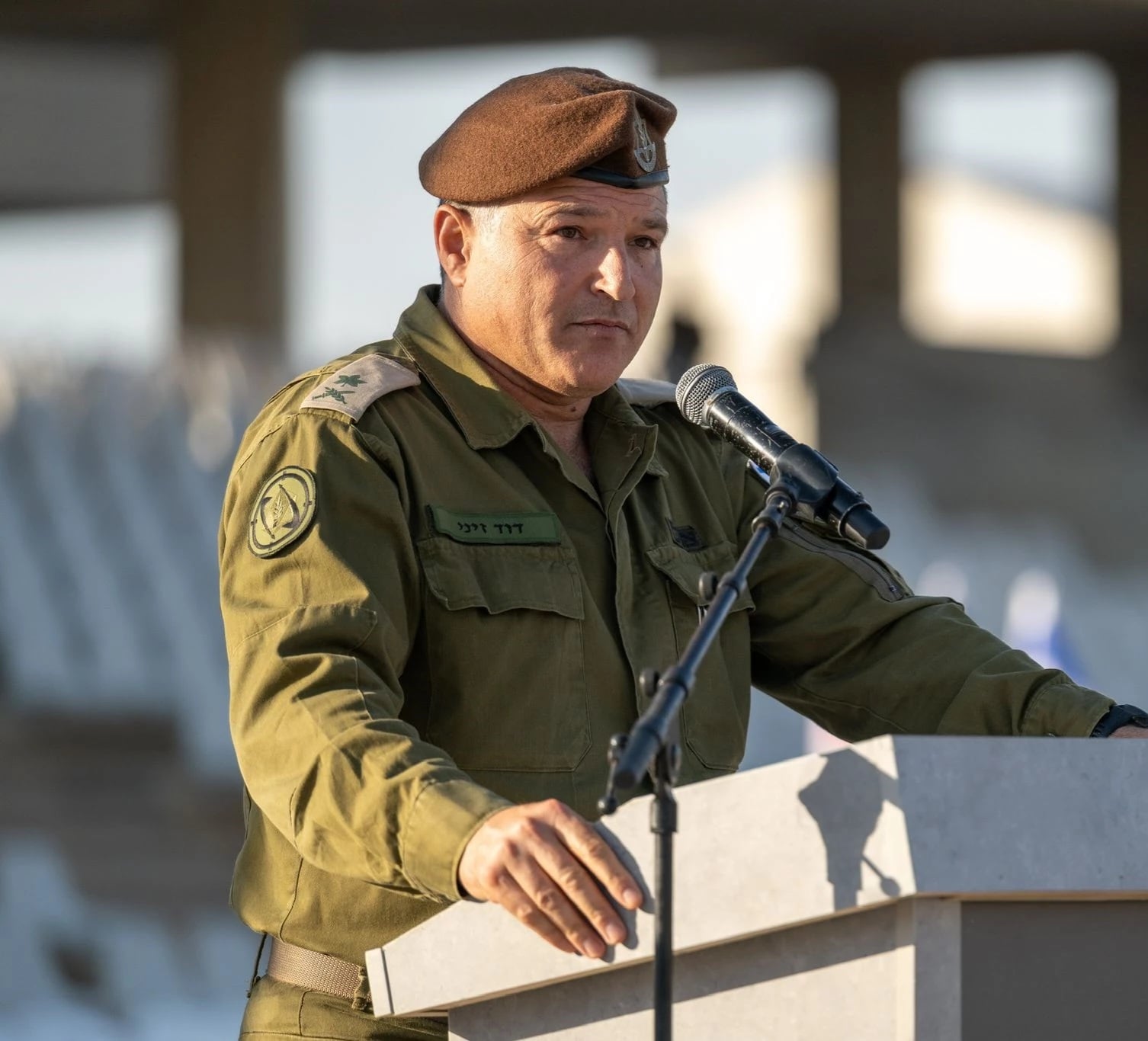
David Zini, who participated while serving as an IDF general, is now head of the Shin Bet, personally selected by Netanyahu in a controversial appointment in 2025. His subsequent public remarks about loyalty to elected officials, and other controversies, have raised further questions about the independence of the security service.
Other graduates include Gilad Zwick, who served as a communications adviser to Netanyahu; Yair Ansbacher, associated with Kohelet’s National Security Forum; and Itai Asman, chairman of the religious-nationalist organization Torat Lechima.
These examples demonstrate the range of people involved, the influential institutions in which they work, and the potential reach of the network.
And the organizers are remarkably explicit about their ambitions. At an Argaman Institute gathering in July 2026, Herut CEO Amiad Cohen reportedly declared: “The elite taking shape here is what the State of Israel will look like in 15 or 20 years.”
The Vision and Plans
The Argaman Institute has published an extensive document called The Paradigm Project: A New Strategic Agenda for Israel.
It’s an eye-opener: The document declares that “The Palestinian Authority is an enemy” and proposes extending Israeli sovereignty throughout the West Bank, dismantling the Palestinian Authority, and creating channels for what it calls “voluntary emigration.” Haaretz reports that the emigration proposals envision as many as 750,000 Palestinians leaving over two decades.
The document also advocates seizing territory beyond Israel’s borders, including in Gaza, Syria and Lebanon, and holding it for “a few months or many decades.” It calls for replacing the IDF’s existing ethical framework with one based on a “national moral framework rather than a universalist one,” expanding Israel’s offensive military capabilities, and reducing its dependence on American military assistance.
These aren’t just abstract plans for a future government. Much of the underlying thinking is already reflected in the outgoing Netanyahu government’s actions, particularly its expansion of Israeli control in the West Bank and its military buffer zones in Gaza, Syria and Lebanon.
We spend so much time discussing Netanyahu, coalition negotiations, opinion polls, and the latest political controversy that it’s easy to overlook what’s happening beyond the daily headlines.
The parallels with Project 2025 and Kohelet are not exact. But the underlying approach should look familiar: substantial financial resources directed toward developing policies, cultivating professional networks, and preparing people who may eventually be in positions to implement them.
And although the existence of these programs is public, I doubt that many Israelis, let alone people abroad who care deeply about Israel, know much about them.
These are organizations operating today, with substantial resources, specific programs, identifiable participants, and an openly declared vision for the country’s future.
They’re thinking 20 years ahead. The rest of us should be paying attention now.