
More Than a Rescue: How Entebbe Reshaped Jewish Identity
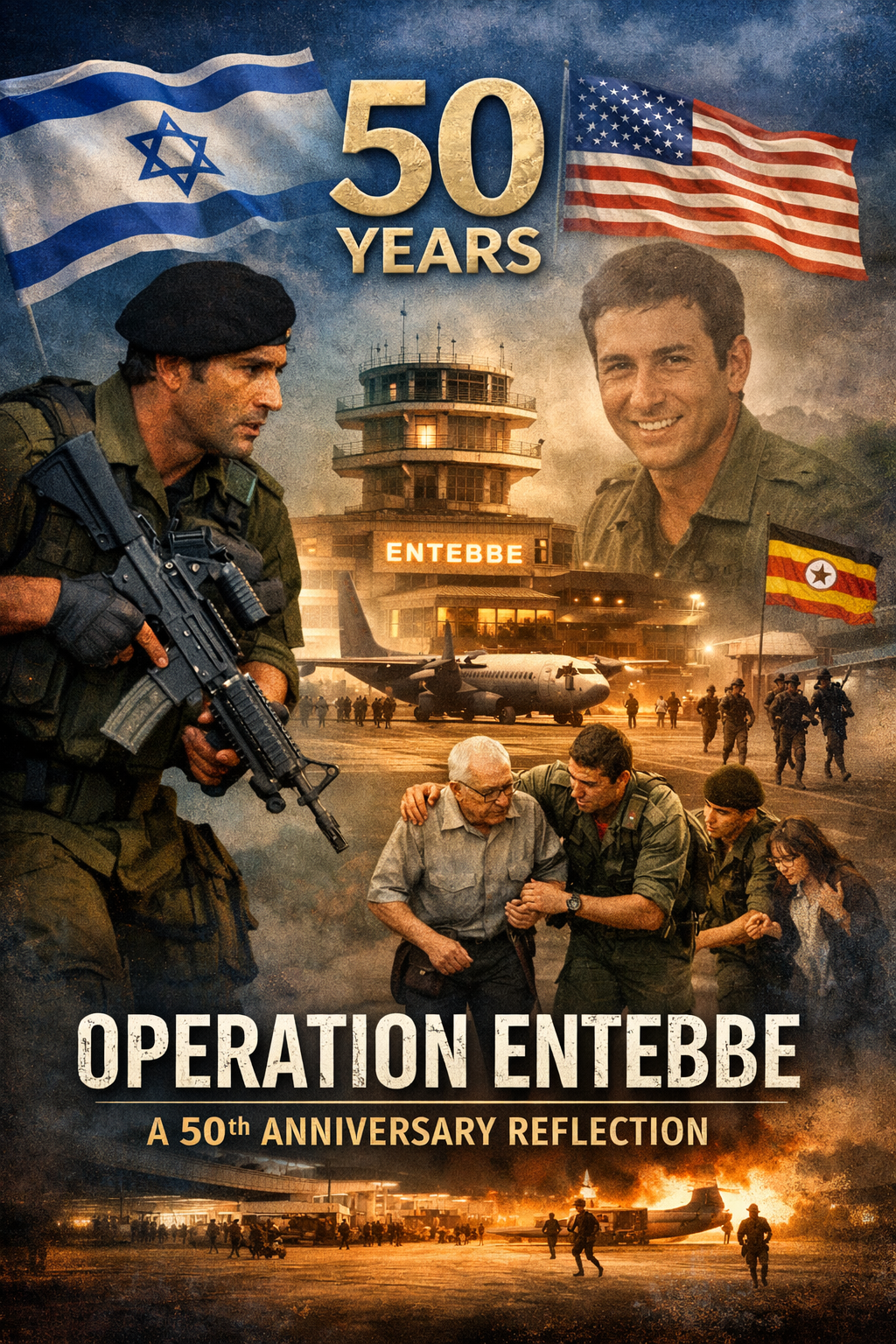
Since the establishment of the State of Israel, there have been three truly transformative events in Israel’s history—and all three have happened during my lifetime.
The first, and most recent, was the October 7th massacre. Its impact has been political, military, psychological, moral, and deeply communal—and it is still reverberating far beyond Israel’s borders. October 7 shattered Israel’s long-held assumption that it could always protect its citizens. It created national trauma and collective grief, raised agonizing moral questions about the ethics of war, and unleashed a worldwide surge in Jew hatred.
The second event was the Six Day War. In just six astonishing days, existential fear gave way to an overwhelming victory. Jewish power was redefined, Jewish pride surged around the world, a religious and theological awakening followed, the bond between Israel and the Diaspora deepened, and Israel enjoyed unprecedented goodwill across the globe.
The third event is sometimes overlooked—but this year we mark its 50th anniversary. I’m talking about the raid on Entebbe.
I will never forget the morning of July 4, 1976, when we woke up to the news that Israel had carried out a daring rescue operation in Uganda, freeing hostages held halfway across the world. There was no internet back then. We heard the news on the radio. And instead of texting friends and relatives, we picked up the phone and called them—just to make sure they’d heard the incredible news.
The raid electrified the Jewish world. Operation Entebbe was spoken about as a modern-day Jewish miracle. We felt an overwhelming sense of pride—not just relief, but pride—in what Israel had done and what it could do.
But Entebbe was about far more than the successful rescue of hostages. It marked a profound psychological and cultural turning point—a moment when centuries-old assumptions about Jewish vulnerability were decisively overturned.
For much of modern Jewish history, especially in the shadow of the Holocaust, Jewish identity was shaped by trauma, survival, and dependence on the goodwill of others. Like the Six Day War, Entebbe shattered that narrative. Israel didn’t appeal endlessly to international institutions or wait for permission. It acted—swiftly, boldly, and successfully. For American Jews watching from afar, the message was unmistakable: Jews were no longer passive victims of history. We were active shapers of our own destiny.
It was an exhilarating time to be Jewish. Rabbis spoke about Entebbe from the pulpit. Jewish schools taught it as a story of modern Jewish heroism. Jewish newspapers and magazines celebrated it openly and unapologetically. For many American Jews—especially those raised in a post-Holocaust, assimilation-minded environment—Entebbe restored a sense of pride that was confident rather than defensive. Being Jewish no longer meant explaining yourself. It meant standing tall.
Entebbe also deepened the emotional bond between American Jews and Israel. Israel was no longer seen only as a fragile refuge for survivors or a small state in constant danger. It became a source of strength, competence, and moral clarity. Supporting Israel felt less like charity and more like partnership. That shift helped fuel increased political advocacy, philanthropy, and personal identification with Israel in the years that followed.
The timing of Entebbe—during America’s Bicentennial year—made it even more powerful symbolically. As American Jews celebrated 200 years of American democracy, Entebbe affirmed something essential: Jewish identity and national confidence were not contradictions. Jews could be fully American and proudly Jewish at the same time. That confidence translated into greater visibility, engagement, and activism in public life.
Entebbe also served as a counterweight to the Holocaust narrative. Jewish history was no longer defined solely by Auschwitz, but also by Entebbe. This balance reshaped how American Jews taught history to their children—not only what was done to Jews, but what Jews could do for themselves.
In short, Operation Entebbe gave American Jews something rare and enduring: a modern story of Jewish courage, competence, and moral resolve. It reshaped identity by replacing inherited fear with earned confidence, and by embedding the idea that Jewish survival in the modern world could be proactive, dignified, and strong.
As we mark Entebbe’s 50th anniversary, it’s worth comparing the lessons it taught us with the lessons of October 7th.
Entebbe reinforced the post-1967 belief that Jewish history had entered a new and safer chapter—one in which Jews, through Israel, could prevent catastrophe.
October 7 shattered that belief—not by erasing Israeli power, but by exposing its limits.
And yet, history does not end on October 7.
If Entebbe taught Jews what strength looks like, October 7 taught Jews what responsibility, resilience, and moral endurance demand under conditions of pain, scrutiny, and unresolved trauma.
Entebbe told Jews that they could no longer be hunted. October 7 reminded Jews that they could still be hated—and harmed—and that strength today must also include endurance, unity, and moral clarity.