

Mathematics Teaching Professor, Author
More than a synagogue: Temple David in Mount Lawley, Perth, Western Australia
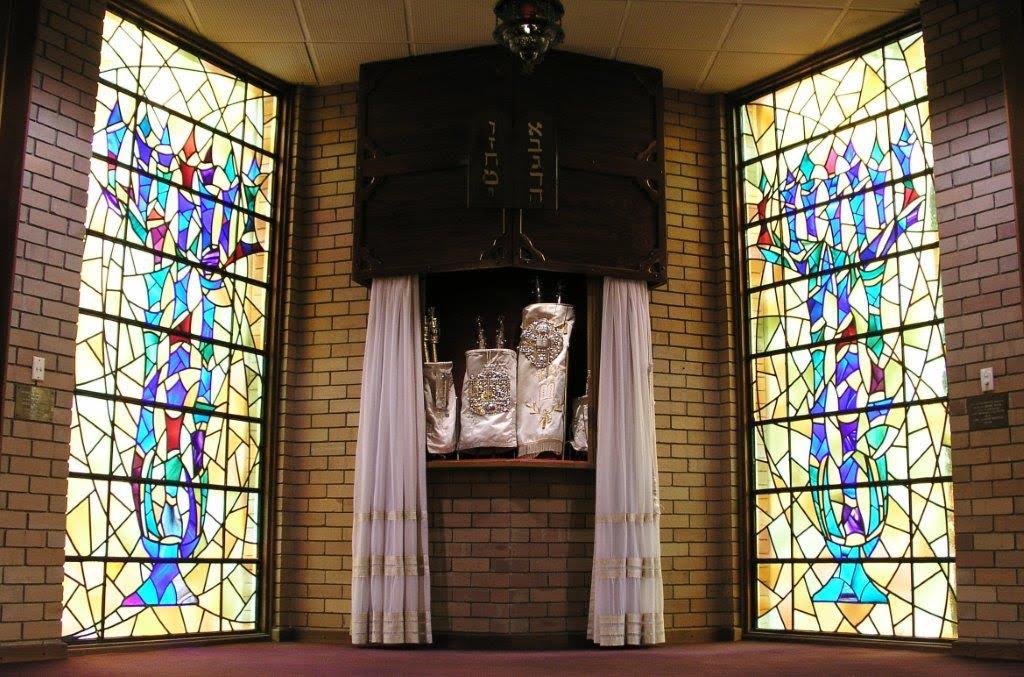
Stained glass windows beside the bimah (Source: Temple David Congregation)
Temple David Congregation, located in a suburb of Perth, Australia, is more than a synagogue; it is a meeting place where the community comes together for religious, cultural and social activities. The congregation celebrates contemporary Jewish life in Western Australia through regular and festival services, community facilities and social events. As a Progressive Jewish congregation, Temple David embraces the belief that there is more than one way to be Jewish and that diversity in religious expression brings honor to God’s name. Its members also identify as Zionists, recognizing a connection with Israel, the people, the land and the state.
I would like to thank the esteemed Talia Raphaely for her support and guidance.
Synagogue
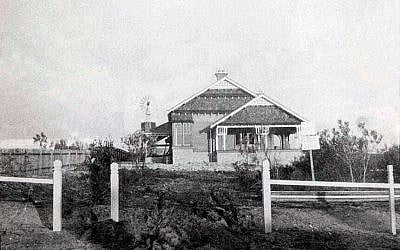
Temple David’s home on Clifton Crescent in Mount Lawley was converted from a family residence into a synagogue, religious school and community centre. The sanctuary features a prominent Ark, menorah-inspired stained-glass windows, classrooms and a function hall.
The synagogue was designed by Harold Boas, a founding member of the congregation. His nephew, Harold Krantz, and Robert Sheldon later designed the temple’s kindergarten through their architectural firm, Krantz and Sheldon.
Torah Scroll
Temple David has a Holocaust Torah Scroll on permanent loan from The Memorial Scrolls Trust (MST#63), carrying a remarkable history. The scroll originally belonged to the Jewish congregation in Vlasim, Czechoslovakia, which was destroyed by the Nazis during the Second World War.
The Memorial Scrolls Trust is dedicated to preserving and restoring Torah scrolls that were damaged or displaced during the Nazi era. A detailed history of Temple David’s scroll, including its connection to the Jewish community of Vlasim, is displayed on the wall in the foyer of the synagogue.
Religious Events
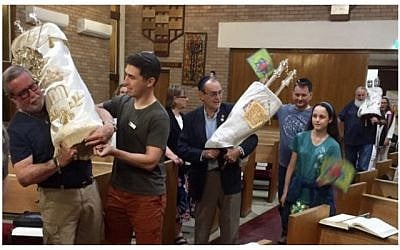
Temple David holds weekly services, including Kabbalat Shabbat on Friday evenings at 6:30 pm, followed by Shabbat Shaharit and the Torah service on Saturday mornings from 10:30 am to 12:00 pm.
Jewish festivals are observed and celebrated throughout the year through a combination of religious services and special community events. These include a communal Second Night Seder during Pesach, services and social gatherings in the Sukkah during Sukkot, full choral services for Rosh Hashanah and Yom Kippur, and dancing with the Torahs during Simchat Torah, among other celebrations.
Education
Temple David Congregation offers a range of educational programs, including Introduction to Judaism, Hebrew classes, Jewish History with Rabbi Ettlinger, Tuesday Limmud, A window into Israeli Society through Israeli Literature, Torah, Tea & Text, and a fortnightly Yiddish Club. These programs cater to beginners and advanced students alike, exploring Jewish texts, history, traditions, contemporary issues and language.
The Temple David Religion School provides Jewish education for children aged five to Bar or Bat Mitzvah. Meeting each Shabbat morning, the school teaches Hebrew, TaNaCh, Jewish history and Jewish identity through a creative and engaging program, with special activities held for Jewish festivals. The school welcomes children from both the congregation and the wider Jewish community. A regular Tots Shabbat is held for little ones under 5 and their families.
Community Service
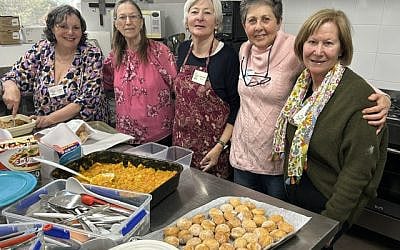
Temple David is more than a synagogue; it is also a community meeting place offering a variety of social activities and events. These include a weekly Mahjong Club and Israeli Dancing, both welcoming beginners, as well as the monthly Doven and Dine, which combines Kabbalat Shabbat, a shared vegetarian dinner and Israeli dancing. Young adults aged 18 to 36 can attend a monthly Shabbat dinner, while Family Service Shabbat offers a family-friendly dinner and Kabbalat Shabbat service. Other activities include the Temple David Choir, the annual Purim Spiel, and regular Netzer Australia youth activities.
The congregation also hosts a Book Club, which meets to discuss four books each year with Jewish themes or connections, and the monthly Shmooz Club, which provides senior members with lunch and social activities. Together, these groups and events provide opportunities for members of different ages and interests to socialise, participate in Jewish life and build connections within the wider community.

Mitzvah Day is based on the belief that everyone can make a positive difference by taking action together. On this annual day of community service, Jewish communities, alongside people from other communities, participate in activities designed to help others and contribute to making the world a better place. On Mitzvah Day, 2019, Temple David donated more than 200 soft toys to children around the world, which were distributed through Wheelchairs for Kids alongside wheelchairs.
Function Centre at Temple David
Functions on Clifton is a versatile venue for social, business and private events, accommodating up to 250 standing guests or 160 seated. Facilities include a commercial kitchen, bar, tables, dance floor, city-facing balcony, Wi-Fi and digital technology, lectern and wireless microphone, accessible lift access, and ample parking.
Historical Backgrounds
Jews first arrived in Australia with the First Fleet in 1788, when England transported convicts to establish a penal colony at Botany Bay and Port Jackson, modern-day Sydney. Among these early arrivals were an estimated eight to fourteen Jewish convicts, including figures such as Esther Abrahams and Ikey Solomon.
A second wave of Jewish convicts arrived in 1790, and by the early decades of British settlement, around 500 Jews had reached Australia. From the 1820s onward, the arrival of free Jewish settlers marked a turning point, leading to the growth of Jewish communities across Tasmania, Victoria, and the Port Phillip Bay region, including what would later become Melbourne.
Jews first arrived in Perth in 1829, shortly after the establishment of the Swan River Colony. Among the earliest settlers was Lionel Samson, who arrived that year. Although the Jewish population remained small for several decades, an organized community began to develop in the late 19th century.
Then it 1887, the first organized Jewish community in Western Australia was established in Fremantle, followed by the founding of the Perth Hebrew Congregation in 1892 during the gold rush. The Brisbane Street Synagogue opened in 1897, providing a permanent centre for Perth’s growing Jewish community.
From 1897 to 1939, Rabbi David Isaac Freedman served as a prominent leader of the Perth Hebrew Congregation and an important spokesman for Western Australian Jewry. During the early 20th century, the community grew through immigration from Eastern Europe, including people escaping poverty and persecution. Following the Second World War, Perth’s Jewish population expanded further with the arrival of Holocaust survivors and European refugees.
Which brings us to 1951.
In 1951, the Australia, New Zealand and United States Security Treaty (ANZUS Treaty) was signed on 1 September, establishing a framework for mutual defense and security in the Pacific region. In Perth, the year was marked by community events and local milestones, including the National Flower Day festival. At the same time, Perth’s Jewish community was experiencing a period of demographic decline and assimilation following the Second World War, before later waves of immigration contributed to its growth and revitalization.
It was in this year, 1951, that Dr. Ronald Taft, an active member of Temple Beth Israel in Melbourne, joined the Psychology Department of the University of Western Australia. Dr. Taft recognized that support for Progressive Judaism in Western Australia would come from newer members of the community, particularly Central European Jews who had fled the Nazi regime between 1933 and 1938 and settled in Western Australia.
In 1952, the Liberal Jewish Group was established following meetings to create a Progressive Jewish community in Perth. The inaugural Erev Shabbat service was held on 18 July 1952, attracting 100 worshippers, while a service led by Rabbi Dr Herman Sanger in August drew 300. As attendance grew, services moved to Manchester Unity Hall in 1953.
On 20 June 1954, the congregation purchased 34 Clifton Crescent, Mount Lawley, converting it into a synagogue, religious school and social centre. It was consecrated as Temple David on 27 October 1954 by Rabbi Dr Herman Sanger, although the rapidly growing congregation soon required larger venues for High Holy Day services.
The 1960s sanctuary is a notable example of late 20th-century ecclesiastical architecture, featuring a rendered projecting element with a menorah, folded-plate roof and stained-glass windows. The foundation stone was laid on 22 July 1962, and the new sanctuary and school were dedicated on 27 October 1963. In 1980, Temple David introduced the Israeli ulpan approach to Hebrew teaching, focusing on practical language skills and Israeli culture.
Today, Temple David Congregation continues to thrive as a warm and inclusive Progressive Jewish community in Perth. For generations, it has been a place where people come together to pray, learn, celebrate, socialize, mourn and support one another, making Temple David a true Jewish home in Western Australia. Through its regular and festival services, educational programs, community facilities and social activities, the congregation continues to celebrate contemporary Jewish life while preserving its shared religious and cultural heritage.
Contact Information:
Temple David Congregation Inc., 34 Clifton Crescent, Mount Lawley WA 6050
Phone: (08) 9271 1485
Email: admin@templedavid.org.au
Website: https://templedavid.org.au/