More Than Just a Kashrut Organization
For many people, the Orthodox Union is instantly recognizable for the small “OU” symbol on millions of kosher products worldwide. For more than a century, the organization has been synonymous with kosher certification, establishing itself as one of the most trusted and influential brands in Jewish life.
But while kashrut remains a cornerstone of its work, today’s Orthodox Union is far more than a kosher agency. Through programs that engage high school and college students, support individuals with disabilities, inspire adult learning, advocate on behalf of the Jewish community, strengthen synagogues, and develop the next generation of Jewish leaders, the OU has become one of the most significant communal organizations in North America and Israel.
Under the leadership of its professional and lay leaders, the OU touches the lives of tens of thousands of Jews every day through initiatives such as JLIC, NCSY, Yachad, Women’s Initiative/Torah Imecha Nach Yomi, OU Advocacy, and a wide range of synagogue and community programs. While almost everyone in the broader Jewish community is impacted by the work of an OU initiative, many remain unaware of the full scope and impact of these efforts.
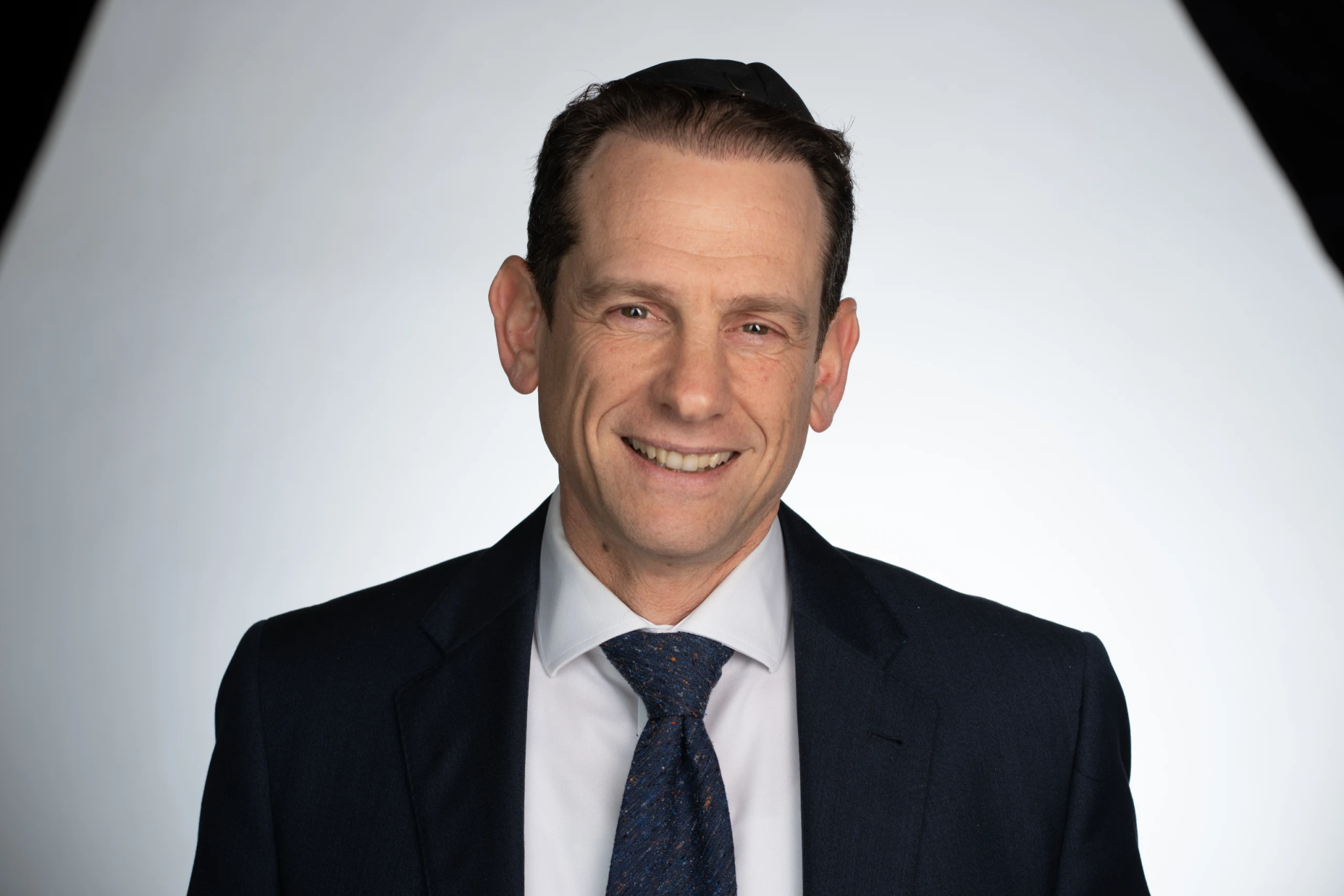
To help shed light on this important work, I sat down with Rabbi Dr. Josh Joseph, Executive Vice President and Chief Operating Officer of the Orthodox Union. In our conversation, he discusses how the OU balances its historic role in kashrut with its expanding mission, the challenges and opportunities facing the Orthodox community today, and the vision guiding the organization’s future as it seeks to strengthen Jewish life across generations
Some people still primarily associate the Orthodox Union with kashrut certification. How do you think about reshaping that public perception to better reflect the OU’s broader mission and portfolio of communal programs?
Our vision is for more Jews to grow closer to Hashem through Torah and mitzvot, and with love and joy. Finding ways to deepen Jewish engagement, strengthen communities, and build pathways for individual and communal growth is all a big part of what we do – and certainly kashrut is quite an important piece. But it also fits into the flywheel of our desire to develop communal solutions that meet the needs of the community in a way that scales. So we’re a communal organization that develops Jewish life through programs like NCSY, JLIC, Yachad, and others. We’re trying to get to the communal solutions that are most needed.
Programs like NCSY and JLIC are shaping Jewish identity at critical life stages. What metrics or outcomes do you use to evaluate their long-term success in strengthening Jewish commitment and leadership?
At NCSY, we measure a number called “reach,” which is program attendance, which isn’t just anybody who walks in the door, but a teen who attends three events. We focus on engagement or impact. And then there’s the notion of leveling up from less immersive programs to a Shabbaton, for example. Showing up to an event like a “latte and learning” versus going to a Shabbaton versus going to spend the summer in Israel, which about 3,000 teens do. Each one of those is a step along the way. We gather staff feedback about relational behavioral growth and survey our teens. With JLIC, it’s similar. We focus on how many individual relationships the JLIC couple is able to establish on their campus.
Yachad has become a leading model for inclusion in the Jewish world. How has Yachad influenced the OU’s broader philosophy about accessibility and communal responsibility?
It has influenced the organization immensely. Recently, I attended the Yachad New York dinner, where we had 500 people come. The place was on fire. I think I cried three times, not out of sadness, but out of joy. The numbers that we are now reaching is incredible … 1,500 unique participants in New York and 30,000 if you include all the families and teens who are impacted. It’s really remarkable.
There are so many unseen or not-yet-seen people in our community who we often ignore … the father with his young autistic son who needs somebody to talk to at kiddush … the widow whose 13-year-old son has nobody to sit with in shul on Shabbat or Yom Tov. Recently, we produced the first-ever large-print copy of Jewish Action to benefit sight-impaired readers. This all aligns with Yachad promoting a broader philosophy about inclusion and what our responsibility should be to the larger community. It’s really become part of our DNA across the OU – the notion of extending beyond your own specific daled amot.
OU Advocacy has become increasingly visible on issues affecting the Jewish community. How do you balance representing Orthodox concerns while also engaging in broader coalition-building?
Advocating for the needs of our community and coalition building is actually less at odds than you might expect. When we work with our partners of other faiths, we focus on areas of agreement and mutual need. If you look for disagreement, there are always issues to find disagreement on, but on issues like funding for security and ensuring the best possible education for all students, there is plenty to agree on. Once we have that baseline, there is open communication about areas where we may differ, and that’s healthy.
The OU has invested in a range of synagogue initiatives. What are the biggest challenges synagogues are facing today, and how is the OU helping them adapt and thrive?
There have certainly been a series of challenges for shuls, both structurally and spiritually. Our goal is to help them run effectively. And it goes back to my statement about the OU trying to get more Jews to grow closer to Hashem through Torah and mitzvot. A shul should not just be a place that people attend, but a platform for growth and connection to God and to each other. Are congregants really connecting spiritually with their leadership? And then there’s governance complexity, operational demands, and security issues. And sometimes, unfortunately, there can be tension between rabbinic and lay roles. Often there are limited financial resources for shuls. So we do a lot of hands-on support. We provide board training and problem-solving, and try to guide shul leaders when there’s an issue going on in a community. And then we provide networking. Recently, a dozen shul rabbanim came together from across the country for a day to discuss with each other what they’re working on, what they’re dealing with, and share best practices. We convene groups in-person and online for rabbis, for executive directors, for professionals, and for lay leaders. So that kind of networking is important for learning from each other.
Non-kashrut programs often rely on philanthropy rather than fee-based revenue. How does the OU prioritize funding across its many initiatives while ensuring sustainability and growth?
I joke with people that when they buy a product with an OU on it, they should get a tax deduction because we’re a nonprofit, so they are in essence feeding the community! More than a non-profit, though, we are also for-purpose. We’ve grown to be a quarter-billion-dollar organization that, with Hashem’s help, will continue to grow. And part of the way to do that is through philanthropy, where we can leverage the dollars that come in from kashrut with philanthropy to be able to grow the things we want to do. So how do we do that? Here’s a good example. A couple of years ago, we started a grant process in alignment with our strategic plan to support new innovative projects that came from within the organization. This year, we expanded it to create something called intrapreneurship grants, which are smaller grant amounts for projects run by individual employees. We received 36 grant proposals from people across the organization. It’s working.
If someone who only knew the OU for its kosher symbol were to revisit the organization five or ten years from now, what would you most want them to understand about its role in shaping the Jewish future?
The OU is playing the role, and should continue to play the role, of being a central platform for Jewish life and for connection, with each other and with God. One of the exciting projects we’re working on is a pipeline to support the current and future leaders of the Jewish community and the world. We try to be a presence at almost every stage and almost every age of an individual’s life. We are developing an integrated system of various programs working together through communication, through coordination, through collaboration, in this broader communal role of building community together. I talk a lot about the three Bs – belief, behavior, belonging – although recently I learned of a fourth B. The fourth one is becoming. And I guess the bracha that I want to end with is this: Where will we be in 5-10 years? God willing, we will still be learning, and we will still be creating. We’ll still be becoming, we’ll still be growing. We’ll still be developing and figuring out the next solutions that are needed to help grow and serve our community.