Morocco: A Throne That Stood by Its Jews
There is a quiet truth about Morocco that many people outside of it never fully grasp. Jewish life there is not a chapter added later, nor a passing presence shaped by circumstance. It is something far older, rooted in the same soil, carried through the same winds, and remembered in the same streets. Long before the modern world drew its borders, Jews were already part of the Moroccan story. But history took on a new weight in 1492, after the Alhambra Decree forced thousands of Sephardic Jews to leave everything behind. Many of them crossed the narrow waters into Morocco, not as strangers, but as people searching for continuity. They settled in places like Fez, Marrakech, Tetouan, Essaouira, and Rabat. Over time, those cities did not simply host Jewish communities. They were shaped by them. In Fez, narrow alleys carried the sounds of Hebrew prayers alongside the rhythm of daily Moroccan life. In Tetouan, people spoke of a “Little Jerusalem,” not as a metaphor, but as a recognition of something deeply real. What began as exile slowly became belonging.
With that arrival came change, though it did not feel like disruption. It felt more like layering. Jewish merchants became part of the arteries that connected Morocco to the wider world, linking it to Europe and to the vast networks of sub-Saharan trade. In Essaouira, Jewish traders stood at the center of economic life, trusted by the sultan to represent Moroccan interests beyond its borders. But what they brought was not only commerce. It was memory, music, language, and craft. The Andalusian melodies they carried blended into Moroccan traditions until it became impossible to separate one from the other. In homes and markets, in food and in speech, something new was formed without ever erasing what came before. That is perhaps what defined Morocco at its best. Difference did not disappear. It learned how to live side by side.
What made that coexistence endure was not chance. It was, in many ways, shaped by the relationship between the Jewish communities and the monarchy. For centuries, Moroccan sultans saw themselves not only as rulers, but as protectors of all those who lived under their authority. Jewish communities, in return, found ways to serve the state with loyalty and skill. Some became diplomats, others advisors, others still the quiet figures who moved between worlds and made communication possible. One such figure was Samuel Pallache, who represented Moroccan interests abroad at a time when diplomacy was as fragile as it was essential. These were not symbolic roles. They were real, consequential, and often risky. Yet they reflected something deeper. A relationship built not only on necessity, but on a shared understanding of place and responsibility.
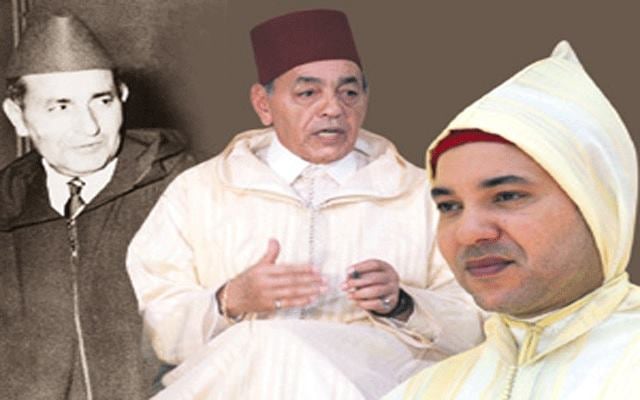
That understanding faced one of its greatest tests during the Second World War. When the Vichy regime extended its reach into Morocco, bringing with it laws that targeted Jews, the situation could have taken a far darker turn. Across Europe, we know what happened. But Morocco followed a different path. Mohammed V stood firm in his refusal to allow his Jewish subjects to be treated as anything less than Moroccan. There are stories, repeated across generations, of his quiet but unwavering stance. He would not separate his people. He would not allow lists, exclusions, or humiliation to define them. Whether spoken publicly or lived through action, the message was clear. They were under his protection. That moment left a mark, not only on history, but on memory. It became part of how Moroccan Jews understood their place in the country, and how Morocco understood itself. This sense of continuity did not end there. Under Hassan II, that connection remained alive. His relationship with Jewish communities extended beyond politics. It carried familiarity, trust, and recognition. The presence of figures like André Azoulay at the heart of royal advisory circles was not an exception. It was a reflection of a tradition that had never fully disappeared.
With Mohammed VI, something even more deliberate has taken shape. What once lived in memory and practice has been brought into the open, affirmed, and preserved with intention. The recognition of Jewish heritage in the 2011 constitution was not simply a political act. It was a statement about identity. Across the country, synagogues have been restored, cemeteries cared for, and neighborhoods that once held vibrant Jewish life have been given renewed attention. The reopening of the Slat Al Fassiyine Synagogue and the continued presence of the Museum of Moroccan Judaism are reminders that this history is not being allowed to fade. It is being protected. In schools, in public discourse, in cultural life, there is now a conscious effort to tell the full story of Morocco, including its Jewish dimension. For many Moroccan Jews living abroad, this has not gone unnoticed. Their connection to the king is often deeply personal, expressed in ways that go beyond politics or diplomacy. It is a relationship built on recognition, on memory, and on a sense of belonging that distance has not erased.
Looking ahead, the significance of this history becomes even more important. In a region often defined by division, Morocco carries within it a different narrative, one that has already existed, already been lived. The ties between Morocco and Israel today are not being built from nothing. They are rooted in centuries of shared experience. That gives them a depth that cannot be manufactured. Cultural exchange, economic cooperation, and human connection all have a foundation to stand on. Morocco, perhaps more than any other country in the region, has the ability to serve as a bridge, not because it claims to be one, but because it has been one for generations. The future of this relationship will depend on how that legacy is carried forward. But if the past offers any guidance, it is that coexistence, when it is real, does not disappear. It adapts. It survives. And sometimes, it finds its way back into the light.