
Mr. Prime Minister, What Were You Thinking?
Although Prime Minister Keir Starmer’s announcement of the UK’s likely recognition of the State of Palestine at the United Nations in September has been welcomed by most supporters of the campaign for recognition now, a close look at the statement shows inconsistencies that are at best an embarrassment and at worst fodder for those who consider recognition a threat rather than a promise. Listing conditions that Israel could meet to avert the move, Starmer needlessly harmed the recognition campaign by framing it as a punitive measure rather than one that will benefit both peoples.
When Ireland, Spain, and Norway announced their countries’ decision to recognize the State of Palestine in May 2024, they clearly stated that the move was intended to be a practical step meant to keep the hope of a two-state solution alive and help the Israelis and Palestinians achieve peace. Slovenian Foreign Minister Tanja Fajon echoed this sentiment a week later, saying that her country’s decision on recognition was meant to deliver “a message of hope and peace.”
Announcing France’s intention to recognize Palestine on July 24, President Emmanuel Macron also stressed that the decision is in the interests of both sides, noting that it “reaffirms France’s commitment to the implementation of the two-state solution with Israel and Palestine living side by side in peace and security” and that it is “the only path that can address the legitimate aspirations of both the Israelis and the Palestinians and establish a lasting peace in the Middle East.”
And then along comes Keir Starmer with his declaration that the UK will recognize Palestine unless Israel agrees to a ceasefire, allows the United Nations to supply aid to Gaza, vows not to annex any part of the West Bank, and commits to a long-term, sustainable peace based on the two-state solution. By asserting conditionality, Starmer undermined the legitimate argument that the Palestinians’ right to exercise self-determination is inalienable and is anchored in international law. He also contradicted the manifesto on which Labour ran in the last elections, which declares that Palestinian statehood is not a gift to be conferred by any neighbor. Rather foolishly, Starmer said that in September his government will assess whether the parties have met his terms and that no one will be able to veto its decision, when in essence he gave Israel the right of veto the moment he said that he will go ahead with recognition only if Israel fails to comply with the UK demands.
In a way, the UK position is reminiscent of the mistaken approach taken with the Abraham Accords, which rewarded Israel for agreeing not to add the crime of annexation to the crime of settlement. This time, the UK has essentially declared readiness to reward Israel for halting its war crimes by perpetuating the denial of the Palestinian right to self-determination.
Of course, there are zero chances of the Israeli Government meeting any of the conditions laid out by Starmer, so the end result is known in advance. Reacting to Starmer’s statement, Prime Minister Benjamin Netanyahu accused the British prime minister of rewarding terrorism and warned that “a jihadist state on Israel’s border TODAY will threaten Britain TOMORROW.” The Israeli Foreign Ministry accused Starmer of succumbing to “internal political pressures” and said that the policy change would harm efforts to achieve a ceasefire and secure the release of the hostages.
The outright rejection of Starmer’s conditions could not possibly have come as a surprise to him, begging the question: Mr. Prime Minister, what were you thinking? Perhaps his intention was to deflect the ire of President Trump by creating a situation in which he can claim that the Israeli Government left him no choice. The result is that instead of standing alongside Macron (and likely others such as Canadian PM Mark Carney) in September as one of the world leaders taking a stand to correct a historical wrong, Starmer will be seen as someone who ended up doing the right thing for the wrong reasons.
But the greatest harm done by Starmer’s approach is the impact on Israeli public opinion. By presenting recognition as a threat that can be avoided if Israel plays nice, he has played into the hands of Netanyahu and his right-wing cohorts, who contend that recognition of Palestinian statehood undermines Israeli sovereignty, endangers its security, and rewards Hamas for the atrocities it committed on October 7. These themes are supported by the Israeli media, which characterize the recognition campaign as a diplomatic tsunami and warn that the shift in the position of Israel’s allies on when to recognize Palestine shows that they are turning their backs on us. Israel’s ineffectual opposition leaders sound no different from the ruling coalition in their comments about rewarding terrorism, and Yair Golan, who leads the furthest left of the Zionist parties, painted recognition of Palestine as a failure brought about by Netanyahu.
In the absence of any significant challenges to the anti-recognition chorus emanating from all quarters, it has fallen to civil society in Israel to try to inform the public of the advantages of recognizing the State of Palestine. In the post-October 7 world, Israelis have little tolerance for legal and moral arguments, and so the thrust of the messaging is on the advantages to be gained by Israel, which will ultimately benefit from living within internationally recognized borders alongside a sovereign neighbor who has achieved independence and has something to lose.
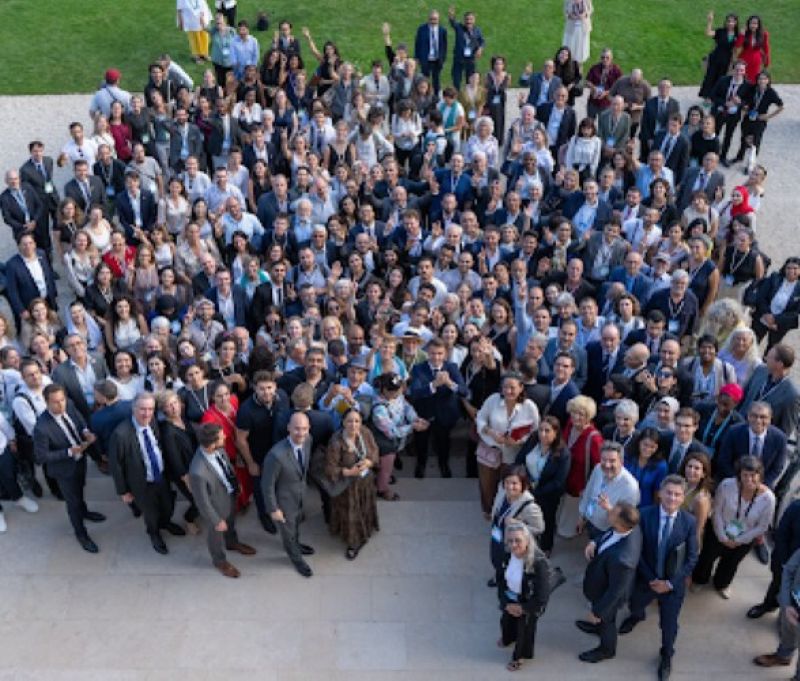
In June, more than 200 Israelis from dozens of civil society organizations met with Palestinian counterparts in Paris under the patronage of President Macron. Their meetings ended in a call for the creation of a comprehensive political and security framework for the Middle East to be based, inter alia, on Palestinian statehood and integration of Israel into the region. Having returned home, these committed activists continue to push back against the narrative that recognition of Palestine is a weapon being used by enemies of Israel, but they have their work cut out for them… and Prime Minister Starmer has not made it any easier.