
Writer covering Israel–Africa, Jewish affairs, and Israel worldwide
Mr. Security’ in the Rubble: Can Bibi Still Recover the Title?
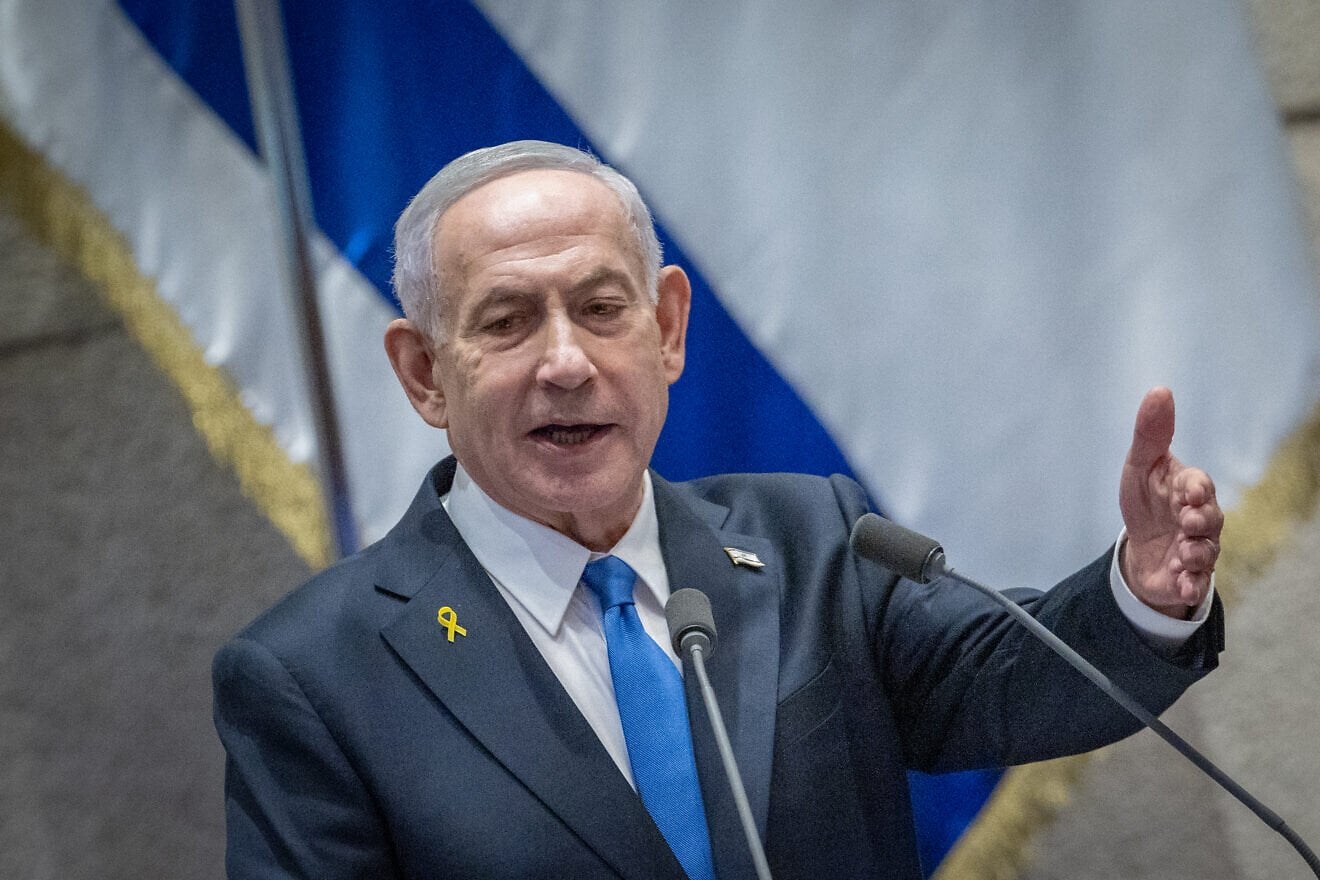
Israeli Prime Minister Benjamin Netanyahu speaks at the opening ceremony of the Knesset, the Israeli parliament in Jerusalem, Oct. 20, 2025. Photo by Chaim Goldberg/Flash90.
For years, Benjamin Netanyahu wore the nickname “Mr. Security” like a custom-tailored flak jacket bulletproof, media-tested, and ready for every election cycle. But since October 7, that armor looks less like Kevlar and more like political tinfoil.
The Rise of Bibi Through Security Rhetoric
Long before he was the country’s most polarizing leader, Benjamin Netanyahu was Israel’s self-styled guardian the man who, in his words, saw “the world as it is, not as we wish it to be.” His political ascent framed around one central thesis: that only he understood the existential dangers facing Israel, and only he had the will to confront them. His approach blended deterrence, diplomacy, and political drama. Netanyahu presented Israel as a fortress in a hostile region, while casting himself as its chief sentry the statesman who could speak “security” fluently in both Washington and Jerusalem. His critics called it fearmongering; his supporters called it realism. Either way, it worked.
Netanyahu crafted the image of a man who didn’t just manage crises but prevented them. He warned world leaders about Iran’s nuclear ambitions, clashing with American presidents over peace talks, and claimed that under his watch, “Israel became stronger, safer, and more respected.” To his base, that wasn’t arrogance; it was reassurance. To his rivals, it was marketing genius with a hint of paranoia. For decades, this narrative delivered: Israelis might complain about the economy, corruption scandals, or judicial reforms but they trusted Bibi to keep rockets at bay. The brand “Mr. Security” wasn’t a nickname. It was a national reflex.
The Day ‘Mr. Security’ Had Only His Own Security
Then came October 7 the day when Israel’s ironclad sense of safety collapsed faster than the intelligence reports could reach the Prime Minister’s desk. For many Israelis, it wasn’t just the border that was breached, but the mythology surrounding the man who promised it never would be. Polls indicated that majority of Israelis believed Netanyahu should resign over the October 7 failures. Streets filled with protesters calling for his removal, signaled not just political fatigue but a deep rupture in the social contract that tied Netanyahu’s survival to the nation’s sense of security.
Even within his own war cabinet, the aura of infallibility has faded. Opposition leader Benny Gantz publicly pressed Netanyahu to clarify a post-war plan for Gaza, while others in the coalition warned that clinging to political survival over strategic unity could undermine Israel’s recovery. The portrait of a once-unifying “protector” now questioned by those who once stood beside him. On that fateful morning, Israel’s defense systems failed, intelligence blindsided, and civilians were left unguarded. And the only security Netanyahu truly had was his personal one.
If Not Bibi, Then Who? The Opposition’s Security Hypothetical
It’s the uncomfortable counterfactual that refuses to go away: if Lapid, Gantz, or another opposition figure had been in Netanyahu’s chair, would October 7 have unfolded differently? The answer, if one believes Israel’s intelligence and defense circles, is grimly bipartisan. Investigations found systemic failures that went far beyond the Prime Minister’s Office intelligence blindness, underestimation of Hamas’s intent, and institutional complacency that had festered for years. Replacing Netanyahu might have changed the rhetoric, but not necessarily the readiness.
Still, his rivals argue leadership tone matters. Several reports showed how opposition figures accused Netanyahu of deflecting blame onto reservists and the IDF instead of accepting command accountability. Gantz’s camp repeatedly said that the rot began at the top that Netanyahu’s political focus on judicial reforms and coalition management distracted Israel’s security apparatus from its most basic mission. So, could another leader have stopped the attack? Probably not entirely. Could another leader have reacted with more transparency and national unity afterward? Almost certainly. And that difference between inevitable tragedy and preventable mistrust may define how history judges October 7’s politics as much as the day itself.
The Future of ‘Mr. Security’
Whether Israelis still buy into the “Mr. Security” brand depends on how they weigh memory against momentum. October 7 shattered the illusion of invincibility, but not necessarily the idea that Netanyahu alone can manage Israel’s perilous neighborhood. For all the criticism, even his harshest opponents can’t deny that he has, in many ways, delivered on his long-term security vision. Netanyahu has impressively followed through on his aim to remake the face of the Middle East. He’s degraded Hamas and Hezbollah two of the vilest terror regimes on the planet and made the Iranian theocracy look both pathetic and decrepit. Under his watch, Israel has demonstrated vast military and intelligence supremacy over its enemies, a message not lost on regional actors or global powers.
Yet, for all that strength, “Mr. Security” now fights a different kind of battle one for public trust. The question is no longer whether Bibi can keep Israel safe, but whether Israelis still feel safe with Bibi at the helm. And in politics, perception has always been Netanyahu’s sharpest weapon and his greatest vulnerability.
If politics were a battlefield, Bibi would still be the last man standing even if half his soldiers are now shouting at him from the rear. After all, in Israel’s stormy democracy, it’s hard to retire the “Mr. Security” title when no one else seems eager to pick up the helmet. Maybe, in the end, Bibi’s greatest security achievement is that he’s made himself indispensable at least until someone else learns how to look tough in front of a PowerPoint.
Related Topics