Mrs. N. and Rabbi Coca-Cola
“Instead, I will sit and watch Christ rise and fall with heavy breaths. I will wait for the time when they stop, and we will be free.”
ABBY Q. HOROWITZ
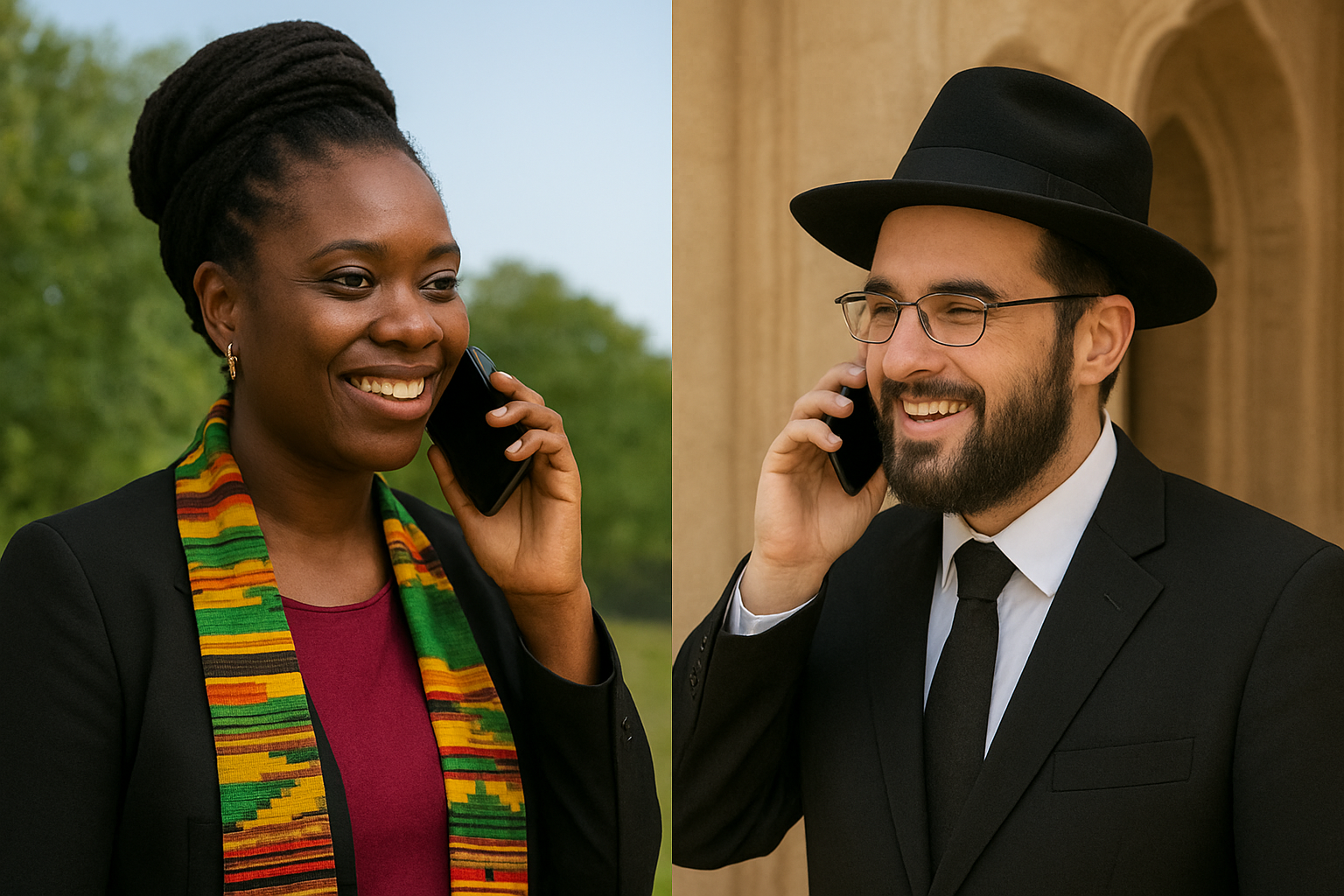
Laurie stepped into the Waldorf Astoria lobby. She pulled her army jacket tighter, adjusted her glasses, and moved past the front desk toward the elevators.
“Mrs. Nicole, we have a message for you,” Tony called from behind the counter.
Laurie froze. Her fists tightened inside her pockets before she turned, slowly. Approaching the desk, she scanned his name tag.
“Listen, Tony. My name is Laurie N. McIntosh. The middle name stays buried. Do you understand?”
Tony dropped his Colgate smile and stood at attention as if listening to the national anthem:
“Yes, ma’am. Here’s the message.”
Laurie opened the letter on her way to the elevator: “Dear Nicole, I hope you enjoy the Waldorf. We’re counting on you at the conference tomorrow at ten.”
When I walked out onto the streets of Mumbai that monsoon night, the rain was falling in fits and starts, and all I could think about was getting home to help Barbra, my wife, feed our five children. I let the rain soak my white clothes, for in this stifling climate everything dries in an instant. Let’s not judge the past as fixed and the future as unfolding. In my steps was the weariness of someone fighting against time.
When I arrived here, my mission was to bring as many Bnei Menashe back to Jewish orthodoxy as possible. But here, amidst the most abject poverty, I found my people fighting against much more than idolatry; they were fighting against their greatest enemy: hunger. The Bnei Menashe are Jews who have lived in India for centuries. They barely know the Torah, yet they maintain many Jewish traditions from the oral law.
A child opens the freezer on the side of the road and shouts in a hoarse, age-old voice, “Coke!” The air is stuffy, and Barbra had asked me to buy something for the kids. With my salary, I can only afford the Cokes the little boy from the freezer offers me across the street.
“How much is a can?”
“Twenty rupees,” the boy replies quickly.
“I want six cans.”
The boy hands me the cans, and I give him one hundred rupees. His pearly green eyes glance at my colorful kippah.
“Okay, Rabbi, shalom.”
“Shalom, young man…”
Laurie closed the door, coughed the letter into the trash, and, before even taking off her coat, strolled over to the fruit basket in the center of the suite. She grabbed the card that read, “Welcome, Dr. Nicole!” and tore it to pieces.
“It’s Laurie, fuck you! Laurie McIntosh!”
I grabbed the cans and went on my way. We are having chicken and rice for dinner tonight. Barbra must be nervous since I have not gotten home yet, but after a day like today, this rain feels welcome. It’s a passing shower that leaves no trace—just like my work. It will vanish quickly with time. The law of Moses cannot thrive on empty stomachs, and there’s little I can do about that. That’s not what I was taught in the Yeshiva in Israel. These are words against the weather, and the rain against my body.
Mopeds buzz down the streets, and a sweet smell lingers in the humid air. I clutch the cans tighter, quicken my pace, and cross the street. The rain blinds me—I can barely see what’s ahead. I stumble, nearly fall, and glance back.
On the table, a small sign read, “Jamaica: Doctor Nicole.”
Laurie stood before four hundred people, her smile fixed and dead-fish eyes. But when they introduced her by name, she decided to open with a true icebreaker.
“I’d like to clear up a few misunderstandings. First of all, I’m not Jamaican—though I’m immensely proud of my parents and my Jamaican passport. The truth is, I’m Canadian, and I’ve always lived in Canada. And another thing—my name isn’t Nicole, it’s Laurie…” Smiles ripple through the room “…which is funny, because ever since I arrived in New York, everyone calls me Nicole.”
In front of lies a boy, just over five, the same age as my Yosef. His skin is scarsely distinguishable from bone. He cannot stand, and as I slowly bend down to look closer, I realize it’s too late to call an ambulance.
The rain does not touch his body; he is so thin he seems smaller than the space between the endlessly falling drops. This is not the first boy I have seen collapsed on the ground. His small chest rises and falls, lifting a golden crucifix that reminds a salvation that never came.
I sit beside him. I see Christ descend and Christ return in the final throes of his darkest night. But the boy does not look at me. He stares at my cans, hoping to find something more than rainwater in them.
The conference director was overflowing with praise in the Waldorf lobby, and Laurie answered with a soft smile. Then she yawned.
“I see you need some rest, Doctor,” the director said, smiling back. They both stepped aside and said their goodbyes.
Laurie walked toward the elevators, passing the reception desk once more.
“Mrs. N!” Tony called out.
Laurie turned sharply.
“You’ve got a phone call. There’s a message. Do you want me to forward it to your room?” Tony held out the receiver.
Laurie sighed. “Never mind, Tony. I’ll take it here.”
She picked up the phone.
“Nicole, this is your mother. It’s wonderful weather in Kingston. You must come! What you miss is your country! Your grandmother baked her famous banana cookies. See if you’ll eat some! Bye.”
Laurie hung up and gave Tony a thin smile. “Thank you so much.”
Tony smiled back. “You’re welcome, Mrs. N.”
I open two cans and sit cross-legged beside him. We don not share a language, and his eyes, half-open, are slipping further into unconsciousness as the minutes pass. His mouth hangs open. I lift a can to his lips, and with effort, he swallows. He closes his eyes and smiles.
I place two fingers against his neck. There is no pulse.
I drink some Coke myself, recite the Kaddish, close his eyes, and gather the remaining cans. Then I continue on my way.
Of course, I want to say, “Let the past not be judged as taken, and the future as becoming.” But I don’t. The truth is, when I get home, I am going to sit down and have a Coke with Barbra.