Munich Security Conference 2026: Alliance, Strength, and Renewal
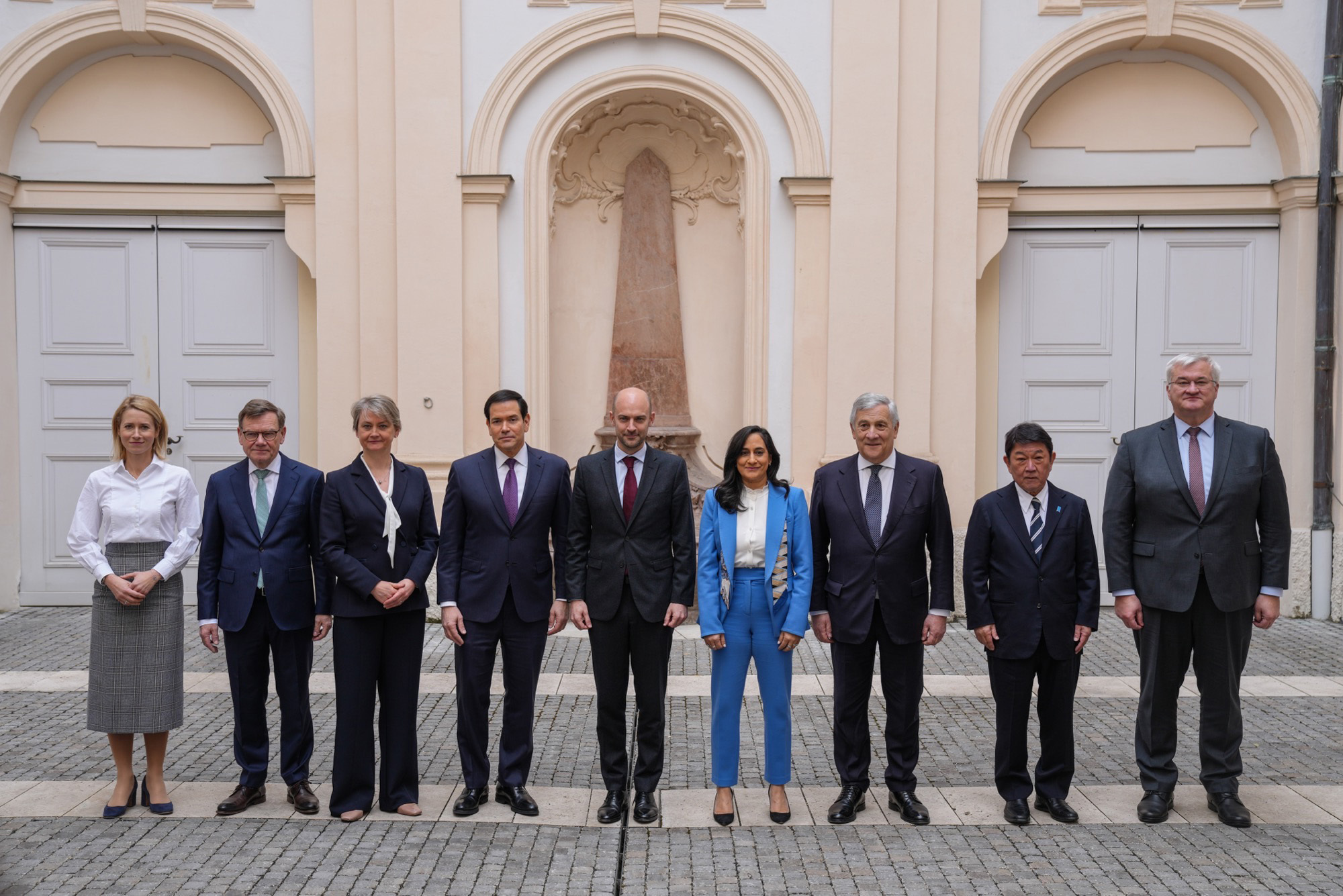
The 62nd Munich Security Conference just wrapped up its second day, and tensions around the globe are palpable—from the ongoing strife in Ukraine to the shifting power plays in the Indo-Pacific. Taking place from February 13 to 15 at the historic Hotel Bayerischer Hof and the modern Rosewood Munich, the event attracted nearly 50 heads of state and government, with a notable European presence led by German Chancellor Friedrich Merz. This year’s gathering, overshadowed by the Munich Security Report titled “Under Destruction,” really drove home a message of unity, resilience, and renewal. It felt like the world leaders were collectively saying, “We’re in a tough spot, but let’s figure out how to rebuild better.”
Security in Europe & the #IndoPacific are closely connected. At #MSC2026, @AussenMinDE and @Sec_Lazaro discussed how ????????&???????? can promote stability, prosperity, & rules-based cooperation across both regions. Strong regional partnerships like @ASEAN, chaired by ???????? this year, are key. pic.twitter.com/KapTfl8u9H
— GermanForeignOffice (@GermanyDiplo) February 14, 2026
At the heart of this narrative was U.S. Secretary of State Marco Rubio’s speech, which struck a chord with many attendees. Rubio positioned America not as a distant overseer but as the “child of Europe,” emphasizing deep cultural and historical ties that bind the transatlantic alliance.
???? BREAKING: The White House just said Marco Rubio's blockbuster speech in Munich is getting MASSIVE PRAISE worldwide, posting all 22 minutes of it
Rubio dropped some absolutely incredible quotes in front of Europe.
KEEP DEFENDING THE WEST, MARCO! ????????pic.twitter.com/pMySBduOLo
— Eric Daugherty (@EricLDaugh) February 14, 2026
His message — alliance, strength, and renewal — was less about nostalgia and more about recalibration. He reminded his audience that the transatlantic partnership was born in crisis, not convenience. The Cold War was not won by accident; it was won by cohesion, industrial capacity, military readiness, and a shared belief in the durability of Western civilization.
WATCH: Secretary Rubio Delivers Remarks to the Munich Security Conference in Munich, Germany. https://t.co/MSnxmlRf2w
— Department of State (@StateDept) February 14, 2026
Rubio’s argument was pretty straightforward: after the Cold War, the West mistook victory for lasting success. Economic globalization lost its connection to strategic caution. Supply chains began to settle in precarious locations. Defense spending became uneven. Borders shifted from being policy priorities to politically charged issues. The implication was clear: vulnerability emerged — not a decline, but a state of exposure.
???????????????? Rubio gets a standing ovation after his speech at Munich Security Conference.
????️Rubio: We care deeply about your future and ours. And if at times we disagree, our disagreements come from a profound sense of concern for Europe, to which we are connected—not just… pic.twitter.com/kr5bDfamEz
— MAKS 25 ???????????? (@Maks_NAFO_FELLA) February 14, 2026
However, the mood in Munich wasn’t one of alarm. It was more about making corrections. Rubio pointed out that real strength starts at home: with secure borders, strong industries, technological leadership, and equitable burden-sharing among allies. But he was clear that strength doesn’t equate to isolation. America isn’t trying to pull away from Europe; it’s looking for a more balanced and confident partnership.
On Ukraine, Rubio projected persistence without illusion. Negotiations are difficult, trust is limited, and outcomes remain uncertain. Still, diplomacy continues alongside sustained pressure. The goal is not indefinite confrontation, but a settlement that can endure. On China, his tone was measured: rivalry is structural, communication is essential, and global stability demands responsible management of competition.
If Rubio’s speech was about strengthening Western unity, another crucial aspect of Munich was how non-Western partners are positioning themselves in this changing environment.
Do yourself a favor and listen to Marco Rubio’s speech at the Munich Security Conference. It’s one of the most consequential speeches we’ve heard in a long time. If anyone still needed proof that Rubio can operate like a global statesman, that was it. This is the U.S. I want to… pic.twitter.com/YFRMRVgxk8
— Francisco Poleo (@FranciscoPoleoR) February 15, 2026
At the historic Hotel Bayerischer Hof, where nearly 50 heads of state and government convened, Pakistan’s presence carried quiet but deliberate significance. Field Marshal Syed Asim Munir engaged in a series of structured discussions that reflected a broader diplomatic strategy: remain connected, remain relevant, remain pragmatic.
His meeting with Rubio was particularly noteworthy. Pakistan–US relations have experienced cycles of strain and recalibration, yet counterterrorism cooperation and regional stability remain areas of convergence. In a region shaped by Afghanistan’s uncertain trajectory, cross-border militancy, and Middle Eastern volatility, sustained dialogue between Islamabad and Washington is not symbolic — it is strategic necessity.
#ISPR
Field Marshal Syed Asim Munir, NI (M), HJ, #COAS & CDF and Lt. General Muhammad Asim Malik, #Pakistan’s National Security Advisor (NSA) & Director General Inter Services Intelligence (DG ISI) met US Secretary of State Marco Rubio on sidelines of #MSC2026 in #Munich, Germany… https://t.co/A1BwzQfDSz pic.twitter.com/cmuUHYpk2j— Pakistan Armed Forces News ???????? (@PakistanFauj) February 15, 2026
Engagement with Germany reinforced that message. Discussions with Interior Minister Alexander Dobrindt, foreign and security policy adviser Günter Sautter, and General Carsten Breuer signaled Pakistan’s intent to deepen ties with Europe’s most influential power. Germany plays a central role in shaping European defense thinking. For Pakistan, dialogue with Berlin situates it within broader multilateral security frameworks rather than at the periphery.
#ISPR
Rawalpindi, 15 February 2026Field Marshal Syed Asim Munir, NI (M), HJ, COAS & CDF of #Pakistan visited #Germany from 12 to 14 February to attend meetings on the sidelines of 62nd Munich Security Conference #MSC2026#COAS & CDF interacted with a number of dignitaries. He… pic.twitter.com/YwpOnljSV4
— Pakistan Armed Forces News ???????? (@PakistanFauj) February 15, 2026
The outreach has really broadened. Conversations with Admiral Renato Rodrigues de Aguiar Freire from Brazil and General Rodolph Haykal highlighted a new multipolar reality: security partnerships today are more diverse than ever. Our strategic resilience increasingly relies on keeping various cooperation channels open across different regions.
It’s evident that the global order is undergoing a transformation. Institutions are being closely examined. The competition among major powers is intensifying. Supply chains, energy security, and artificial intelligence have all become vital strategic assets. In this context, stepping back can be risky. Being engaged signals confidence.
Rubio’s speech called for a renewed alliance grounded in strength and clarity. Pakistan’s participation reflected an important principle: engagement is a form of leverage. Being in the room where strategic decisions are made allows a country not just to listen, but to influence the outcomes.
The conference is a reminder that diplomacy remains the most durable instrument of power. Alliances are being reassessed, but they are not disappearing. Partnerships are evolving, not collapsing.
If there is a unifying message from Munich, it’s this: renewal is possible — for the transatlantic alliance, and for countries navigating a complex multipolar world. But renewal demands presence, dialogue, and strategic patience.
In that sense, both Rubio’s call for alliance strength and Pakistan’s measured engagement pointed in the same direction — toward a world where cooperation, however recalibrated, remains the foundation of collective security.