

Music: An Interview with pianist Petronel Malan
Preface
In 2013, I had the great pleasure of interviewing the South African concert pianist Petronel Malan for my book Women and Art. Unfortunately, the book did not become a bestseller or a prize-winning cultural product. I simply did not have the means to hire a layout editor, book advisor, or manage printing and marketing.
Yesterday, I looked up Petronel Malan to see what she has been doing and came across a beautiful concert she gave three years ago at an Episcopal church in Los Angeles. She performed works by Scarlatti, Liszt, and the African American composer Florence Price. I was particularly moved by her interpretation of Price’s pieces, such as Summer Moon, Clouds, and In Sentimental Mood. For music lovers, I thought this interview from 2013 might still be of interest.
Those three pieces begin about twelve minutes into the YouTube video.
Pianist Petronel Malan – Classical Sundays
Thus, here is a shorter version of the original interview that appeared in my book, which remained an e-book.
Petronal Malan: A Life Between Africa and America; A Life Between Safaris and Concert Halls
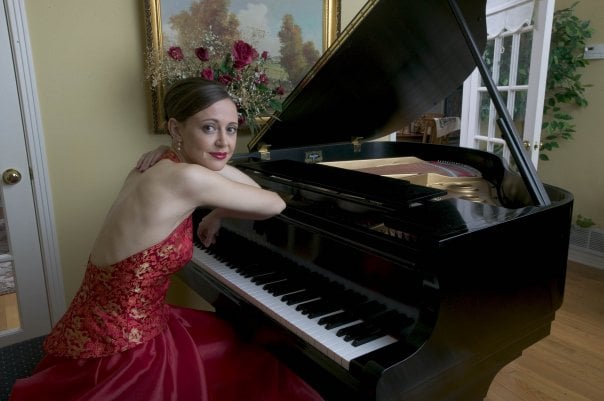
Petronel Malan is a South African concert pianist based in Texas. She has been nominated for three Grammy Awards, is a gold medalist in several international piano competitions, and received the Rapport/City Press Prestige Award in 2003.
I, first met Petronel Malan in October 2012 at filmmaker Stephen Mitchell’s weekly Wednesday evening gatherings at Caffe Primo on Sunset Boulevard in Los Angeles. The first thing I noticed about her was her elegant appearance. She wore a stunning vintage dress from the 1960s with an open back and an antique necklace made of a cameo set in jet and onyx. The second thing I noticed was her delicate hands with long fingers and carefully kept nails.
At that time, I did not know much about her background, so we simply spoke about music, from one music lover to another. Later, we exchanged emails about composers and pianos. When I mentioned a friend’s Steinway grand piano, Petronel Malan explained the difference in length and sound between a Model B made in Hamburg and a Model D made in New York. She also warned me about piano frauds and told me about a fake Blüthner that had been sold on eBay for seven thousand dollars. Then she invited me to visit the Kasimoff Blüthner Company in Los Angeles, whose client list includes opera and rock stars, the Los Angeles Philharmonic, and the Hollywood Bowl Orchestra.
Later, I had the idea to interview her. Our correspondence, conducted while Petronel Malan was staying with her family in South Africa before leaving on a safari and a visit to Cape Town, became the following conversation.
Simone Kussatz: There is a picture of you as a child sitting at a piano. At what age did you start to play?
Petronel Malan: I do not ever remember not playing. My mother started teaching me when I was about four and a half years old. I have three siblings, and she taught all of us a little piano. I was the only one who continued.
Simone Kussatz: Can you recall the first time you touched the keys?
Petronel Malan: Not really. We had a grand piano in the house, and my mother said she sometimes had to lock it to prevent me from “playing,” which was probably just making noise. Having a piano around was simply part of my life.
Simone Kussatz: Your mother was your first teacher. Was she a pianist herself?
Petronel Malan: My parents met at the University of Pretoria, where my father studied law and my mother completed a degree in voice. She played piano and sang opera arias as lullabies for us.
Simone Kussatz: Why do you think you chose the piano over other instruments?
Petronel Malan: It was in the house, and it seemed easy when I was a child, though everything seems easy then. I also played harp for a short while, but when my teacher found out, that was the end of the harp lessons.
Simone Kussatz: Your first formal teacher was the virtuoso Adolph Hallis. What influence did he have on you?
Petronel Malan: I was about seven when I began lessons with Dr. Hallis. He was already in his eighties, but still sharp and witty. I did not speak English, so my mother came to my lessons to translate. He did not usually teach children, but he agreed to work with me. I learned so much from him, and he made a lasting impact. He died when I was twelve.
Simone Kussatz: You gave your first concert at seven and played with the Johannesburg Symphony at ten. Did that affect your childhood?
Petronel Malan: I actually had a very normal childhood. I had sleepovers, stayed up late with my siblings, did athletics at school, and had top academic honors every year. My sister worked in film, and I often visited her on set, which was fun.
Simone Kussatz: How do you approach learning a new piece?
Petronel Malan: There is no single way. Sometimes I practice hands separately, sometimes together. Slow practice is essential. I focus on difficult sections for many days until they become easy. Once you can play the notes, it takes time for the music to become your own.
Simone Kussatz: Do you memorize all your pieces?
Petronel Malan: Yes, it is required for pianists to perform by heart. It creates a certain intimacy with the music when you no longer need the score.
Simone Kussatz: Which pianists inspire you most?
Petronel Malan: I love pianists from the mid-twentieth century, such as Benno Moiseiwitsch, Myra Hess, and Ignaz Friedman. Their playing was about sincerity, not just speed or display.
Simone Kussatz: You have a particular affection for German composers and for Franz Liszt. What draws you to them?
Petronel Malan: They gave pianists the richest repertoire imaginable. Liszt holds a special place in my heart. He was a brilliant musician and a charming man. I even have a framed Liszt signature. When I was thirteen, a South African author told me she could see from my palms that I had been Liszt’s mistress in a previous life. I loved the idea, but she later admitted she made it up for inspiration.
Simone Kussatz: Are you left-handed, and has that influenced your playing?
Petronel Malan: I am left-handed, but my right hand is stronger and larger. It has never really mattered for performance.
Simone Kussatz: How many hours a day do you practice?
Petronel Malan: Not eight, as some say. That would take twelve hours, including breaks. I practice in focused sessions, usually one in the morning and one later in the day, depending on travel and other responsibilities.
Simone Kussatz: Does physical appearance influence success for female pianists?
Petronel Malan: Perhaps it helps with CD covers, but in the end, you must produce results. With Photoshop, everyone looks great on a cover anyway.
Simone Kussatz: How do you practice when on tour?
Petronel Malan: I am usually given access to a piano, often through a host family. On concert days, I schedule time in the hall to get used to the instrument.
Simone Kussatz: What makes the Blüthner piano so special to you?
Petronel Malan: The sound and craftsmanship are extraordinary. I visited the factory in Leipzig and saw how much care goes into each piano. Knowing that I will always have a world-class instrument gives me peace of mind on stage.
Simone Kussatz: Each of your “Transfigured” albums focuses on a different composer. Who is next?
Petronel Malan: I am still deciding, but I love researching unrecorded repertoire. I spend hours in libraries. It makes me a bit of a nerd, but I enjoy it.
Simone Kussatz: What does your schedule look like in 2013?
Petronel Malan: I’m preparing for concerts and master classes in Venezuela, the United States, Canada, Europe, and a South Africa tour. I’m also working on the fifth CD in the Transfigured Series.
Simone Kussatz: What is the classical world like for women pianists today?
Petronel Malan: It is still somewhat male-dominated, but there have always been extraordinary women, from Clara Schumann to the many remarkable pianists performing now. Women today also have more freedom and can express themselves through fashion on stage, which adds another layer of artistry.
Simone Kussatz: Do you think your career would have developed the same way had you stayed in South Africa?
Petronel Malan: South Africa is beautiful, with wonderful people and culture, but classical music does not receive enough support. There is limited funding and little job security for musicians. I am grateful to those who keep the art form alive there.
Simone Kussatz: What do you enjoy doing in your free time?
Petronel Malan: I collect vintage gowns and often go searching for new pieces. I love cooking South African dishes like bobotie and milk tart for friends. I also read constantly, especially books about music and composers.
Simone Kussatz: If you knew the world would end tomorrow, how would you spend your last day?
Petronel Malan: I would rather not know, but if I did, I would spend it with my family in South Africa.
Simone Kussatz: Thank you so much again, Petronel Malan, for this conversation.
I hope that one day our paths will cross again. It was easier when I was still living in Los Angeles. I remember the day I went to see Petronel Malan at the Bing Theater at LACMA in a concert that was part of Sundays Live. I don’t know if it still exists.
It is hard to believe how much time has passed since then. Today, I dream of a concert in which she, Yo-Yo Ma, Alon Ohel, and many other passionate musicians from all corners of the world come together to celebrate peace and harmony. Many people are grieving these days. Music brings people together. Music is the language of the heart, and it reminds us of our shared humanity. Wherever life takes us, I will always carry the memory of that encounter and hope that her music continues to touch hearts across the world.