Distinguished Professor of Sociology Emeritus CUNY
My Cousin Musa
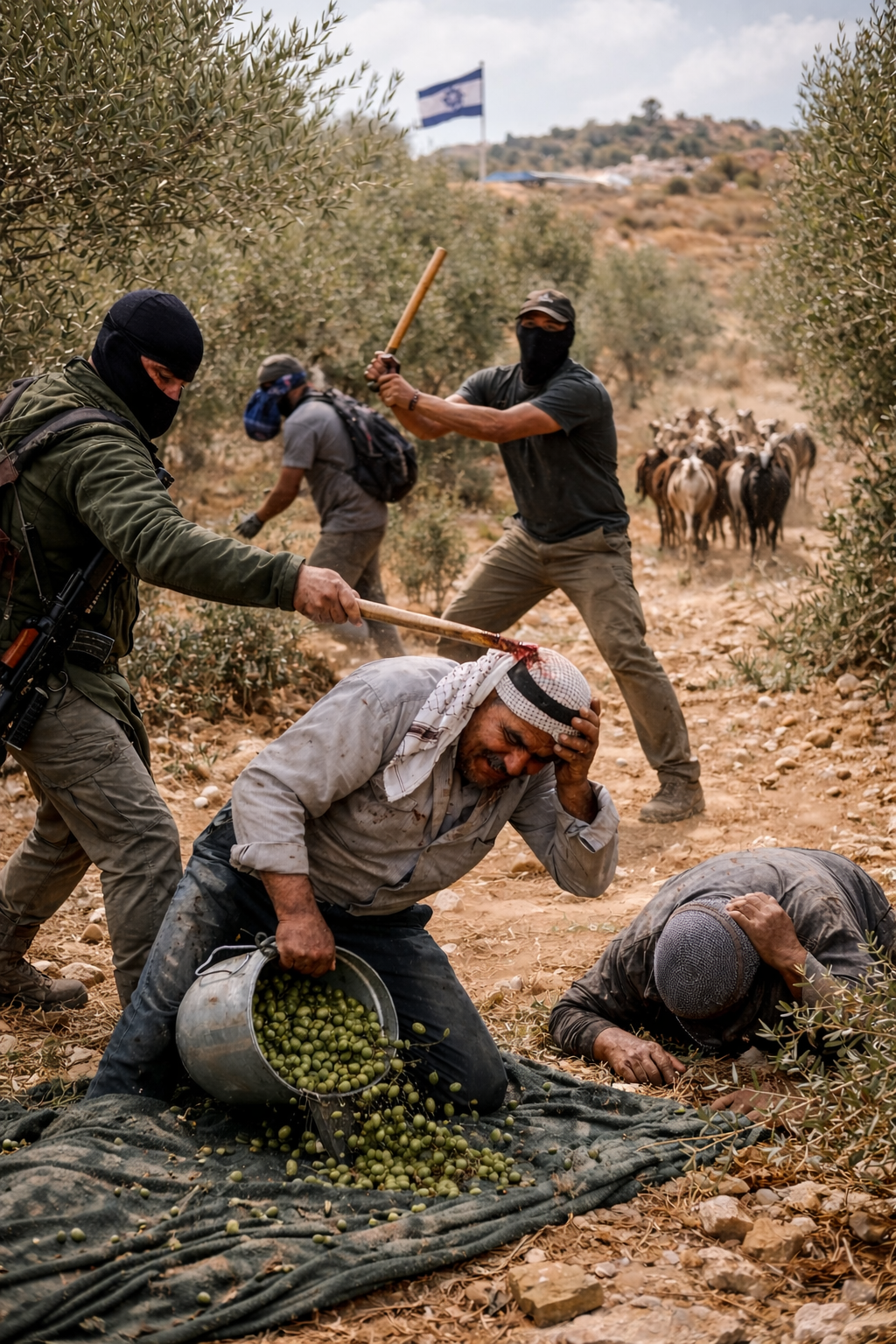
AI Generated
A cherished Palestinian friend whom I have known for many years, and whom I trust with the keys to my house and would trust with what is dearest to me, lives in the village of Masafer Yatta, near Hebron, in the West Bank. He is a member of the Makhamra, one of the largest clans in the southern Hebron Hills. These people, also called Mahamreh, are Moslems and Palestinians, however they marry only members of their own clan and regard themselves as descendants of a Jewish tribe of Arabia. I’ll call my friend “Musa,” though that’s not his real name.
In the better days, Musa would work in Israel and travel from his home to Jerusalem, a drive of about an hour and forty-five minutes, depending on traffic, to find work, often in carpentry, painting and the like. A friend of mine was a contractor and through her I met him. Musa would stay for some time in Jerusalem and vicinity while he had work, and then return to his village and family for Friday prayers and the weekend, or sometimes for longer during holiday periods. He spoke fluent Hebrew, and had friends on both sides of the green line. When our mutual friend the contractor passed away, Musa came to her Shivah, and was treated like a member of the family. When it came to skills that he could not manage himself, he always found a friend among the many Arabs in and around Jerusalem. Even then, however, he always made certain they were as reliable as him, and introduced them to me, and in this way my friendship with him spread to many of his workmen colleagues. Because he also served as a caretaker in a large building in the neighborhood where I lived, I saw him often, and not only when he did work for me.
As the situation between the Israeli government and Palestinians in the occupied territories deteriorated beginning in the 1980s and the First Intifada, a period of intense conflict and especially after 1991 when Israel introduced a mandatory permit system, marking the start of tighter controls, the large numbers of West Bank Arabs working within Israel proper quickly diminished. Following the Second Intifada between 2000 and 2005, the numbers were slashed even more. They were gradually replaced by foreign workers from Asia and the far east, and it became harder and harder for Musa to get to the Jerusalem area. But because he was getting older, he managed for a long time to get a permit, while those younger than him, were gradually winnowed down to a relative few who had permits to work across the green line. In the meantime, he had lost his job as a caretaker in the building near me when it was sold and moved some his possessions from there into our storage shed, while he found a place to stay among his Israeli Arab friends.
And then came October 7, 2023. Musa was home in his village, and for a long time, was unable to come back to work as the crossing points were shuttered. I called and stayed in touch with him, and he described how the situation started to deteriorate as many of the West Bank Jewish settlers terrorized the people in his village, which is in the so-called area C, subject to Israeli control. These actions by the settlers the Netanyahu right-wing coalition studiously ignored. After all Bezalel Smotrich, Minister in the Defense Ministry, has been responsible for overseeing the Settlements Administration and controls the Civil Administration’s policies regarding land registration, settlement expansion, and planning in Area C and espouses a policy of expansion of Jewish control in all the occupied territories. What Smotrich supports, Itamar Ben Gvir, as Minister of National Security and an avowed Kahanist and bigot, enforces, even when the courts prohibit it.
Finally, after the Trump brokered ceasefire and the return of hostages, Musa at last managed to receive permission to return to Jerusalem. He had come back during one of the earlier brief cessations of fighting but stayed only briefly. During the 12-day war with Iran, in June, 2025, he was once again locked at home. Then finally in January 2026 with the return of the last Hamas hostage, Musa came back. Most of his work among Jewish Israelis had dried up, and so he worked in the Arab neighborhoods of Jerusalem, where he was staying, while he waited for his old customers elsewhere in Jerusalem to reach out to him for work.
As Ramadan approached in February this year, Musa went home to his family. In the midst of this the Americans attacked Iran, and so too did the Israelis. Once again, Musa was locked in his village. While the fighting between Iran and The American-Israeli allies grew fiercer, the West Bank violence grew exponentially. Jewish settlers had for years attacked Musa’s village. They did so again burning homes, beating locals, and worse while soldiers, many of whom came from the settlements in area C, looked on. This month, a young Palestinian Mahamreh man, Amir Mohammad Hussein Shanaran, was killed and his brother, Khaled, was seriously injured by settler gunfire in the Al-Rakhim area of Masafer Yatta. The attack occurred after settlers released livestock on Palestinian land. As the two brothers shooed away the animals who were eating their crops, they were shot. Musa watched as his ‘brothers’ were attacked while soldiers looked on. He had tears in his eyes.
The Sunday after Eid al-Fitr, the holiday that marks the end of Ramadan, I sent Musa a voice message as I often did when I was unable to reach him by phone and asked how he was doing and how the holiday was, but unlike what he usually did, he did not reply. And then in the evening my wife called to tell me he had just knocked on our door.
The next day I met him on the street, as I came home from swimming at the YMCA. He had his usual smile as we embraced. He told me it had taken six and half hours to make the trip the day before from his village to Jerusalem. We talked about what life was like for him, and he said it was miserable, but he had to get away. He also needed to work to help support his large family. Then he shared the news of the attack on his ‘brothers.’ When I heard the details of his story, I felt ashamed as an Israeli-American and a Jew.
I am sure the people who committed this and other such vile acts consider themselves religious Jews. They recite the same prayers I do, probably in as regular a pattern as I do. But they are not doing God’s bidding as I understand it no matter what they think. Their behavior is a sacrilege, and they are criminals both in fact and morally. They read from the same Torah as I do, and likely consider themselves as committed to its commandments as I do – if not more so from the looks of how they dress with their huge yarmulkes and kerchief covered heads, though they appear to believe that settlement of the land by Jews is the most important of those commandments – something which I do not believe – and ignore the all important verse in Deuteronomy 10:19 where Torah commands: “Ve-ahavtem et hager ki gerim hayitem be-eretz mitzrayim” (“Love the stranger, for you were strangers in the land of Egypt”), which to me is essential to my identity as a Jew. Except that in this case, to me people like Musa are not truly strangers; they are my cousins and always will be, as will all the Palestinians.
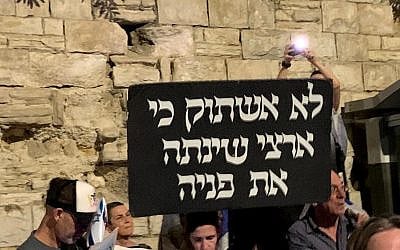
I asked Musa if he had shelter from the missiles raining down upon us all from Iran and Hezbollah when he was at home. The area is dotted with caves, at the very least. He said he had none.
“So, what do you when they are overhead?” I asked.
“I look to God and pray that one hits me and puts me out of my misery,” He replied, still smiling, and he hobbled off on his spent knees and promised we would see each other after Passover. In the meantime, I pray this government that rules our state of Israel will wake up to find moral courage and make peace, go to elections and then go away.
Related Topics
Related Posts