My injury from Lebanon 2006
I don’t think I ever wrote about my injury from Lebanon 2006. It was a long time ago… and in many ways it no longer feels relevant.
Thank God, I’m doing well. Alive, healthy, functioning well.
Sunday (17 Kislev) was dedicated to wounded soldiers, and two events over the past few weeks brought a lot of memories back to the surface. So I decided to write. And I decided to share.
I enlisted in the 401 Reconnaissance Unit in August 2004. We completed training in November 2005, and I went on to a squad commanders’ course. After the course, I commanded soldiers during advanced training, and just before the war broke out, I was scheduled to head to officers’ school.
I will never forget the moment we were told about the kidnapping of soldiers Goldwasser and Regev. It happened during a visit by Major General Yair Naveh, then head of Central Command. In the middle of his talk, someone handed him a note — and from that moment everything moved fast: straight to our gear and into the helicopters.
I was wounded on the last Saturday of the war during the battle in Wadi Saluki, on the outskirts of the village of Randouriyeh — a brutal battle in which 12 fighters were killed and dozens were wounded.
My injury was considered “light” — a blast injury. The missile that killed my friend and teammate, Itai Steinberger z”l, threw me into the air. I felt a sharp pain in my lower abdomen, but I wasn’t bleeding. I kept fighting alongside my friends, and only 24 hours later, we returned to Israel. Throughout that entire time, I was in agonizing pain. Forgive the graphic description, but it felt like I desperately needed to urinate — multiplied by 10 in intensity.
Only after we returned did I see a doctor, who referred me to a hospital. For weeks, I was passed from doctor to doctor, test to test. The pain was unbearable. I couldn’t sleep at night because of it.
Eventually, they concluded that I had a tear in the bladder muscle, the detrusor. And when it tears, it hurts. A lot. And it becomes very difficult to urinate. So at the age of 20, I found myself with a catheter. And let me tell you — it is not pleasant at all.
Some doctors recommended surgery; others suggested giving the muscle time to heal on its own. I was terrified of surgery and just wanted to return to my unit, so I refused the operation and said goodbye to the rehabilitation unit (RMA 2).
Finally, I went back to my unit. I was still in terrible pain, but I was happy to be back as a combat soldier.
The guys joked about how often I went to urinate, while I silently prayed for the pain to pass.
After I returned, one of the officers mentioned something about a medical committee. I was so afraid they’d lower my medical profile that I brushed it off and said everything was fine.
And so I lived with pain — for years.
Over the past two years, I once again found myself in combat, constantly aware of the pain and the fear of having to carry it under harsh conditions.
Beyond the physical pain, there are the thoughts that never fully leave — the fragility of life, and the dear friends who are no longer with us.
There was that night I woke up in panic, certain I had heard an anti-tank missile coming straight toward me. My entire body tightened. Then I woke up remembering I was in a small cabin in a tiny village in the Pennsylvania woods. The noise I heard was probably just a truck passing on the nearby highway. But I couldn’t fall back asleep — not because of the scare itself, but because of the fear: Here it is: it’s happening to me. The fear that moments like this will keep returning.
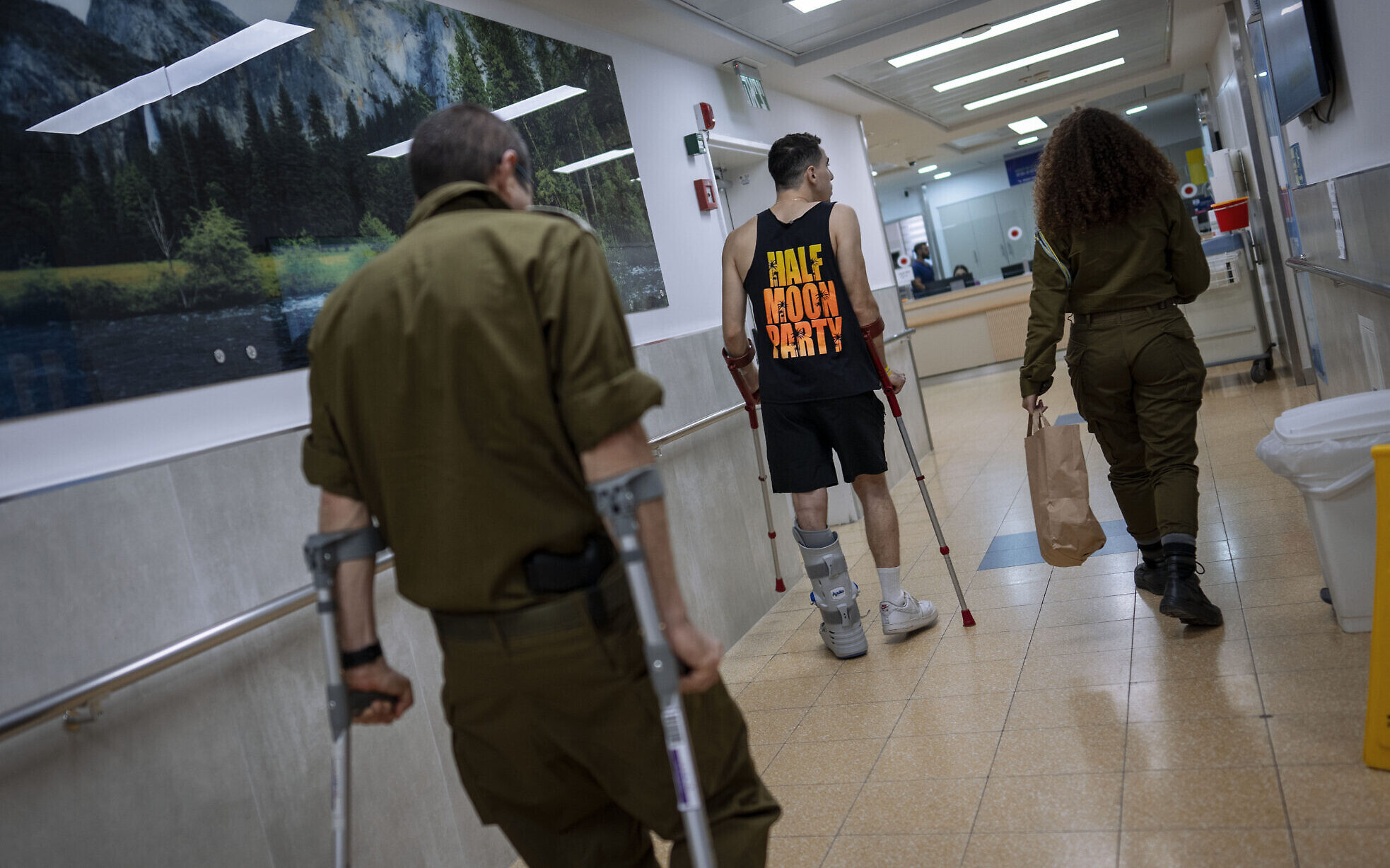
A few weeks ago, I spoke with a friend who was injured at the beginning of the current war. He told me how, immediately after his injury, various people and organizations arrived to support and help him. I was glad to hear how much the support system has progressed over the past 20 years — and also struck by the gap between his experience and mine. It stirred up memories I had pushed aside.
For a moment, I considered whether I should finally seek some professional help. But life is so full — and who really has the time to deal with this? So I go on as usual. Everything’s fine. Truly.
So why am I sharing this? Because there are thousands like me. Thousands of Israelis living with injuries, physical or emotional. Many of them will never talk about it, because it’s uncomfortable, because it feels unnecessary, because overall everything is “we’re fine.” Everything’s okay. Really.
And we need to remember that.
And hopefully, we can all be a little more patient. A little more understanding.