

My “Innocent” Childhood – A Luxury I Never Asked For
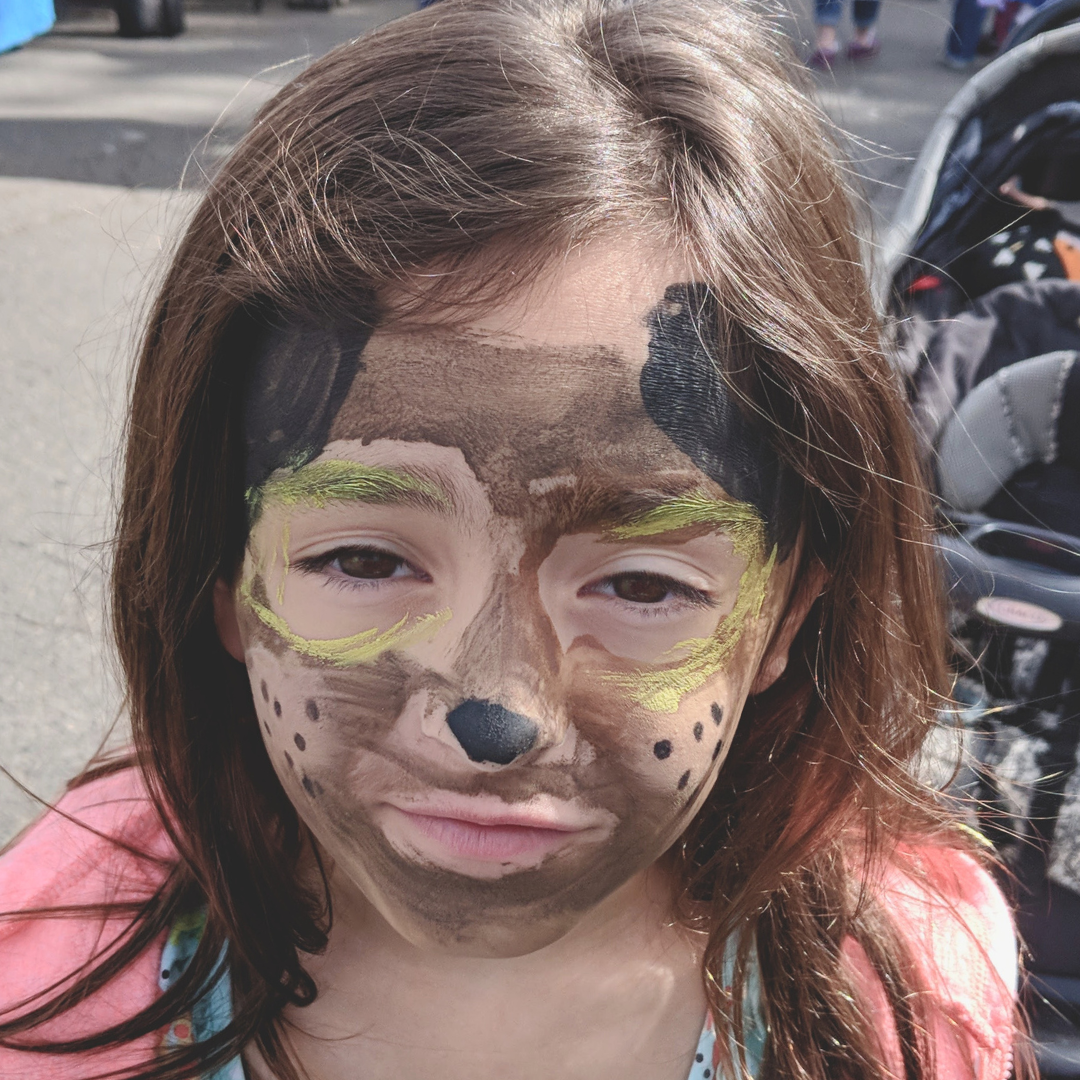
I was born in Santa Barbara, California, to an Orthodox Jewish mother and a father of both Ashkenazi and English descent. My mother’s parents, whom I call Saba and Safta, were very religious. My mother and her brother gravitated towards secular Judaism after growing up, but my family, although not sharing the same spiritual beliefs, identifies as Jewish. We would have Chanukkah together, and my grandmother would teach me to sing the prayers. She would give me golden coins, and I always ate them immediately.
In the town where I grew up, there weren’t many other Jews. At the time, most people in the area were friendly, and I even gave a class presentation about Chanukah. I didn’t know there was even such a thing as anti-Semitism. Everyone around me was tolerant, if not outright embracing of Jewish history and culture.
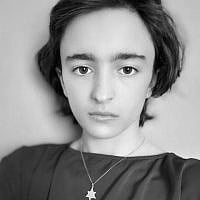
I vividly remember baking hamantaschen with a babysitter, playing dreidel with some family friends, and wearing a Star of David in public; my friends and teachers all said it was beautiful, and I had no reason to think that anyone would say otherwise.
My parents would always hide the truths from me. I never knew about the Holocaust, the wars with Hamas, the Intifadas, or anti-Semitism in the United States, until I was about 10. My class assigned a book set during the Holocaust, and my mother sat me down and told me the story. I was unable to understand what she was saying at first; why would someone want to wipe me, and everyone else like me, off the face of the earth? Why would someone show such cruelty? What makes me so different from everybody else so that I would be targeted by something like that? Over time, she told me more stories; a childhood friend, who had numbers inked into her arm, and whose family had been murdered in a concentration camp. I couldn’t comprehend why someone would have numbers tattooed onto their skin. That small detail was the only thing that I was even able to think about. The mass murder, the gas chambers, and many other indescribable horrors were just too much to comprehend. Even now, a decade later, the awful reality hasn’t fully sunk in.
In the next few years, I experienced another shock; the Holocaust wasn’t fully over. Jewish people were still being attacked for no reason except their identity. When I was finally allowed to go online, I learned of the wars in Israel; the brutality, the terrorism, the endless cycle of violence. As I gained more access to the news, I found myself horrified at what humans can do to the most vulnerable minorities.
In only a few years, I learned of so much horror and barbarism. I went from an innocent child unaware of the danger and hatred her people faced to a girl permanently scarred by stories of children being murdered just for belonging to the same faith as her. It was the first time in my life I felt scared; that fear hasn’t even worn off. In fact, it has only deepened.
I never knew any Holocaust survivors. My family was extraordinarily lucky to have escaped Poland before it was too late. I have only heard about the unbearable trauma from relatives who only know from others. In this way, I often consider it a luxury. Through a stroke of luck, I have not experienced what so many of my people have. But I often wonder if that is what I truly want.
Sometimes I imagine myself as a child growing up in Israel. I live in a close-knit community of Jews, maybe Tel Aviv, or perhaps a small Kibbutz. The Intifadas happened a few years before I was born, but the trauma is still fresh. My older friends all have family who suffered in the conflict. When I am a young toddler, Israel withdraws from Gaza. I am too young, of course, to understand what that means, but as I grow up my community holds its breath, hoping that this risky move will bring peace. Only, we realize we are wrong. In my adolescence, the conflict escalates. Kidnappings become regular, rocket attacks are part of daily life. Our Palestinian neighbors become the “enemy”, politicians want us to start settling our Biblical homeland of Judea and Samaria. I am a young woman, serving in the IDF, when Hamas attacks the peaceful communities around Gaza. My brigade is dispatched to fight back. Perhaps I am assigned to treat the wounded. Perhaps I shall fight on the front lines. Either way, the trauma would be unimaginable.
I can never fully imagine what that would be like. As an American Jew, I have never even visited Israel. I hope to, in the next few years, and it is my dream to someday move to the beautiful country. I have only heard about the Intifadas, the rocket attacks, and the unspeakable atrocities of Hamas from others; friends and family in Israel, brave activists recounting their harrowing stories, and the footage that is nearly impossible to watch.
So, if I could do it all again, which life would I choose? Would I keep my innocence, growing up in America, unaware of the horrors that no child should ever have to see? Or would I want to be raised in Israel, the sacred land which I have an unbreakable connection to? In Israel, I would serve in the IDF, defending my people from terrorism, but losing my friends to the horrors of conflict. In America, I would see my own classmates at university calling for the destruction of my homeland. In Israel, I would grow up with Mizrahi, Haredi, Sephardi, Ashkenazi, Yemenite, and Ethiopian friends, all of us sharing the ancient identity and connection to Hashem.
I truly don’t know which life I would pick. The one I am blessed to have has been more pleasant, and one I would wish for every child born onto this earth. But as a Jew, I feel an obligation to grow up alongside my brothers and sisters who do not have the same luxuries, and are forced to live with the burden of war and fear.
This is a question that I wrestle with every day, and I have never come to a definite conclusion. I don’t think I ever will; a concept this deep has no true answers, and nothing can provide me with the knowledge I yearn for. I now have to accept that nothing in this world is perfect, and the only thing I can do is fight for a better future for Jewish children of the current and next generations.
Whether Zionist or anti-Zionist, pro-settlements or anti-settlements, Orthodox or secular, Likud or Yesh Atid, traditional or progressive, we are all Jewish. This is a connection that cannot be broken, and must not be broken. This is a time when that bond is more important than ever. So many people want us wiped off the face of the earth. The only thing stronger than that hate is our love. Love for each other, love for Hashem, love for our children, or even love for our Arab friends and neighbors. I know Jews who have political views that I can never understand, who I disagree with on every concept imaginable; except our devotion to our culture and identity. We are a divided people; we may never agree on settlements, the Gaza war, politics, gay marriage, or maybe even anything. But the thing every single one of us has in common is that we are Jewish. For some of us it is faith. For some it is life. For some it is identity. For some it is history. For some it is family. For some it is tradition. For some it is ethnicity. For others, like me, it is a mix of all of those. But it ties every one of us together, and we can never let the hate destroy us. May we fight for peace, for unity, and for our identity; and may we do it together, as one people.