My Journey Through Prayer: What I Finally Realised
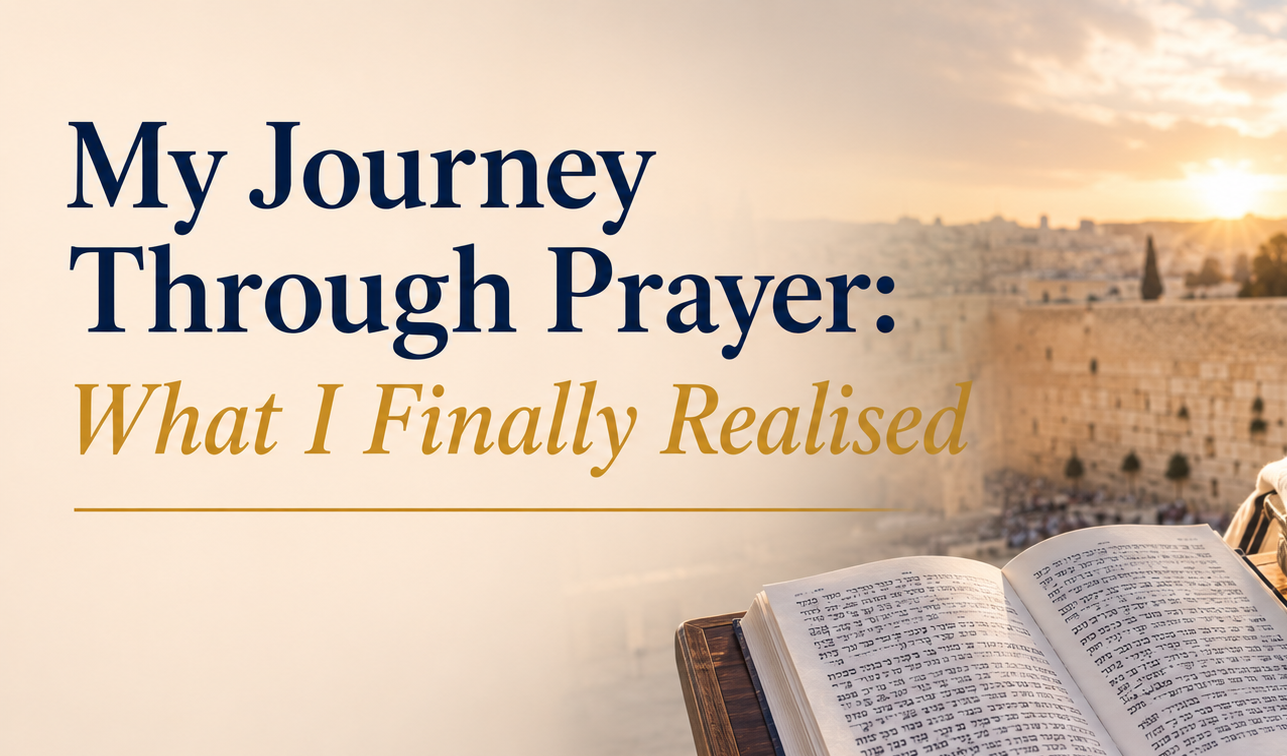
As Rosh Hashanah approaches, many of us will spend more time in synagogue than at any other point in the year. Some will leave inspired. Others will spend much of the service wondering when it will end. Some will even leave early. At one time or another, I have been all three.
Prayer has taken me to the highest highs. More often, if I am honest, it has left me struggling to concentrate, counting pages rather than moments of inspiration. Yet perhaps that should not surprise us. Daily prayer struggles against the age in which we live. We have become accustomed to instant messages, endless notifications, short videos and constant stimulation. We expect everything to be immediate, personalised and engaging. The machzor and siddur ask something very different of us. They ask us to slow down, to listen to words written centuries ago and to believe that they still have something new to teach us. For many of us, perhaps it has never been harder to pray with genuine concentration.
Rabbi Lord Jonathan Sacks expressed the idea that prayer changes the world because it changes us. When I first encountered those words, I admired them. It has taken me many years to understand them personally. My journey through prayer has taught me that the words of the siddur have remained remarkably constant throughout my lifetime. It has been a journey that has accompanied me from childhood to retirement. What has changed is the person praying them.
The first step on that journey came when I was about eleven years old. A Sunday school teacher changed my understanding of prayer with one simple observation. During Shema Koleinu, he explained, there is a moment when we can pause and speak to G-d in our own words. Until then I had assumed that prayer was entirely scripted. Suddenly I realised that Judaism leaves room for my own voice. I could bring my hopes, fears, frustrations and gratitude directly to G-d in my own language, without worrying whether someone else had written the perfect words first. That discovery changed everything. Prayer became an opportunity for a personal conversation rather than simply a recitation.
As the years passed, another appreciation slowly developed. For nearly 30 years I have had the privilege of leading parts of the Rosh Hashanah and Yom Kippur services. This year, G-d willing, I hope to do so again, albeit from my wheelchair, something that will be new both for me and for my community.
These are long prayers and many are ancient, yet among them lie some of the most haunting and moving prayers in our tradition. Unetaneh Tokef. Kol Nidrei. The congregation bowing together during Aleinu. The drama and emotion of the Avodah. Their melodies become part of us. Their words have been refined over centuries and have sustained generations of Jews through joy, tragedy, exile and return. The more I have studied them and the more often I have led them, the more I have come to appreciate their depth. They remind me that prayer is not only about finding my own words; it is also about discovering the wisdom contained in words that have carried the Jewish people for centuries.
However deeply I might pray in my own words, I could never express what these prayers express. They give voice to emotions that I simply could not articulate for myself. Without them, I would not know how to convey the awe, humility and hope that they awaken within me.
At first glance, these two experiences could hardly be more different. One is completely spontaneous, expressed in my own words. The other is the product of generations of Jewish scholarship, poetry and faith. Yet both seek exactly the same thing: an honest encounter with G-d.
That leaves the prayers that make up most of our spiritual lives: the ordinary weekday services. Perhaps our mistake is expecting every prayer to be life-changing. We assume that every service should leave us inspired and every page should speak directly to us. Yet perhaps that is asking too much. Sometimes it is enough if a single blessing, one sentence or even one phrase suddenly connects with where we are in our lives at that moment. The siddur does not have to speak to us all at once. It only has to speak to us today.
More recently, life itself has taught me another lesson. Living with Progressive Supranuclear Palsy (PSP) has given familiar prayers meanings I could never previously have imagined.
For decades I recited the blessing פוקח עיוורים (Pokeach Ivrim), “Who gives sight to the blind.” It was beautiful, but largely theoretical. I recited it without a thought. Today my eyesight is one of the greatest challenges of my illness. My eyes water constantly. Bright light overwhelms me. Sometimes my eyelids simply refuse to stay open. The blessing has not changed. I have. Words that I had recited for decades without much thought suddenly became intensely personal because my own circumstances had changed. The siddur was saying exactly what it had always said; I was finally hearing it differently.
The same has been true of words I recite three times each day in the Amidah: סוֹמֵךְ נוֹפְלִים, וְרוֹפֵא חוֹלִים, וּמַתִּיר אֲסוּרִים (Somech noflim, v’rofei cholim, u’matir asurim) – “Who supports the fallen, heals the sick and frees those who are bound.” From October 7, and throughout the long months in which hostages were held captive, I found it almost impossible to reach the words u’matir asurim without thinking of them. Once again, the prayer had not changed. Our reality had. Ancient words acquired a fresh and painful urgency because life had taught us to hear them differently.
Looking back, I realise that my journey through prayer has not been about discovering new prayers at all. It has been about discovering new meaning in familiar ones. As an eleven-year-old I discovered that the siddur made room for my own voice. As an adult I learnt to appreciate the majesty of the High Holy Day liturgy. Living with PSP has given blessings that I once recited almost automatically a depth I could never have imagined.
Rabbi Sacks was right all along. Prayer changes us. Not because the words themselves change, but because we do. As we grow older, experience joy and loss, celebrate new life, endure illness, witness suffering and carry hope, we return to the same prayers as different people. The siddur patiently waits for us to catch up with the wisdom it has always contained.
Perhaps that is one of the quiet miracles of Jewish prayer. We return to the same pages year after year believing that we are reading the siddur. In truth, the siddur has been patiently teaching us to read ourselves.