My mother’s legacy and the rage in my DNA
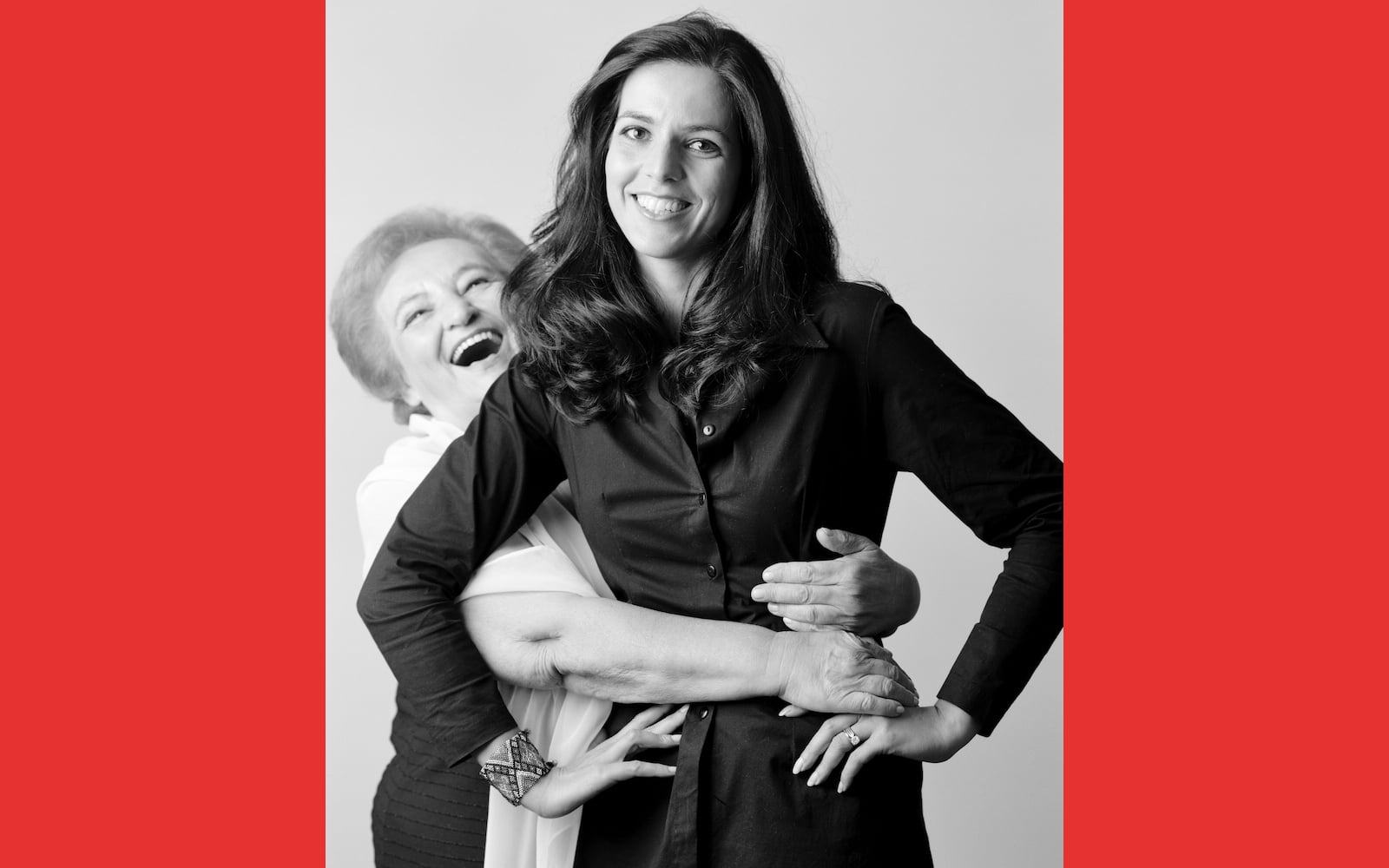
Whenever people asked me if I had inherited the trauma of my late mother’s history, I’d say, “No, but I inherited her joy.” The question was often posed to me by journalists because I had written a book about my mother Mira, a Holocaust survivor who endured four concentration camps, including Auschwitz, and a death march. Half a century after, when she gave her testimony to the Melbourne Holocaust Museum, she was asked whether there was anything she’d learned. “In the Holocaust, I learned about the goodness of people,” she replied swiftly. Outwardly, she was such a sunny, vibrant person that I did not feel traumatised, even though our family tree was bloodied with murder, its dead leaves scattered at the trunk. All four of my grandparents: slaughtered. Two aunts. Three uncles. Two first cousins, no older than toddlers, straight to the gas chambers. My great-grandmother. Yet I did not think I had the Shoah running through my DNA.
But then recently, in my hometown of Melbourne, the synagogue where my parents married got firebombed on a Sabbath, families praying inside. That same night, an Israeli restaurant was the scene of an angry protest, and all I could think about was how often I’d ordered their roasted cauliflower dish, which arrives at the table inside a paper bag with few utensils and fewer plates because customers need to get their hands dirty in the business of sharing.
By the time Monday rolled around, the traffic sign near my house was marked with a picture of Hitler. And just as the antisemitic attacks built up one after the other, so did my anger. My Instagram stories – in the past filled with pretty photos of the books I’m reading – became a crime scene with horrific headlines. Although I never knew it was there, I recognized the rage I felt, as if it had been patiently waiting for me in the wings, like muscle memory.
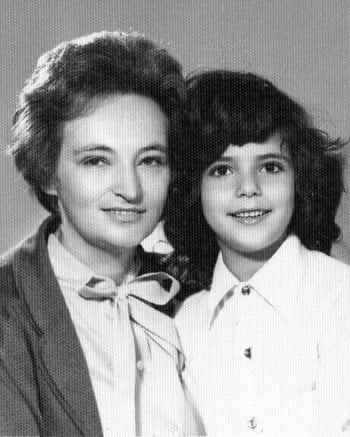 Do I have intergenerational trauma? I have something. I wonder if it’s like an underlying gene mutation, a genetic predisposition to disease that becomes activated under specific circumstances. It turns out that my mother did not pass down her specific brand of positivity to me, as if it was a family heirloom, a silver kiddush cup. It is true that Mira was the kind of mother who woke up singing, whose laugh was so hearty that it would come out as gasping, uncontrollable sputters, who weaved through the world with a sense of purpose and also happiness. But it was also true that so much of her family had been destroyed in acts of incomprehensible brutality. Her father Dolfie shot in front of her family home. Her mother Genya separated from her when they landed in the first camp, Plaszow, only to be sent to a pit of bodies where she would also meet her end. Is it any wonder that I feel something restless stirring deep inside of me?
Perhaps it has been there for some time. Recently, I took a friend on a tour of my childhood home, once a Victorian mansion and later subdivided into apartments. The edifice is slightly crumbling now, but she marvelled at the arched, stained glass window featuring a green-feathered pheasant, wings outstretched. She admired the Corinthian pillars and sweeping ceilings.
“Your imagination must have run wild here,” she said, “thinking about all the magical happenings in so many rooms.”
“No,” I shot back, “I was just glad that there were so many secret places to hide if the Nazis ever came out after us.”
Before that moment, I had never articulated that aloud, and so had never perceived that thought process as odd. Didn’t every child engineer make-believe spaces beneath their house that might keep them safe?
In my parents’ living room, a polyptych artwork, four drawings sketched and mounted together. They portrayed a woman who had lived through the Holocaust, even though in the last frame, part of her had disintegrated, crumbled little pieces from her body around her. “This is because she had lost her children,” my father, who had fought as a soldier in the war, explained. “And once that happened, you could never be whole again.”
Certainly, my mother’s past had left a kind of physical imprint on me. In the course of researching my book A Brilliant Life, I had combed over the stories of her life so finely that many of Mira’s memories appeared to me in 3-D. One day at my computer, I was typing the story of my 15-year-old mother hiding in a barn where the hay around her triggered an allergic response, swelling her eyes and throat. As my fingers hit the keyboard, I began to sneeze uncontrollably. It was as though I shared some kind of cellular connection with her – and, after all, wasn’t part of me a collection of cells in her body already, stored deep in her ovaries when she was suffering this?
Good people
Melbourne was a city where my parents, each from Slovakia, arrived at separately, choosing a point on the map that was as geographically far away as they could imagine. Mira imagined kangaroos bounding up and down the street, and even though that would not prove true, she loved it from the start. It lodged itself as my parents’ forever home for its beautiful landscape, its warm summers, its friendly people and the unspoken promise that they could observe their religion without threat.
When she spoke about the “goodness of people” many decades after the war, I think it wasn’t only her wartime saviors – the people who risked their lives to save hers – who summoned that description. It was also her neighbors in Elwood, Trish and Leon, who popped in for coffee. It was her doctor, Oscar, who would pay house calls in the middle of the night if needed, a jacket over his pajamas. Once, when we went on a family road trip in rural Victoria, our car broke down and its radiator exploded in my father’s face. It was a relentlessly hot day in the countryside, and we had come to a stop outside a small house in the middle of nowhere, where inside a young mother was minding her baby and toddler. Immediately, she sprang into action, driving my father to the hospital in her car, leaving her two children with me and Mira to mind, no question of what needed to be done. These were the Australians my mother knew.
These past weeks, the red heat of emotion has kept me company. Still, I try to remember my mother Mira and the way she lived. She always had faith in her ability to find light in the shadows, even – especially – when there was no evidence it was there. She taught me that one had to believe in its existence first, long before you began the search. And through her, part of me understands that there are many good people in the world who want to help us, and many more who mean us no harm. I force myself to imagine those who are like that young mother, waiting inside their homes, but ready to spring out if the call is desperate enough.
Still. I am not my mother. And despite her vibrancy and her faith in humanity, even she remembered that antisemitism only lay in the shallow parts below the surface and one did not have to reach too deeply to access it. I knew this when I wrote the last pages of my book, several years after her death. I held an advance copy of it only days before the October 7th massacre took place and reread the lines I had written:
“I sometimes ask myself whether the hatred my mother experienced could happen in my lifetime. It is a question about possibility, and I’ve learned that many things are possible. Love, yes, but also hate and cruelty.”
I had not glimpsed the future, but I had not forgotten the past, my mother’s past. I cannot forget it now.