My Six-Year Anniversary in France – Part II
Part II – The oeuvres of Maya Mercer and Maxime Duveau
As I mentioned in my previous post, my move to France was the result of several intertwined factors. I had to leave the United States because my work visa expired, and I could not imagine returning to Germany, for reasons that had compelled me to leave in August 2001. Added to this was my love for the arts, which made Paris feel inevitable.
Here are the first two articles I wrote after my arrival in Paris in 2020. One appeared on my blog ARETE, the other in Noah Becker’s Whitehot Magazine. I chose to write about French-American artist Maya Mercer because her work recalled my youth and the vulnerable teenagers I knew in Germany. Her images also reminded me of the book Wir Kinder vom Bahnhof Zoo, written by Kai Hermann and Horst Rieck and published in 1978, which shaped my generation, and of the music of David Bowie that ran through it.
During my teenage years, I spent time at a youth center in Ludwigsburg called Villa 5, today known as Villa Barock, where Dr. Stephan Engelhardt, who later became an important psychotherapist and theatre director in Vienna, led a theatre group. Many of the young people who came there were struggling. A few became heroin addicts, others committed crimes and went to prison, some died by suicide, and others developed eating disorders. Many smoked, drank alcohol, and could not escape these cycles. Maya Mercer’s photographs reminded me of these lives and of a society that looked away. Yet I believe strongly that, with more support in society, troubled teenagers can become responsible and healthy citizens, a possibility I see reflected in the socially engaged work of American artist Gregory Sale, whose Future IDs project at Alcatraz invited people with conviction histories to imagine and create identities beyond their prison records and to envision lives of transformation and reintegration. I was fortunate to go to Alcatraz to see one of his exhibits in the year 2019. From this visit I learned that some went on to build successful, responsible lives.
Future IDs, 2016-present – Gregory Sale
Dr. Stephan Engelhardt – Psychotherapeut & Theaterregisseur
I chose the second article, which focused on the work of French artist Maxime Duveau, because of his engagement with American culture and his ability to blend reality with imagined spaces, drawing inspiration from films set in Los Angeles, books by James Ellroy, and the music of the Beach Boys.
The Art of Maya Mercer
Written in February 2020
Published on my blog ARETE
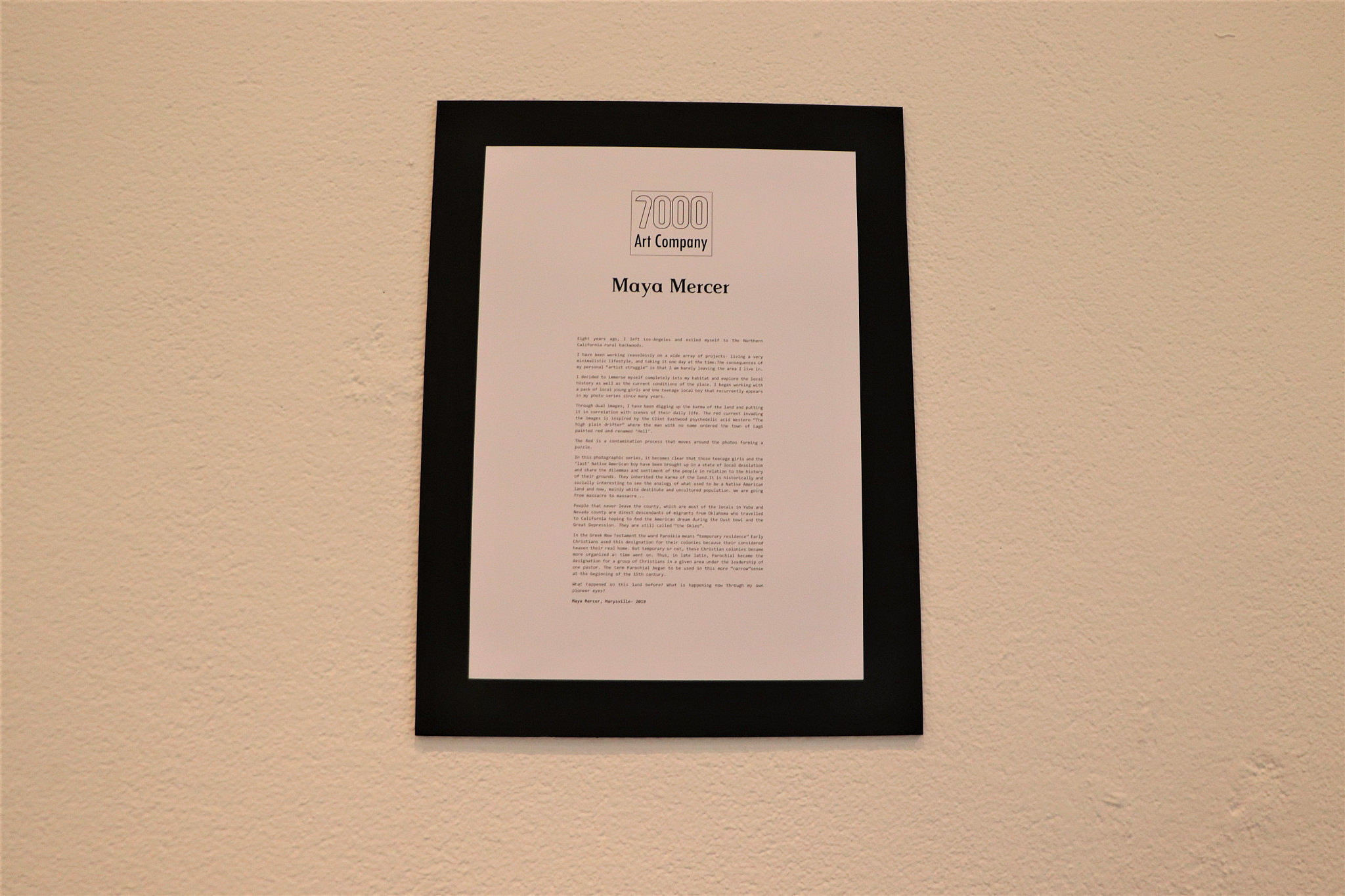
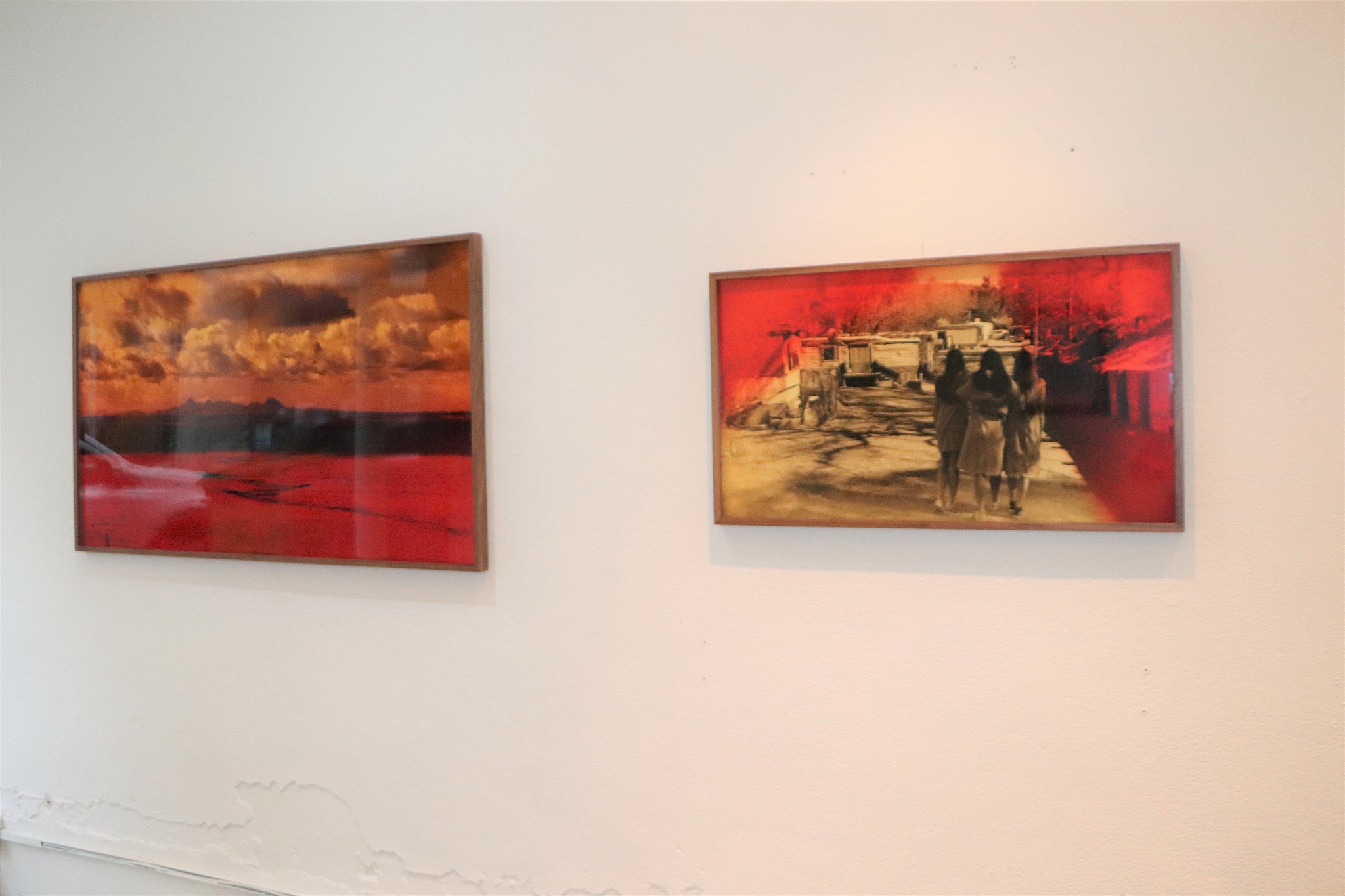
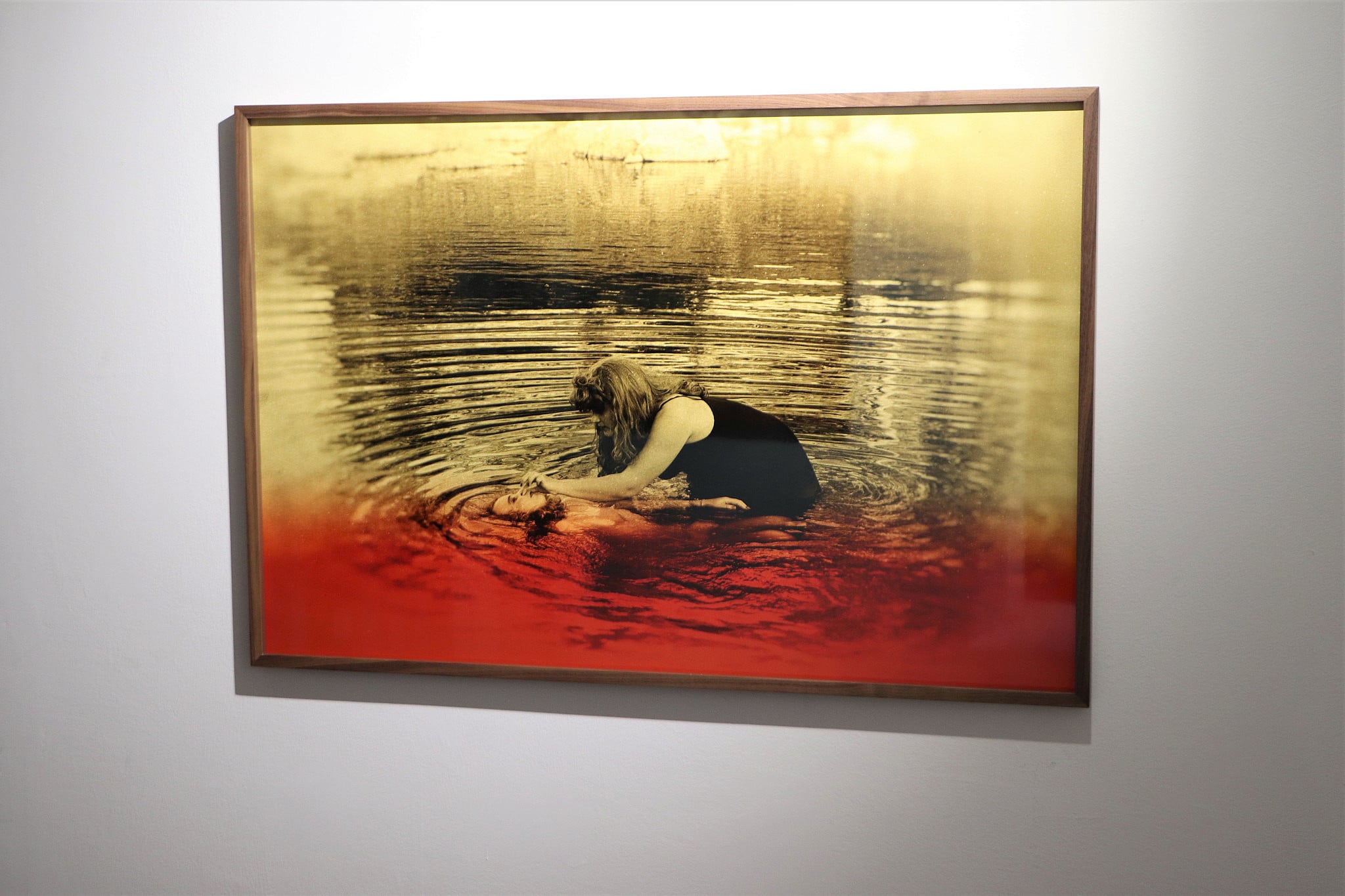
Zombie-like figures, images of wounded or seemingly dead teenage girls, and an unsettling interplay of violence, bizarreness, and camaraderie define Maya Mercer’s series Parochial Segments. Rendered in black-and-white photographs that appear to have been dipped in a bright red liquid, the works immediately arrest the viewer’s attention and provoke unease. The series was recently presented in the group exhibition organized by 7000 Art Company, curated by Natasha Caillot at Nazareth Market in Paris, and will be on view in April 2020 at Photo Paris in New York, where Mercer will be represented by Baudoin Lebon Gallery.
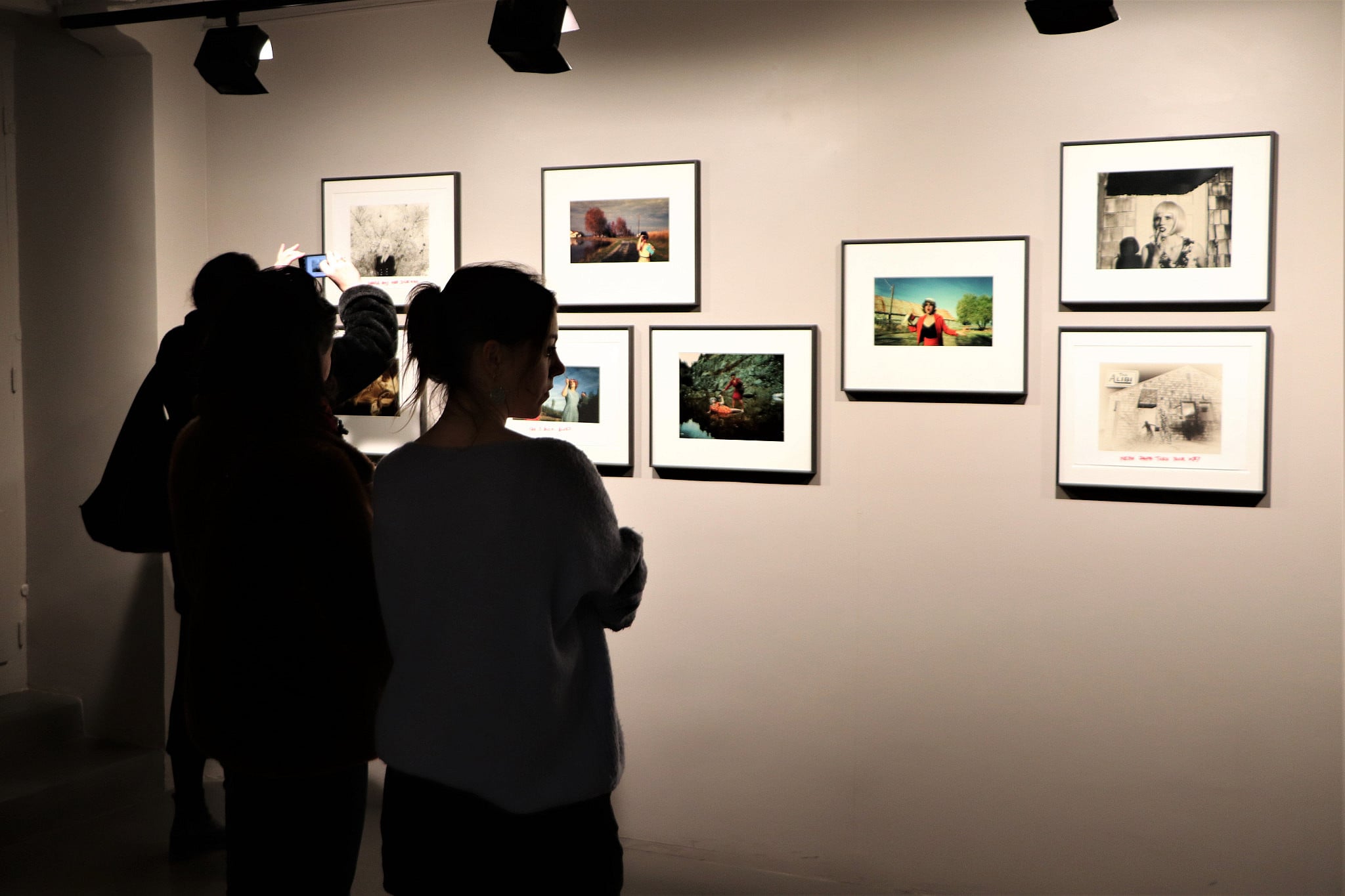
Mercer’s earlier series, The Westend Girls (2015–2018), is currently included in the group exhibition Feminin at Galerie Agathe Gaillard, alongside works by Martine Barrat and Fiona Mackay. Her work will also be presented at the art salon L’Antichambre, held from February 21 to 23 at the Hôtel La Nouvelle République in Paris.
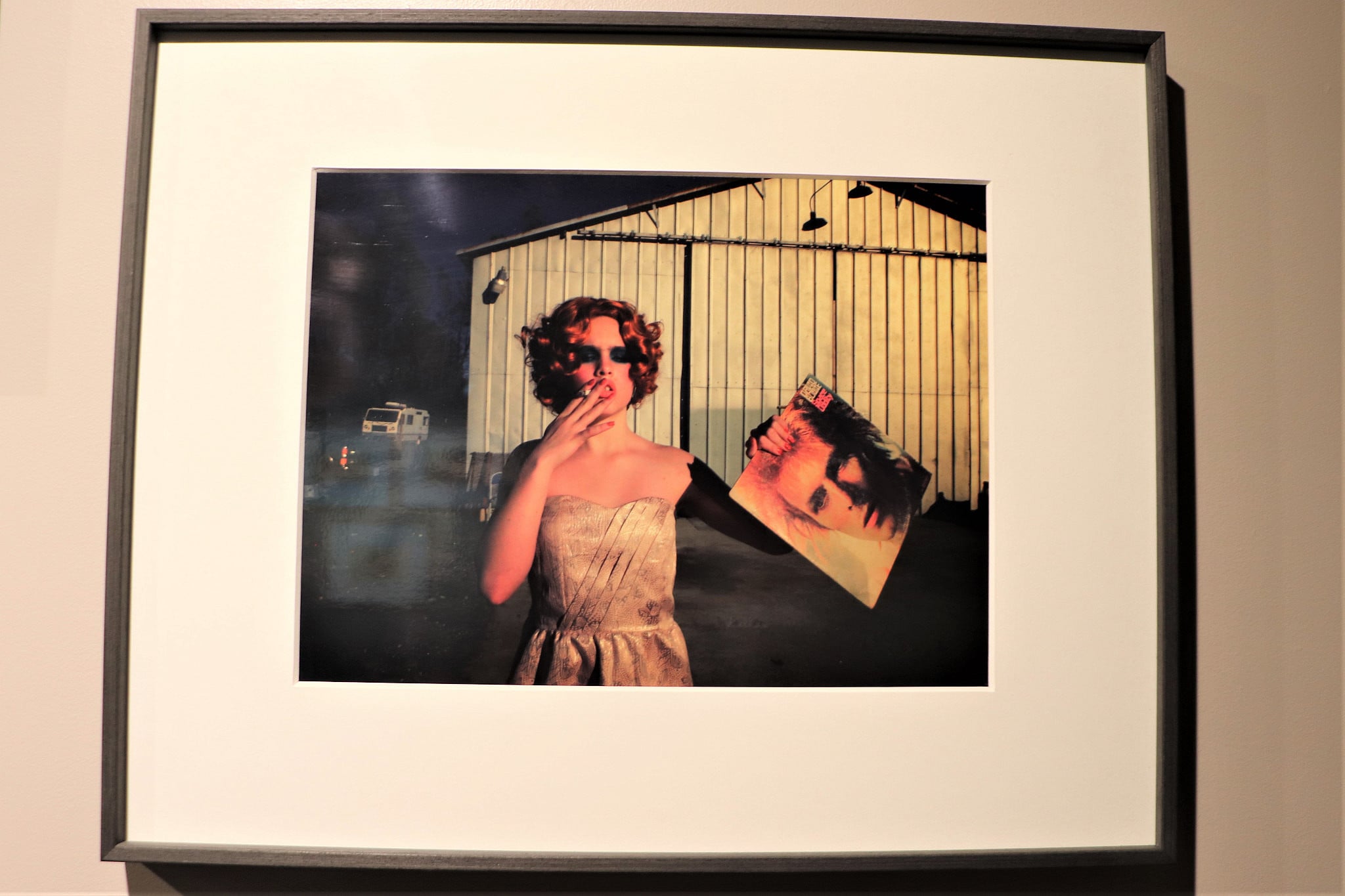
When comparing The Westend Girls and Parochial Segments, clear similarities emerge in their emotional intensity, though their visual strategies differ. While Parochial Segments relies on stark black-and-white imagery punctuated by red, The Westend Girls combines black-and-white and color photography and incorporates handwritten textual subtitles. In both bodies of work, Mercer focuses on young, troubled women depicted in scenarios that feel disturbingly familiar.
In “Feminin”, for example, Mercer presents an image of a bright blonde woman overdosing, a scene that recalls the mythology surrounding Marilyn Monroe’s death. Another photograph shows a young woman with vivid red lipstick and wide, unblinking eyes, holding a copy of One Flew Over the Cuckoo’s Nest, evoking Milos Forman’s film and its setting within a psychiatric institution. Several images portray women in transparent lingerie, calling to mind the sexualized teenage figures of films such as ‘Taxi Driver”, “Pretty Baby”, and “Lolita”. Elsewhere, a photograph of a woman lying motionless beside a lake, a microphone resting in her hand, resembles a crime-scene image—suggesting the collapse of artistic aspiration and the violence of abandonment.
Mercer’s oeuvre is far from a tranquil walk through the woods; it is closer to a walk on the wild side. Yet the work is executed with evident care and empathy for its subjects. The women she photographs live in Yuba County in Northern California, where Mercer relocated several years ago. There, removed from the global art capitals in which she grew up, she turned her attention to a rural community marked by isolation and economic hardship.
Mercer’s engagement with film and performance art is unmistakable. Her scenes often appear theatrically heightened and frequently reference Hollywood iconography. The photographs are carefully staged, with subjects dressed in costume-like clothing and heavy makeup. Mercer also produces what she terms “photo cinema performances.” In November, she presented one such performance at Silencio in Paris—a cultural space conceived by David Lynch—where she staged a thirty-minute slideshow accompanied by voice-over and live music. The performance featured a fifteen-year-old singer narrating the stories of the women of Yuba County through a low, resonant vocal performance. This performative inclination feels almost inevitable, given Mercer’s background as the daughter of a German actress and the British playwright David Mercer, and her early life spent in Los Angeles, the epicenter of the film industry.
But who are these girls, and what do they represent more broadly?
The women in Mercer’s photographs are residents of Yuba County—young women living on the margins, many facing poverty, addiction, and unstable housing, moving between juvenile detention, homelessness, and precarious survival. Their presence also evokes the layered history of the region. Yuba County was once the most productive gold-mining area in Northern California, settled largely by men during the Gold Rush. Historically, few wives accompanied them, while women arrived primarily as entertainers, laborers, or sex workers. Mercer’s images resonate with this inherited history of exploitation and displacement.
The region is also marked by violent colonial expansion. The land was taken from the Martis and Nisenan peoples, who were forcibly displaced and massacred. In one photograph, Mercer depicts a young woman aiming a rifle directly at the viewer, standing beside a young Native American man—the only male figure in her photographic universe. His presence, isolated within the group, underscores the enduring legacy of racial violence and limited access to social mobility shared by marginalized communities.
For these reasons, The Westend Girls and Parochial Segments can be understood as socially and politically driven bodies of work. They address the exploitation and oppression of women, the consequences of systemic neglect, and the long shadows cast by Manifest Destiny. By shifting attention away from urban centers toward rural America, Mercer confronts viewers with the aftermath of failed promises and inherited histories that continue to shape lives at the margins.
Maya MERCER
Interview with Maxime Duveau, conducted in January 2020 and published in Noah Becker’s Whitehot Magazine in February 2020.
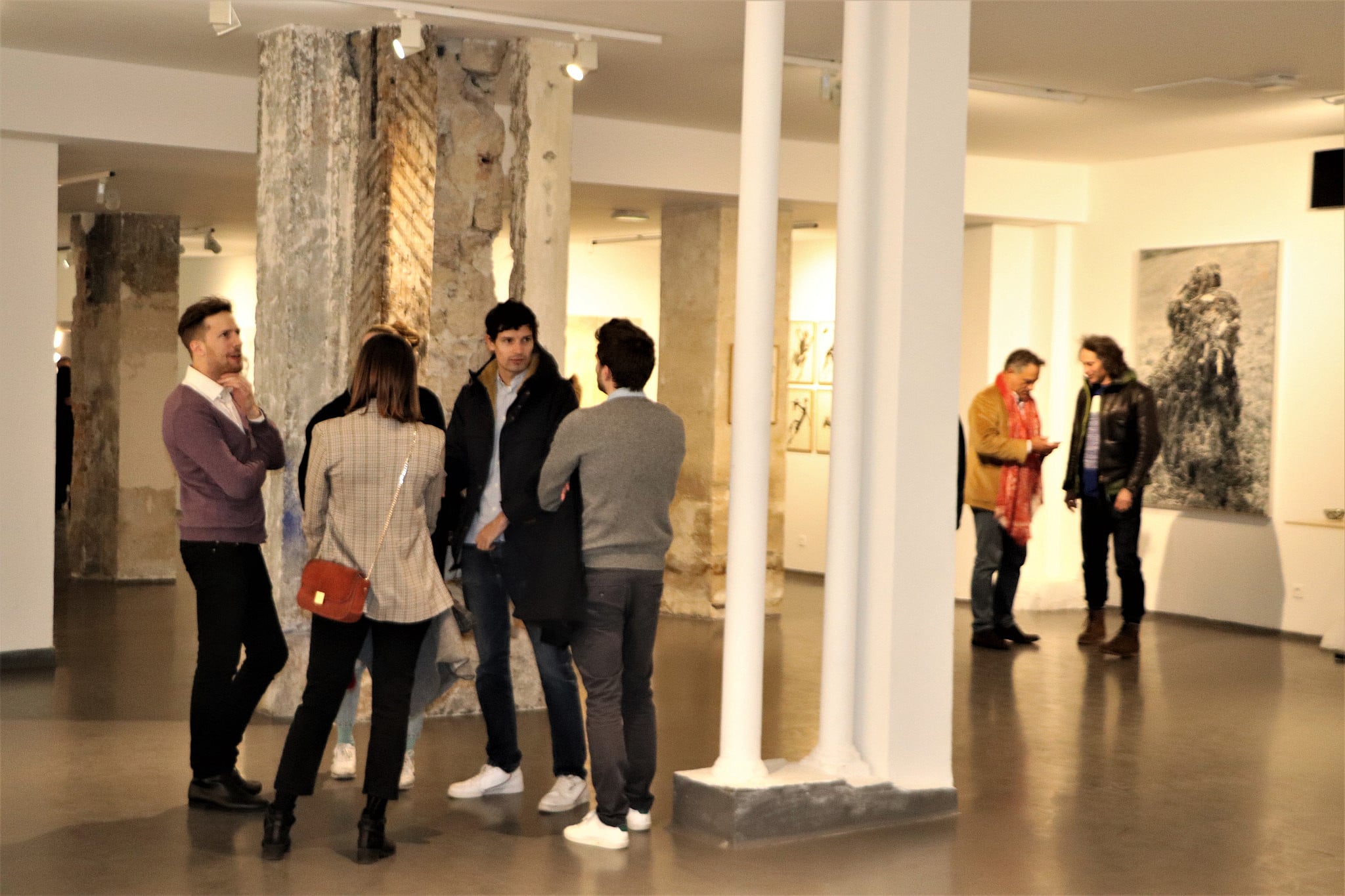
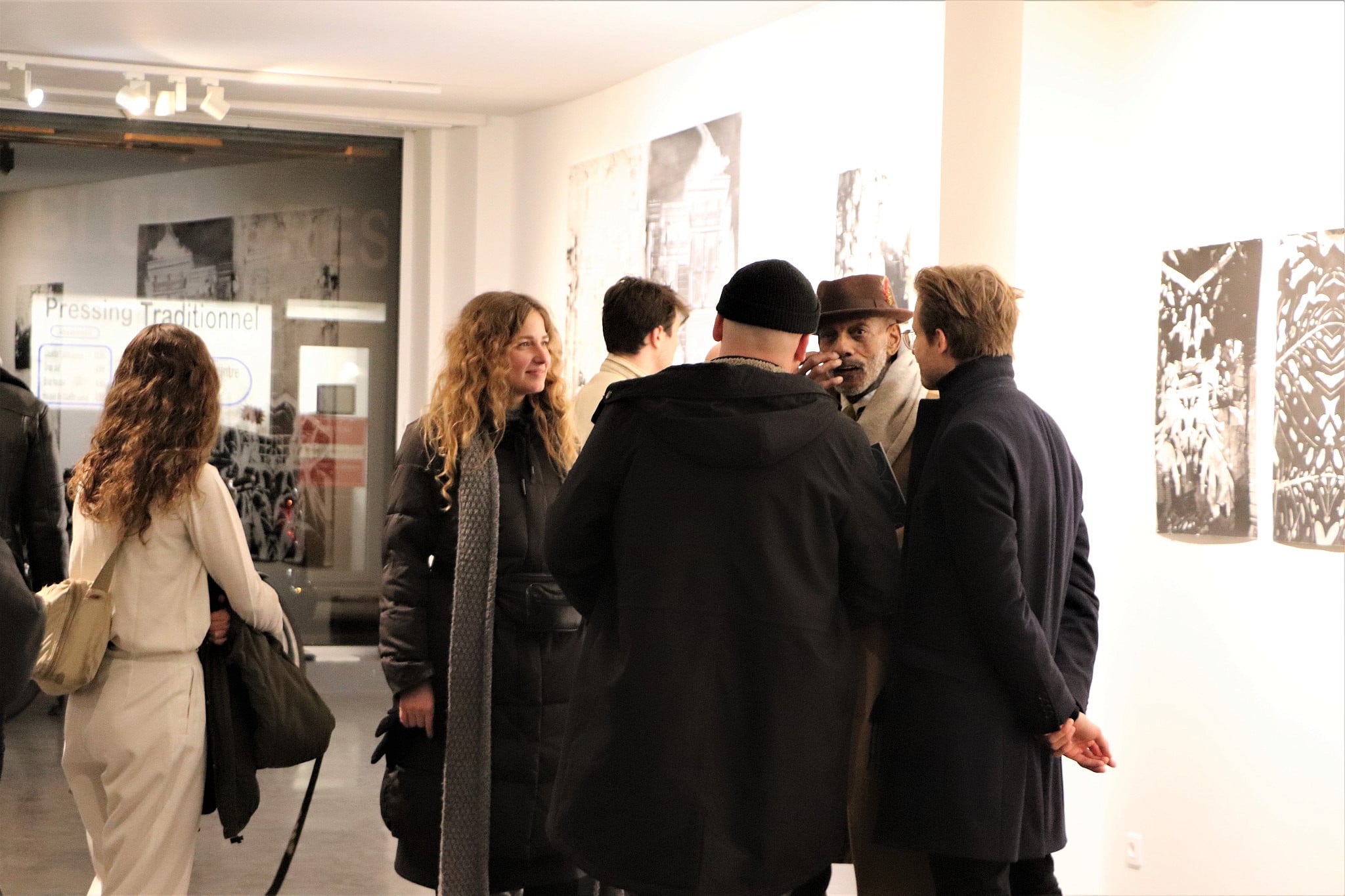
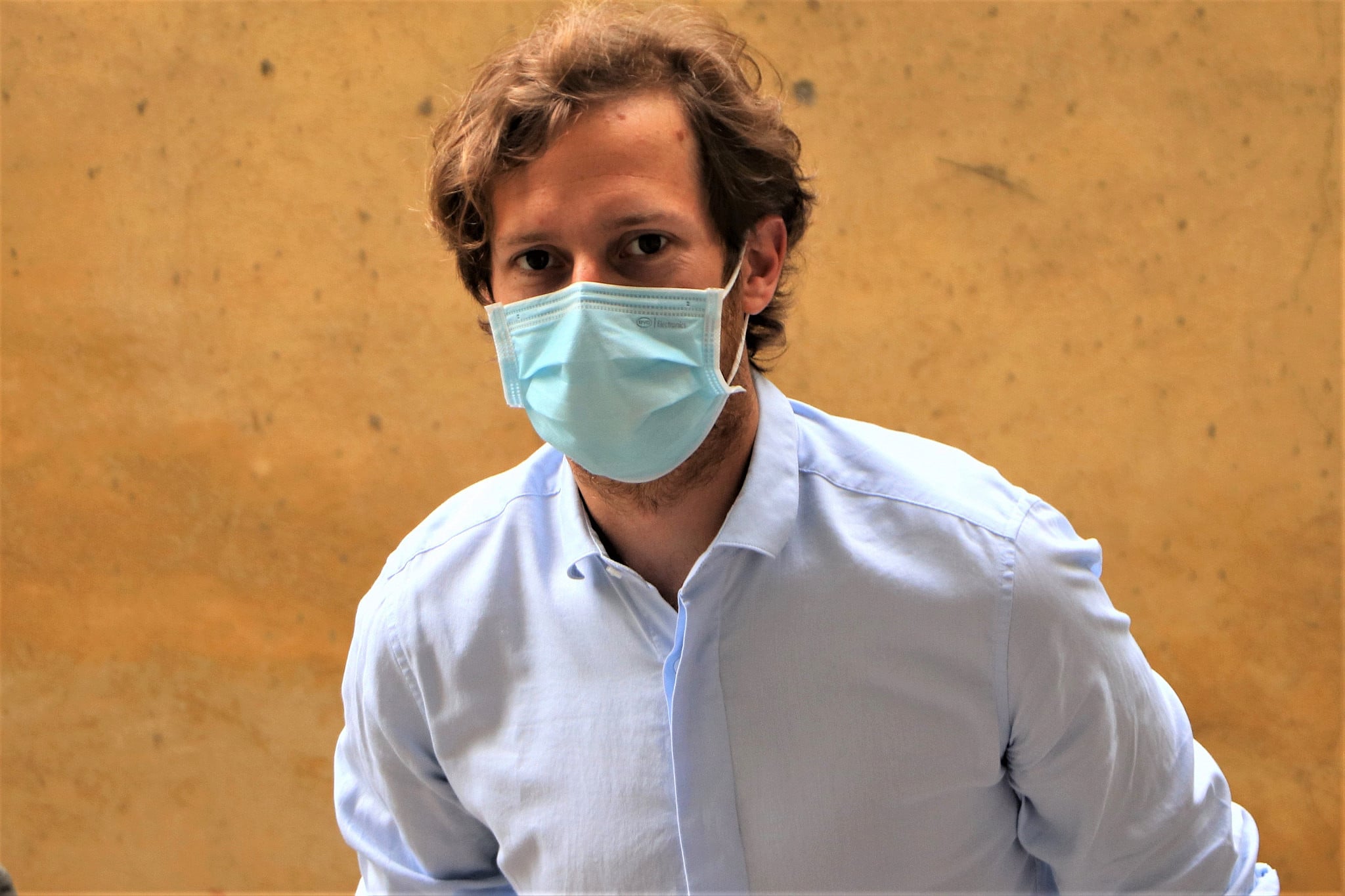
Maxime Duveau is a Paris based artist whom I met at an art opening at Nazareth Market in Paris. At the time, the gallery was presenting a group exhibition organized by 7000 Art Company, which also included works by photographer Peter Knapp and artist Maya Mercer. The exhibition was accompanied by a bilingual catalog in French and English that traveled with shows in France and abroad. Because Duveau’s works depicted fictional worlds connected to two cities I had lived in, San Francisco and Los Angeles, I was immediately intrigued. I sat down with Maxime, who had just received the 2019 Young Creation Award from 7000 Art Company, to learn more about his work.
Simone Kussatz: I noticed on your website that most, if not all, of your works have an American theme. How did that come about, and what makes America so appealing as a subject for you?
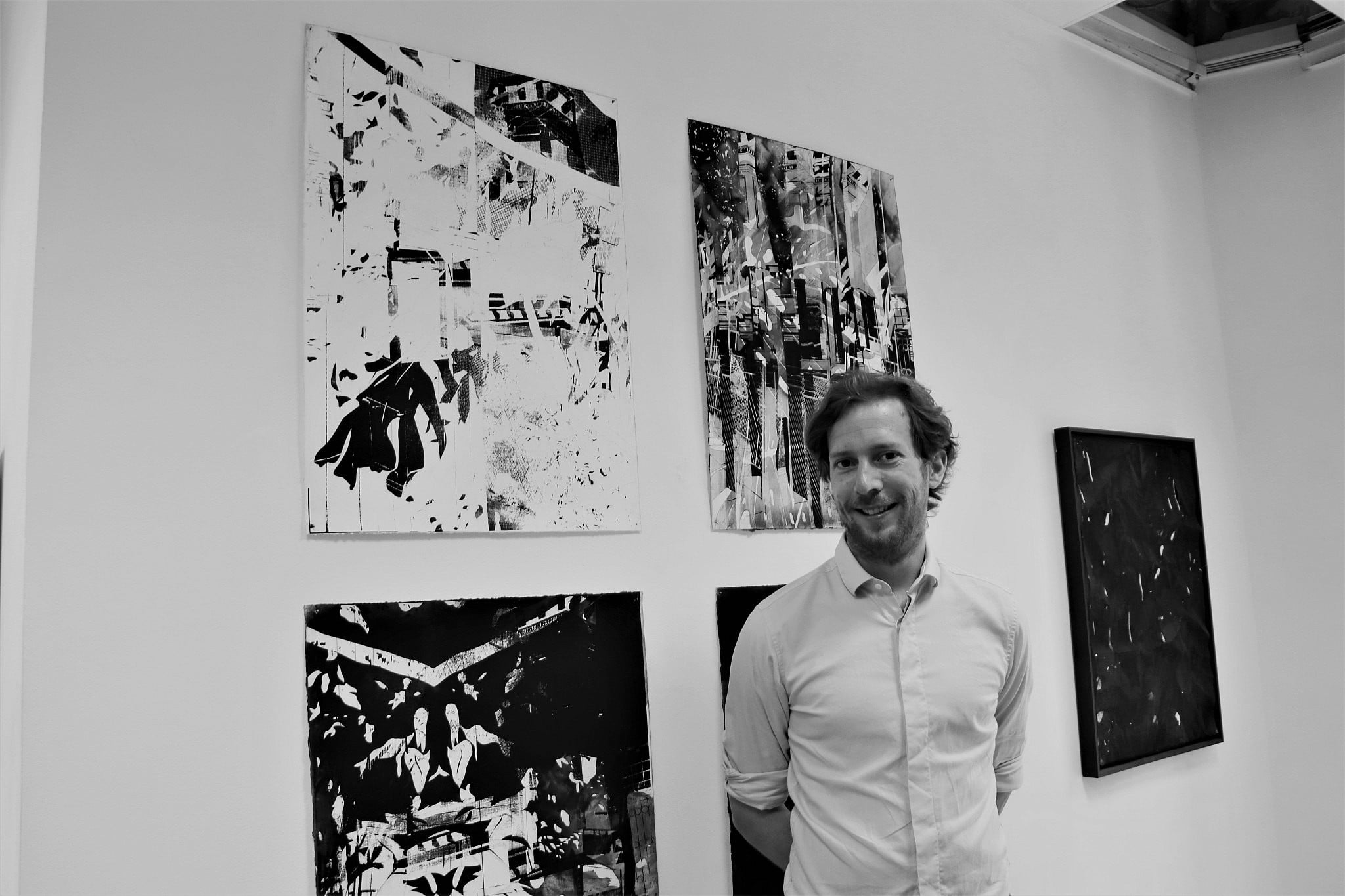
Maxime Duveau: I have always listened to a lot of Rock and Roll music, especially bands from California in the 1960s and 1970s. At the end of my studies at Villa Arson in Nice, on the French Riviera, I decided to take what I call a pilgrimage to the holy land. I took many photographs in California and wrote a short story about my adventures there. Ever since I returned from that trip five years ago, I have drawn inspiration from those images. My aim was to transcribe my experience. My work blends reality and imagination, drawing from the images I absorbed from films set in Los Angeles, books by James Ellroy, and the music of the Beach Boys. Over time, my trip to California and my reflections on it became a central subject for me, and I have continued to explore it ever since.
Simone Kussatz: What were your subject matters when you first started as an artist?
Maxime Duveau: When I began drawing, I usually selected images connected to Rock and Roll history. For example, I drew toilets at CBGB, a music club in New York, which I found online, or stages from concerts shown in magazines. Eventually, I wanted to create my own series and my own visual history, which is why I traveled to California to gather the material I needed.
Simone Kussatz: Your technique seems multi-layered. Could you explain it in more detail?
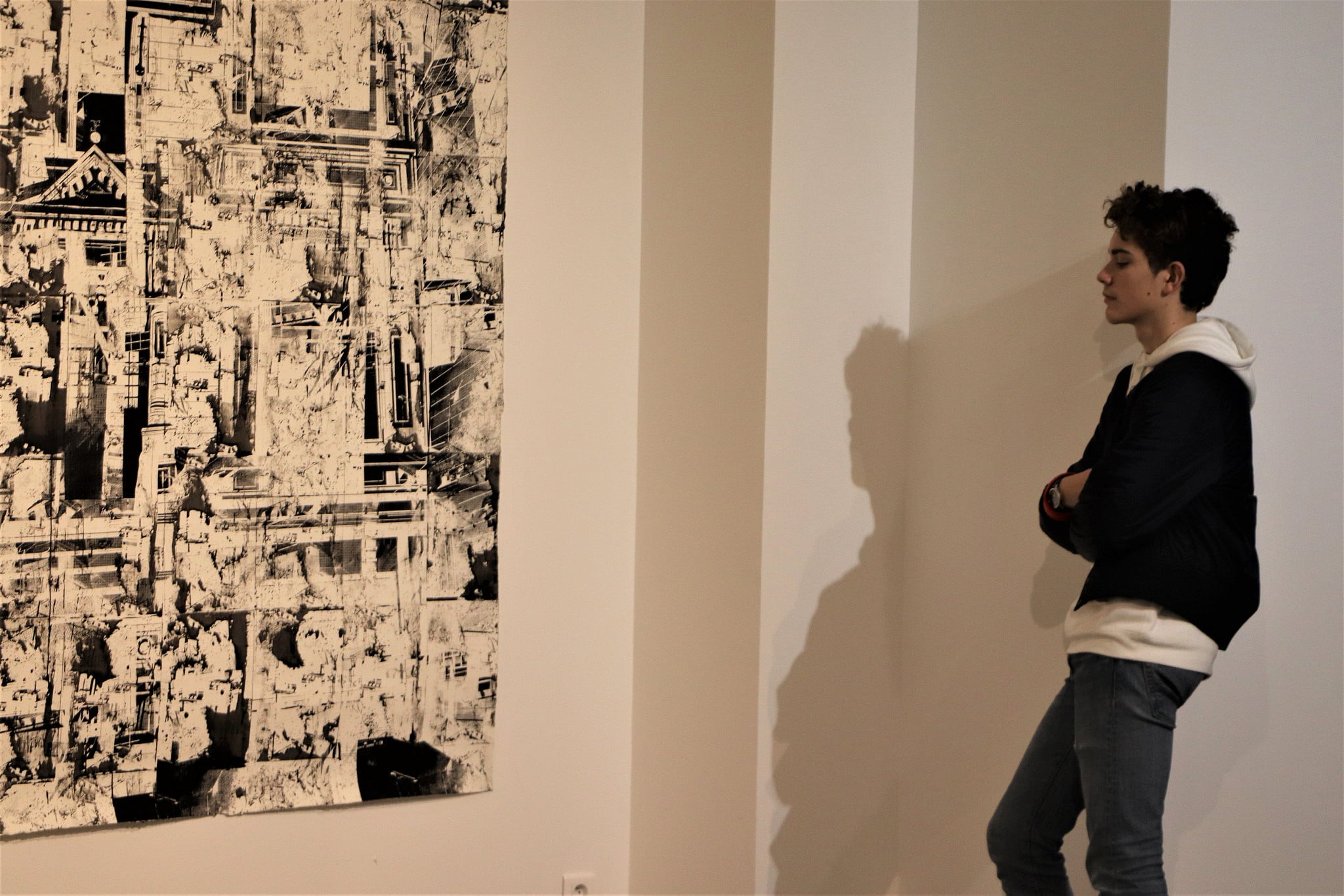
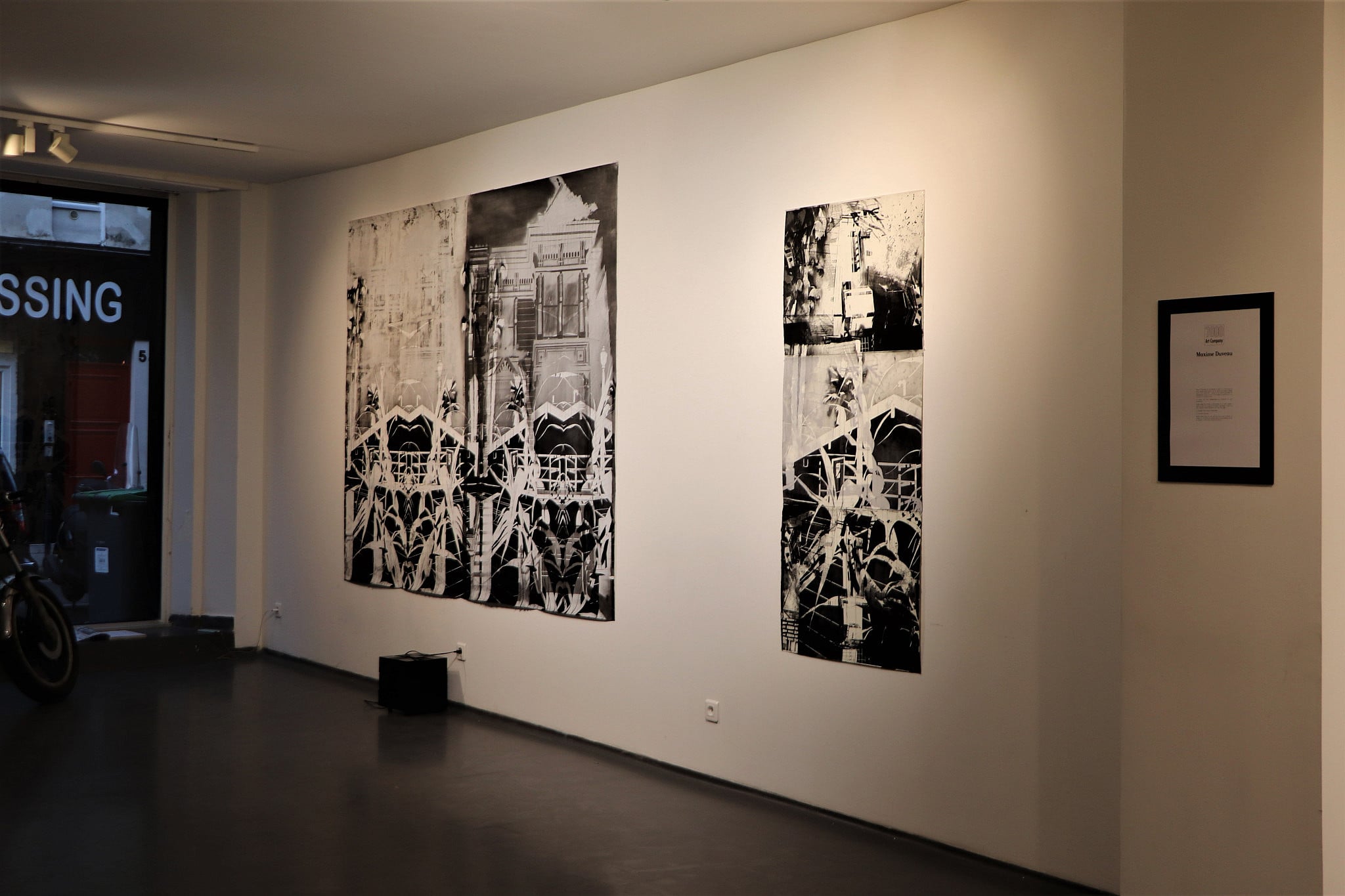
Maxime Duveau: My drawings are made in several stages, similar to a palimpsest. I begin with photographs from my trip, which I draw by hand. I then photograph these drawings and redraw the results. After that, I turn the drawings into stamps and create a backdrop that I rub, scrape, lift off, cut up, glue, and alter. It becomes a process of disappearance and revelation.
When I reflect on my memories, these layers become strata of history. Each drawing carries traces of the previous ones, forming what I call a bank of images that begins with my first photographs in California. I am fascinated by how older layers emerge in the foreground, disrupting the surface image and creating a new composition, or what I call a matter.
Simone Kussatz: You avoid using color. Is that due to your technique, an aesthetic choice, or something else? I am thinking in psychological terms. There is a concept called splitting, or black-and-white thinking.
Maxime Duveau: I am not sure my work is about positive or negative thinking. The black- and-white comes first from using charcoal, and it is also an aesthetic choice. I was influenced by the work of Ed Ruscha and early films by Jim Jarmusch. I also wanted to avoid portraying Los Angeles the way Europeans often see it, with bright colors, palm trees, neon lights, and sunsets.
I was inspired by the atmospheres in James Ellroy’s novels and David Lynch’s films, and I wanted to reflect those in my fictional Los Angeles. Black-and-white also allowed me to create images that feel outside of time. As I continued to explore my California experience, I realized these were the right colors for the work.
Simone Kussatz: You are currently in a group show with Maya Mercer, Philippe Maurice, and fashion photographer and artist Peter Knapp at Nazareth Market. From an artist’s perspective, how does your work relate to Knapp’s? I notice a shared focus on black, white, and grey, although your techniques differ.
Maxime Duveau: It is a great honor for me as a young artist to be exhibited alongside such an established artist. Our works create a dialogue. Beyond the shared use of black, white, and grey, we are both interested in photography and drawing. Each of us has our own approach, but the exhibition aims to present the works in conversation with one another.
Simone Kussatz: Who has been your greatest inspiration in the arts, and why?
Maxime Duveau: There are many. In music, I am inspired by the Beach Boys, the Doors, Frank Zappa, and Tom Waits. In literature, Thomas Pynchon and the Fante family. In cinema, I admire Quentin Tarantino and Robert Rodriguez. In contemporary art, my first major influence was Cy Twombly, whose work I saw at the Centre Pompidou when I was fifteen. More recently, I have been interested in painters such as Wade Guyton, Josh Smith, and Harold Ancart, who work serially and often use color, which is ironic given my own black and white work.
Simone Kussatz: Do you already know what you will work on next, or does inspiration come during your travels?
Maxime Duveau: Once I finish this series based on my California trip, I plan to work on the city where I have lived since childhood, a residential suburb of Paris. It will be very different from Los Angeles, but I am excited to begin.
Simone Kussatz: Where will we be able to see your work next?
Maxime Duveau: I have started working with a new gallery in Paris called Backslash. I am very happy about this collaboration. We are planning a solo exhibition in June, so anyone in Paris should come and see it.
Simone Kussatz: Thank you, Maxime!
Update 2026: Maxime Duveau at Drawing Factory II
After the interview, I met Maxime again at a group exhibition he invited me to at espace à Vendre in Nice, the year following the pandemic.
Since the beginning of 2026, Maxime Duveau has been a resident artist at Drawing Factory II, a 1,500 square meter space in the heart of Paris dedicated to contemporary drawing. Drawing Factory II hosts around thirty artists across several floors, offering studios, shared areas, and meeting spaces designed to encourage collaboration, experimentation, and the development of large-scale projects. Maxime works in Studio 45 on the fourth floor.
Drawing Factory II opened following a selection process in late 2025, organized by a committee that included Simon André Deconchat, Deputy Director of the Centre national des arts plastiques; Marianne Dollo, art advisor and collector; Christine Phal, founder of the Drawing Lab; Carine Roma, artistic director of the Espace Jacques Villeglé; Carine Tissot, president of the Drawing Society; Henri Van Melle, president of Les Jardiniers Montrouge; and the artist Jérôme Zonder. The residency runs through April 30, 2026, and includes workshops, open studio days, and participatory events designed to foster exchange and collaboration around contemporary drawing.
Maxime will take part in the first Open Studios session on Wednesday, January 21, from 15:30 to 18:00, welcoming visitors to his studio to view his most recent works. A performance at the Drawing Lab will follow. Maxime has expressed his enthusiasm for this new creative environment and looks forward to sharing his work with the public.
Maxime Duveau | espace à vendre / Art contemporain, Nice
Maxime Duveau – Drawing Lab