My “Social Justice” Colleagues Fought for Everyone. Except Us.
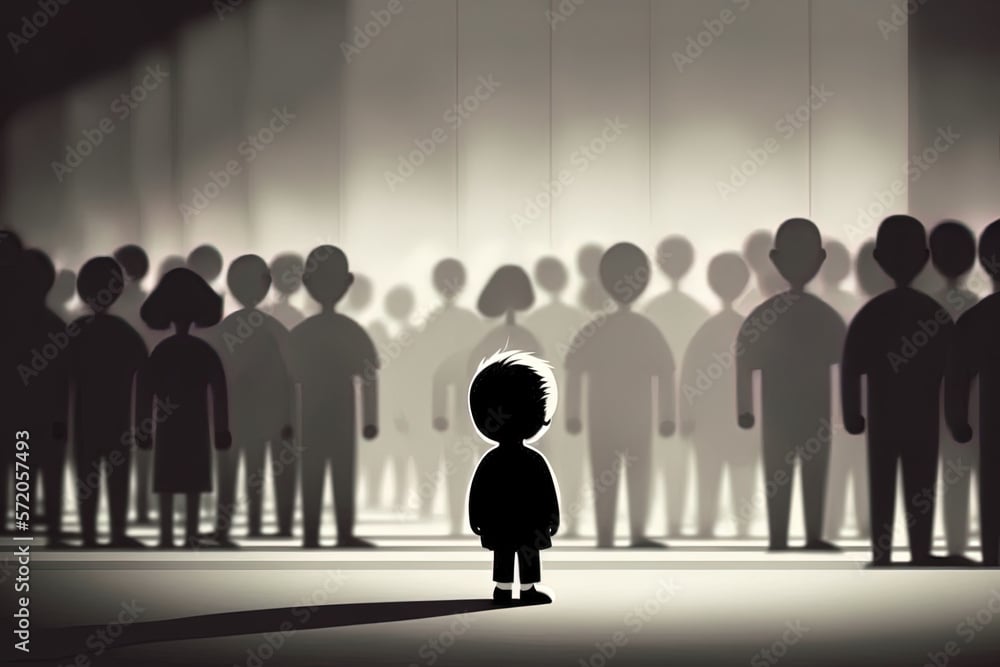
I grew up hearing the stories. Nazis rolled into a town, and neighbors (people who had lived beside Jewish families for years, shared meals, watched each other’s children grow up) stood on the sidewalk and watched. Some cheered. Some pointed. Some turned the family in the next morning. I heard the same about the pogroms in Russia, where the closeness was different: less the deep assimilation Jews had built in Germany or Austria, more daily proximity, years on the same street. But the neighbors were still neighbors, and when the violence came, many joined in or watched, while authorities did little to stop it. Some ransacked the home before the family was even out the door. How do you do that to someone you’ve known your whole life? Something was missing from the story, I thought. It had to be more complicated than that.
I remember being six, telling my grandparents about a sleepover a friend had invited me to, and being asked, “Is she Jewish?” I was genuinely puzzled. “What difference does it make?” It happened more than once, and every time I couldn’t understand why it mattered so much to people who had lived through what they’d lived through.
I understand it now. It was never really about the sleepover. It was about who you can trust when it counts: a lesson passed down by people who had learned, at unbearable cost, that the people who know you best are not always the people who will stand next to you when the mob turns. Sometimes they are part of the mob.
So many of us have lost friends, colleagues, entire professional communities in the last three years. But nowhere has that loss cut deeper than inside my own profession, a field whose entire premise is empathy, and which has, in the moment it mattered most, largely failed to extend that empathy to Jews.
This is a piece I have been thinking about for some time, and one of the more painful ones I have written. Not because the facts are hard to find, but because writing it means coming to terms with certain realities about people I knew for years, laughed with, shared painful stories with, hugged, dined with, and trusted.
People I knew
I spent decades in the American Psychological Association (APA) as a Fellow in three divisions, writing, presenting, and advocating on multicultural competence going back to the 1990s: years when this work was not fashionable, when it would not easily land you tenure.
That’s what makes this so disorienting. The people who joined in the antisemitism, or who say nothing while it is happening, are not strangers to me. They are former mentees. Co-authors. Friends. Colleagues I called during other communities’ moments of crisis, stood shoulder to shoulder with when it was their community under threat. Other Jewish colleagues have experienced the same.
I founded Psychologists Against Antisemitism in May 2021, before October 7th, because I had already watched antisemitism take hold within the very APA divisions I’d given so much of myself to, and few were willing to name it. It now represents over a thousand psychologists and mental health professionals. It is one of the only organized Jewish voices willing to say, plainly, what the silence around us has allowed to grow.
Two responses
In the three years since October 7th, my colleagues in psychology have responded to Jewish suffering in essentially two ways. Some have actively joined in: amplifying misinformation and propaganda. A larger number simply said nothing. Many still say nothing today, while backing candidates for APA office who dehumanize Jews, cheering those candidates on, and pursuing awards within the very divisions, out of APA’s 54, that have been the worst offenders. These are the so-called social justice divisions, my own former professional home.
I don’t say “amplifying propaganda” lightly. APA-hosted listservs have carried messages reading “Kudos to Hamas” and chants of “Intifada, Intifada” (language synonymous with calls for violence against Jewish and Israeli civilians), posted openly, under professional signatures, without rebuke. Official division statements have, with notable consistency, inaccurately “contextualized” the October 7th massacre rather than treating it as an atrocity in its own right; gaslit, silenced and mocked Jewish people; spread antisemitic libels; and called for Boycott, Divestment and Sanctions against Israel in an attempt to delegitimize and isolate it.
The silence did not require becoming an antisemite. It only required looking away.
Nowhere was that clearer than in the silence about what was done to Israeli women on October 7th. Specific divisions within APA built around feminism and the study of sexual violence, whose entire professional identity rests on believing survivors, said, on the whole, nothing about the rape, the mutilation, the hostages held for months. A field that has spent decades teaching the world to say “believe women” could not bring itself to say it about Jewish women, even as APA itself funds a research grant named for Christine Blasey Ford, dedicated to understanding the trauma of sexual assault. Some of the same members signed on to boycott campaigns against the country whose women had just survived it.
When our mental health organizations have spoken at all, typically after much begging from Jewish members (yes, begging!), the statements follow a familiar pattern: generic, diluted, careful to spread concern across every group except the one actually under discussion. And when Jewish members ask to define antisemitism themselves, we’re met with committees stacked with the very people responsible for the hostility, and told this is “creating space for a range of perspectives.” No other minority group in psychology is asked to negotiate the definition of the bigotry directed at them with people who deny that bigotry exists. Only Jews.
For me, witnessing the mob fall subject to, promote, or remain silent about antisemitic libels is not simply professional disappointment. Antisemitism does not land on an empty page. It lands on centuries of accumulated memory: expulsions, pogroms, inquisitions, genocide, carried, physiologically and psychologically, by the generations that came after. When antisemitism resurges now, it arrives as confirmation of something many of us were taught, explicitly or by osmosis, to fear.
That is what makes a colleague’s silence so much heavier than ordinary indifference. It does not read as neutral. It reads as corroboration: confirmation that when it mattered, the people beside us would not speak. Shame on a field that calls itself a healing one, devoted to “liberation.” It is a specific and painful irony, and it is one explored at length, along with what it reveals about how our field defines whose suffering is real, in my new book, Antisemitism and Jew Hatred: Psychological Perspectives.
What allyship actually requires
Allyship means showing up specifically, by name, for the group under attack, in the moment it is under attack, the same standard Jewish colleagues have met, repeatedly, for others. It is a co-author picking up the phone. It is a former mentee reaching out. It is a colleague willing to lose something (a friendship, a committee seat, an invitation) for saying a true thing at the wrong time. It means educating yourself about Jewish culture, history, identity, and why so many of us are struggling now. That is what allyship cost many of us, for years, on behalf of other communities. It is not too much to ask that it be reciprocated now. This is another topic addressed in the book.
What I understand now
I think often about Hitler’s Willing Executioners, Daniel Goldhagen’s controversial but haunting study of how ordinary Germans participated in, or simply tolerated, the destruction of their Jewish neighbors. It did not take a nation of monsters. It took a nation of people willing to let it happen, and neighbors willing to stay quiet while it did. That is the same mechanism, playing out at a scale my career never prepared me to expect from a field built on empathy.
I understand my grandparents’ question now. Not because it mattered whether my six-year-old friend was Jewish, but because they had learned, in the worst way imaginable, exactly how much it mattered whether the people around you would stand with you when it counted, or whether they would enact violence against you and your family, or hand you over to those who would.
So, where are our allies? Who has the courage?
I am deeply grateful for the handful I have. They know who they are, and I do not take them for granted. But they are too few, and the silence of the rest, from people I mentored, published with, broke bread with, looked up to, and stood beside, is its own kind of answer.
I have also found new friends in this: fellow psychologists, advocates, strangers who reached out simply because they saw what was happening and refused to stay quiet. That has been its own unexpected gift, even as it does not erase what was lost.
I know I am not alone in wondering whether these institutions can still be repaired, or whether they are corrupted past the point of correction, and Jewish psychologists and our allies need to keep building our own.
We have seen this playbook before. Cheering or silence. I am afraid my grandparents may have been right.