


Myths and Facts About the Gap Year in Israel: An Interview with Mark Trencher
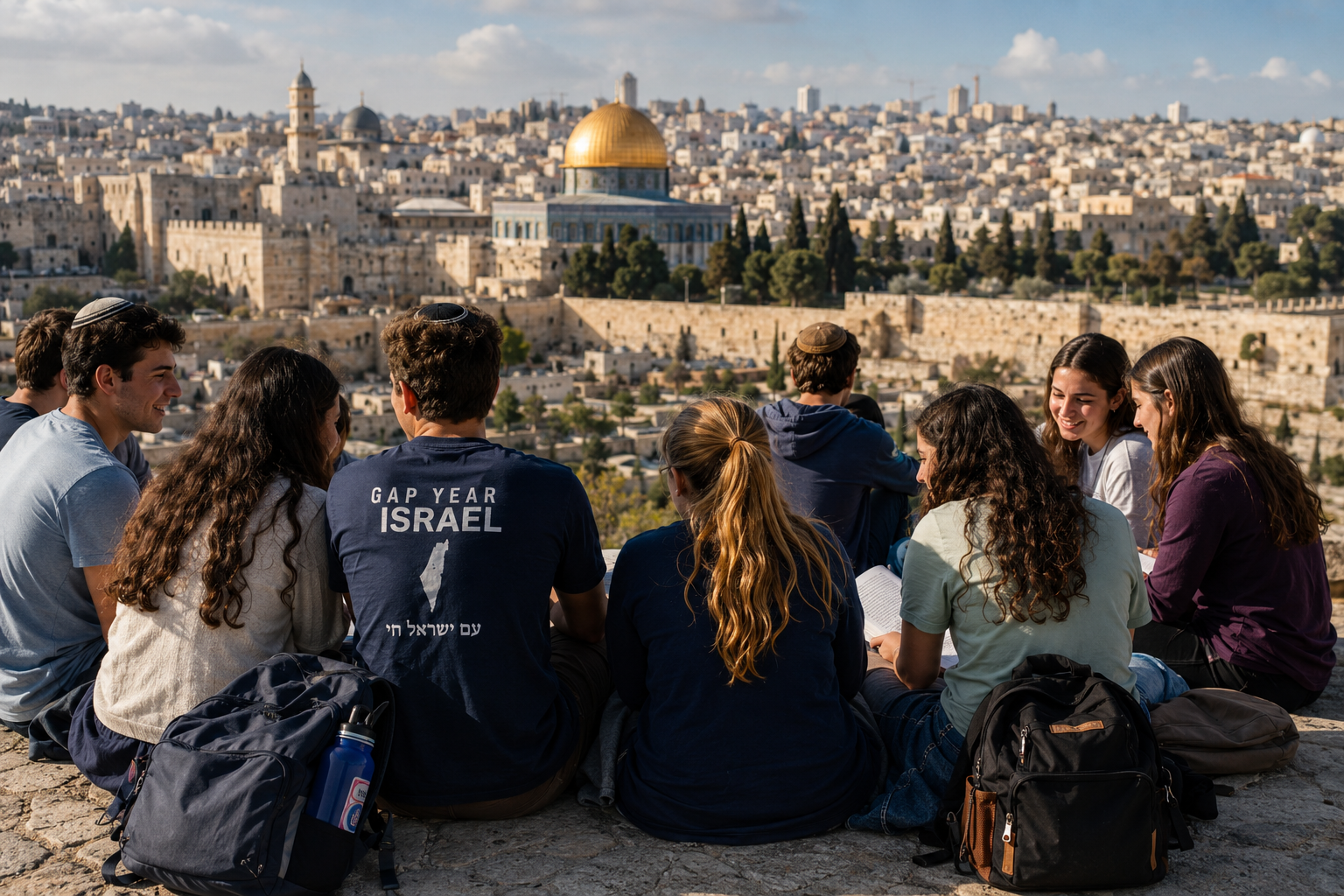
We hear it a lot … about how the gap year in Israel has been a transformative event for post-high school students and how it has given young men and women a religious experience that they ordinarily would not be able to receive in the States.
However, there is little data that has scientifically studied the long-term effects of the gap year in Israel in an organized and professional way.
Just recently, Mark Trencher, who has conducted more than two dozen studies on various topics that affect the Orthodox community, released the results of an important study in which he surveyed more than 300 individuals who attended a gap year program over a 40-year period.
About two-thirds of both men and women assessed their Israel program as very good-to-excellent. Gap year experiences are said to have had a very strong impact on commitment to Torah study (88% for men and 82% for women); and attributes that were highest rated were the programs’ abilities to provide growth in Torah studies (78%), the quality of teaching (73%), and the imparted sense of spirituality (70%).
Trencher asked what participants liked most about the programs, and they listed, in order: (1) Israel, and being in that country; (2) serious Torah study; (3) their teachers and mentors; (4) the opportunity for personal and religious growth, and development of their identity; and (5) independence and having time to grow up.
I had an opportunity to speak to Trencher in more detail about the study … specifically why this survey is important, where they reinforced our existing assumptions and where they might have challenged conventional wisdom, and what parents and educators can glean from these results.
Below is the transcript of our discussion:
You’ve been studying the Orthodox community for many years. What was the single most surprising or unexpected finding to emerge from this study?
Perhaps naively, I was thinking that the gap year affects people on a lifetime basis. It does have some lasting effect, but there is so much going on in people’s lives that the gap year experience in the end becomes only one element of their Jewish life experiences. An important one, but there are many other factors that lead us to become the adult observant Jews that we hopefully want to become.
Many parents assume that a gap year in Israel has lifelong benefits, while others wonder whether the “Israel high” eventually fades. Based on your research, what effects proved to be the most enduring five, ten, or even twenty years later?
Most people who attend a gap year program are affected religiously, but they often revert to their post-high school level in areas of observance, such as Shabbat and kashrut. We did, however, find that levels of emunah (we asked if they believe Hashem is involved in their day-to-day lives) do increase during the gap year and then drop a bit during their lives, but they generally remain higher than where they started (as high school graduates). So this may well be a “lifelong benefit.”
How confident can we be that the gap year itself produces these positive outcomes? Could it simply be that students who choose to spend a year in Israel were already more committed religiously or Jewishly before they left?
That is true. The only thing similar among our survey respondents when they took off to their program was that they had all graduated from an Orthodox high school in the U.S. So there was and continued to be a lot going on in their lives. In a few areas, we are confident of the effect of the gap year program, and these include their level of emunah, as noted earlier, the extent to which they continue to learn (Torah study), and their connection to Israel.
Were there particular characteristics—family background, type of high school, level of observance, or personality—that predicted which students benefited the most from the experience?
The one that jumped out at me was the individual’s personality. Regardless of level of observance, there is a program in Israel that would likely be a good fit, creating growth. But the individual’s personality is important. Do they want to go? What are their motivations? Ask and listen to the response. As parents and students start to think about this, focus on the individual. He or she might be different from siblings … and might even have goals that differ from the parents’ goals. With so many school options available, we truly have the opportunity to create a “great fit.”
You noted the variety of yeshivot and seminaries. Did your research identify characteristics of programs that seem to produce stronger long-term outcomes than others?
We did not ask for people to identify their program and did not want to get into a “rating game.” There are many options, and this is so important that people need to do research. We did find that programs vary a lot in their curricula (Talmud, other learning, mussar, hashkafa, etc.), as well as Israel-related aspects (immersion, tiyulim, volunteerism, etc.).
Many participants studied in Israel during or after October 7 and the ensuing war. Did that experience strengthen their attachment to Israel and Jewish identity, or did it create new challenges and complexities that previous generations of gap-year students never faced?
Our sample of students who were in their programs at that time is small, and it generally is similar to the respondents as a whole. None of them cited anything unique (such as trauma) in their verbatim responses.
One concern some educators raise is whether students maintain the religious and spiritual growth they experience in Israel once they enter college. What did your study reveal about how well that growth survives the transition back to North America?
There is about an 8% shift from secular colleges to a Jewish college. Of course, Jewish colleges provide strong religious programs. But what about those who go on to a secular college? The data supports the view that the gap year gives them knowledge and emunah that will help them, but further research here might be helpful. Anecdotally, I’ve spoken to college students who say the anti-Israel sentiment they hear has actually made them stronger and prouder Jews.
Every educational experience has trade-offs. Did your research uncover any unintended negative consequences or areas where expectations about the gap year are unrealistic?
Positive comments vastly outnumbered negative views. I would not say we uncovered a lot of “negative consequences,” although some mentioned that the level of learning was not a good fit for them (in both directions … stronger and weaker)
Based on everything you’ve learned, what changes would you like to see yeshivot, seminaries, high schools, and parents make to ensure that the Israel gap year continues to have a meaningful impact on the next generation?
While two-thirds rated their programs highly, others pointed out problems, most often on the administrative side (organization, communication, and staff–student relationships). So, beyond the teachers, rebbeim, etc., who are generally rated very highly, the organizational infrastructure is important for things to run smoothly.
Were there any findings that challenged commonly held assumptions in the Orthodox community about the value of the Israel year?
One commonly held assumption is that it will be a religious “booster,” and that it might “fix” things that need to be worked on. So, this is a good point to make, and I think it’s worth repeating. There is no guarantee, and the most important thing to remember is to start with the student, and realistically assess his or her needs, and then – given the huge variety of programs – one can almost always find an appropriate program. It’s important, and it’s worth the effort to make it work.