


Nakba 78: Policing by Promises, Not by Action
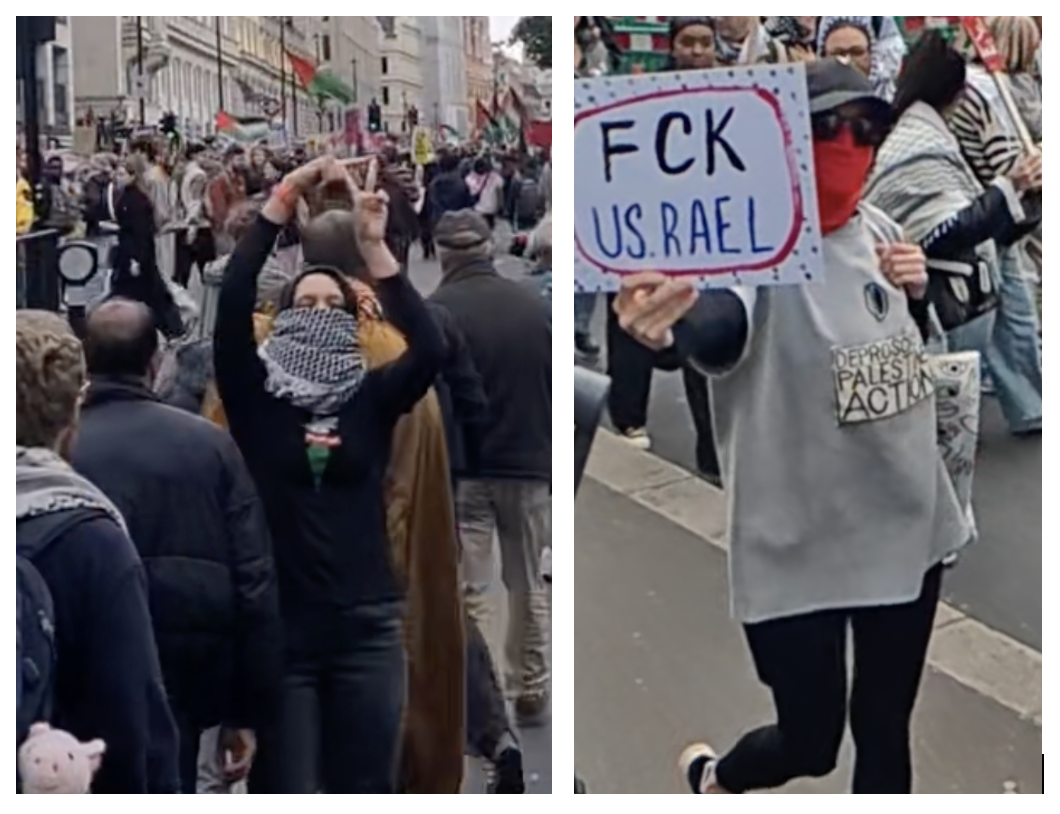
The Metropolitan Police promised London a “zero-tolerance” operation. What London got instead was a £4.5million masterclass in performative policing.
Ahead of the Nakba 78, Stand Up to the Far Right, and United the Kingdom marches on 16 May, Deputy Assistant Commissioner (DAC) James Harman delivered what sounded less like a policing briefing and more like the trailer for a dystopian action film. There would be 4,000 officers, helicopters, drones, mounted units, armoured vehicles, live facial recognition, and dedicated investigative teams. The police would use “The most assertive possible use of our powers”, there would be “Zero tolerance” to offending, leading to “Swift arrests”. Assertive conditions were imposed on the demonstrations, and powers to disperse people and to remove face coverings from protesters were authorised. DAC Harman promised “We will deal swiftly and decisively with anyone who thinks they can come to London on Saturday to abuse that right by committing crime.”
Splendid. Britain’s Jews might reasonably have assumed that, for once, the authorities were taking seriously the tidal wave of intimidation and hatred that has become a routine feature of anti-Israel protests in London since 7 October 2023.
And then reality arrived.
For two hours on Piccadilly, a tiny group of Jews, Israelis and their allies stood waving Israeli flags, dancing and playing music. Around them surged thousands of protesters. The police presence was measly. There were enough officers to create a safety barrier around the counter-protesters, too few to deal with any offences that arose. This was supposedly the “highest degree of control” the Met could impose.
Hate crimes occurred repeatedly, openly and directly in front of police officers. Not hidden away in a side street. Not discovered later on social media after grainy footage emerged online. Right there. In real time. Under the noses of one of the largest policing operations London has seen in years.
The swift and assertive action was completely underwhelming.
In a lull of the crowd, one protester marched past shouting “Death, death to the IDF” directly at the Israelis gathered nearby. Surely an opportunity to deal with a lone person and set the tone? But he continued on his way, untroubled by officers, even though DAC Harman’s briefing included boasting of a prosecution under similar circumstances.
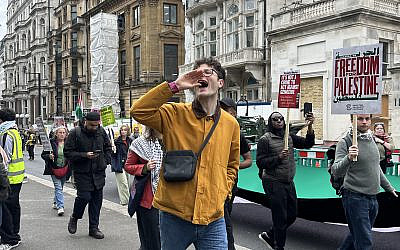
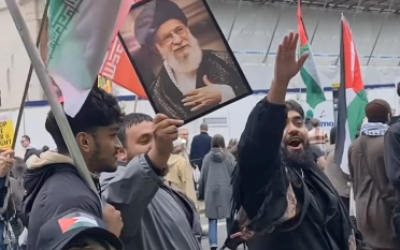
Another group chanted “Who protects the Nazis?”, answered by “Police protect the Nazis”, while gesturing towards Israelis waving flags. One man repeatedly screamed “Suck your dad” at Israeli counter-protesters before striking a camera pole carried by an observer. Another demonstrator, draped in Iranian-regime symbolism, allegedly turned toward Israeli counter-protesters and performed what was described as a Nazi salute.
And then there were the face coverings.
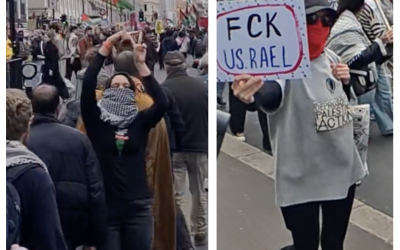
Remember those? The Metropolitan Police certainly did when they briefed the media. Officers were supposedly empowered under Section 60AA of the Criminal Justice and Public Order Act 1994 to require the removal of face coverings. The whole point, we were told, was to prevent anonymity during disorder and intimidation. Yet masks, keffiyehs and concealed faces were everywhere. In one instance a woman covering much of her face with a keffiyeh, turned and made the infamous targeting gesture of the inverted triangle made famous by Hamas propaganda and shouted “The resistance will get you” at Israeli counter-protesters. Another demonstrator wearing an inverted red face covering and dark glasses wore clothing supporting Palestine Action, the proscribed terrorist organisation.
Apparently “zero tolerance” now means tolerating it quite a lot.
Of course, defenders of the current approach always reach for the same excuse: policing is difficult. Crowds are dynamic. Officers must balance competing rights. Arrests can inflame tensions. Context matters.
Fine. Nobody sensible expects officers to instantly rugby-tackle every idiot with a placard. But the Met itself deliberately raised expectations. It chose the language. It chose the theatrics. It chose to tell the public that this operation would involve the “most assertive possible use” of police powers. It would seem the Met even failed to brief it’s officers that keffiyehs were not religious dress, and therefore could be removed protesters.
You cannot spend days briefing the media about a “zero-tolerance approach”, deploy thousands of officers and extraordinary legal powers, and then shrug when racially abusive behaviour happens directly in front of officers for hours on end.
Well, actually, in modern Britain you apparently can.
The real problem here is not simply operational inconsistency. It is that the British state has developed an extraordinary reluctance to treat anti-Jewish intimidation with the seriousness it deserves when it emerges from fashionable political movements.
Imagine for one second a comparable situation in reverse. Imagine thousands marching past Muslim counter-protesters chanting abuse while some wore masks under special police powers designed precisely to prevent concealment. Imagine gestures associated with genocidal movements directed at minorities under the watch of thousands of officers. Would the police response really have been so restrained? Would journalists and politicians dismiss concerns as overreaction? Would we be endlessly reminded that “context matters”?
We all know the answer.
The uncomfortable truth is that Britain’s institutions remain deeply nervous about confronting antisemitism when it presents itself wrapped in the language of anti-Zionism, “resistance” and fashionable activist politics. The police know perfectly well that aggressive enforcement against these demonstrations risks accusations of racism, authoritarianism or political bias. So instead they overcompensate. They talk tough at press conferences while policing timidly on the ground.
The result is the worst of both worlds. Jewish Londoners are left feeling abandoned, while public confidence in policing erodes further.
What makes the situation even more absurd is that the Met itself openly acknowledged the scale of the problem beforehand. Harman admitted these protests had repeatedly involved arrests for racially aggravated public-order offences, stirring up racial hatred and support for terrorist organisations. He even stated: “It is not normal to see criminality of this nature or on this scale at what are billed as peaceful protests.”
Quite right. It is not normal. But somehow it has become normalised.
There is also something grimly comic about the sheer technological extravagance of modern British policing. Britain in 2026 can deploy drones over Piccadilly, scan faces with live facial recognition, mobilise mounted units and spend millions on public-order operations. But stopping people screaming abuse at Jews standing behind Israeli flags? Apparently, that remains beyond the capability of the modern state.
Perhaps the next operation needs more helicopters.
Or perhaps the issue is not capability at all. Perhaps it is confidence. Perhaps Britain’s institutions no longer possess the moral clarity required to distinguish between legitimate protest and outright racial intimidation when Jews are the target.
The saddest part is that many officers on the ground almost certainly knew exactly what was happening. They were not blind. They could hear the chants. They could see the gestures. Many probably disliked it as much as anyone else. But modern policing increasingly seems paralysed by managerial caution, political anxiety and fear of controversy. Officers are expected to maintain “community cohesion”, which often translates into avoiding confrontation with large aggressive crowds wherever possible.
And so, the burden falls instead on the victims. Jews are told to avoid certain areas. Avoid certain demonstrations. Avoid wearing identifiable symbols. Avoid provoking hostility by existing too visibly in public while Israeli.
This is presented as pragmatism. In reality, it is surrender.
The Metropolitan Police promised zero tolerance. What they delivered instead was a giant security spectacle in which racist abuse could flourish quite comfortably. London may have got drones in the sky, horses in the street and armoured vehicles on standby. The Jews got told, once again, to keep their heads down and be grateful things were not worse.

