

Mathematics Teaching Professor, Author
National Holocaust Museum, Nottinghamshire, England: Educating Generations
National Holocaust Museum (Source: National Holocaust Museum of Nottinghamshire, England)
Located in Nottinghamshire, England, the National Holocaust Museum is a national institution dedicated to preserving the history of the Holocaust, honoring its victims and survivors, and educating future generations about the consequences of antisemitism, discrimination and genocide. Established in1995 by brothers Dr James Smith CBE, Co-founder and Life President. and Dr Stephen Smith MBE, Co-founder and former Director, their mother Marina Smith MBE, Co-founder and first Director of Education, and The Reverend Dr Edward (Eddie) Smith CBE, Co-founder and Methodist minister, the museum was founded following a life-changing visit to Yad Vashem in Israel.
Through its permanent exhibitions, historical collections, survivor testimonies, interactive educational experiences and landscaped Memorial Gardens, the Museum provides visitors with a deeper understanding of the Holocaust and the individual lives affected by Nazi persecution. As an independent museum founded by a Christian family, it has a particular commitment to educating schoolchildren and young people from diverse backgrounds, promoting historical understanding, empathy and the importance of challenging prejudice in contemporary society.
I would like to thank the esteemed Abi Levitt, CEO of the National Holocaust Museum along with the National Holocaust Museum team, for their guidance.
Museum
The National Holocaust Museum in Nottinghamshire, England, is an independent Holocaust museum founded by a Christian family. It is not a Jewish museum. Its primary focus is education, particularly working with schools, teachers and young people from across the country, the vast majority of whom come from non-Jewish backgrounds and who have very little, if any, knowledge of the Jewish community. The Museum works with almost 40,000 young people and aims to make Holocaust history accessible and meaningful to visitors of different faiths and cultural backgrounds, emphasizing that understanding and learning the lessons from the Holocaust is a shared responsibility that extends beyond the Jewish community.
A distinctive aspect of the Museum’s educational work is its focus on how non-Jewish children engage with Holocaust history and understand its relevance to the modern world and their lives in it. Through exhibitions, historical artifacts, survivor testimonies and interactive learning experiences, students are encouraged to consider the human consequences of antisemitism, discrimination and persecution.
The Museum seeks to help young visitors understand not only what happened during the Holocaust but also how prejudice develops and why it must be challenged. By connecting historical events with contemporary society, the Centre promotes critical thinking, empathy and awareness, encouraging future generations to recognize and confront anti-Jewish racism and other forms of hatred.
Exhibitions
The National Holocaust Museum in Nottinghamshire, England, features two permanent exhibitions, the Holocaust Exhibition and The Journey, alongside its Memorial Gardens. The Holocaust Exhibition explores Jewish life in Europe before the Second World War, the rise of Adolf Hitler and the Nazi Party, and the persecution that ultimately led to the Holocaust.
Through historical information and displays, survivor testimony and original artifacts, visitors learn about centuries of antisemitism, discriminatory Nazi legislation, the violence of Kristallnacht, the establishment of ghettos and the implementation of the Final Solution, which resulted in the murder of six million Jewish people. The exhibition also highlights survival, liberation and the courage of individuals and communities who risked their lives to protect others.
The museum’s second permanent exhibition, The Journey, follows the experiences of Leo Stein, a 10-year-old Jewish boy living in Berlin in 1938. Based on the amalgamated real-life experiences of 36 Holocaust refugees, his story explores the increasing persecution of Jewish families and the difficult decision his parents make to send him to England alone on a Kindertransport rescue train. It is a fully immersive exhibition where visitors move through exhibition spaces representing Leo’s family home, school, neighborhood and eventual train journey, and discovering more than 300 historical objects, photographs and personal belongings along the way.
The immersive exhibition also features interactive technology, diary extracts and recorded testimonies that help visitors understand the experiences of children forced to leave their homes. An introductory film about refugeeism, narrated by Dame Maureen Lipman, provides further context, while the Many Journeys Room presents testimonies from refugees of the Holocaust and the genocides in Cambodia, Rwanda and Srebrenica. Among its distinctive features is an interactive experience with a digital representation of Steve Mendelsson, a former Kindertransport child refugee, allowing visitors to ask questions about his experiences through technology developed as part of the Forever Project.
Designed to be suitable for families with children aged seven and above, The Journey focuses on the events that forced people to flee their homes rather than depicting the Holocaust itself. Together, the exhibitions provide an educational and deeply personal understanding of persecution, displacement, survival and remembrance. Through historical artifacts, survivor testimonies and interactive displays, the National Holocaust Museum encourage visitors to reflect on the consequences of hatred and discrimination while recognizing the importance of compassion, tolerance and standing against prejudice.
Collections
The National Holocaust Museum in Nottinghamshire, England, holds an extensive collection of artifacts, photographs, documents, personal testimonies and other objects relating to the Holocaust. As an actively collecting museum, it acquires items through its very personal relationships with Holocaust survivors and their families, as well as miscellaneous planned projects and specific requests to address gaps in its existing collection. These materials provide important historical evidence and feature in the Museum’s permanent exhibitions, including the Holocaust Exhibition and The Journey. The Museum is committed to preserving and caring for these objects to ensure that future generations can continue learning from their historical and personal significance.
Among its notable holdings is the Moshe Galili Collection, comprising 50 paintings donated to the Museum. Born in Hungary in 1930, Galili experienced Nazi occupation and persecution during his childhood. His father joined the Jewish resistance in Budapest and died from injuries sustained while fighting the Nazis, while his mother managed to keep her four children hidden throughout the war.
After surviving the Holocaust and eventually settling in Israel, Galili developed his artistic career, later studying at the École des Beaux-Arts in Paris before moving to London in 1962. He subsequently created his Holocaust and Humanity series, with each painting offering an individual interpretation of the Holocaust. The donated artworks are being processed and archived by the Museum’s curatorial team as part of its growing art collection.
Another significant initiative is The Forever Project, developed to preserve the voices and experiences of Holocaust survivors for future generations. Recognizing the importance of survivor testimony and the questions that arise as fewer survivors remain alive, the Museum collaborated with Dr Stephen Smith MBE to develop an interactive experience using voice recognition and artificial intelligence. The technology allows visitors to watch and listen to recorded survivor testimonies while asking questions and receiving responses based on their accounts. Featuring 11 members of the museum’s survivor community, the project complements hundreds of conventional video testimonies and offers a more personal, two-way learning experience, helping preserve survivors’ memories, identities and experiences for generations to come.
November Event: Poland Before the Holocaust: Recovering Traces of Jewish Life
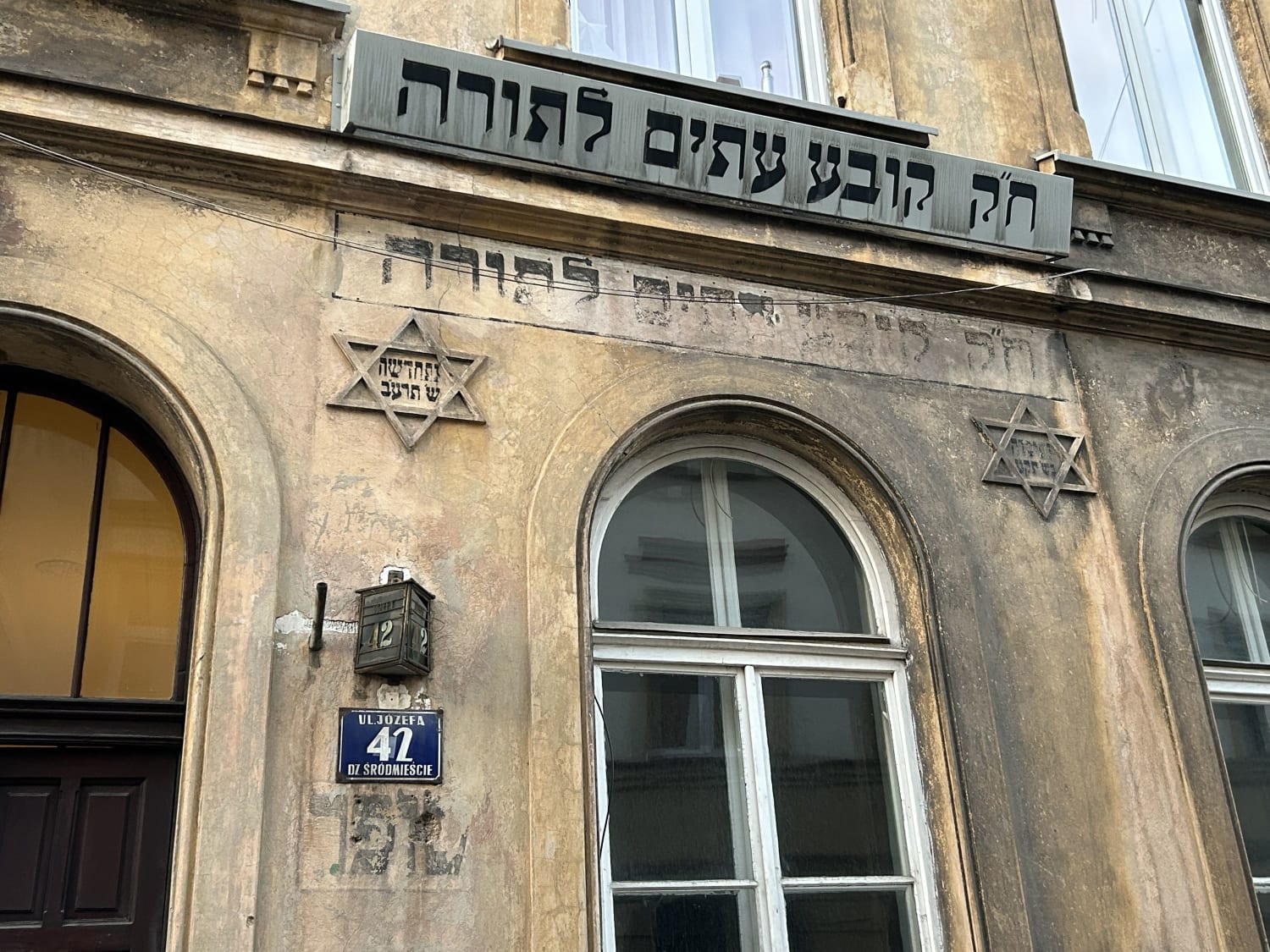
The National Holocaust Museum will host a special event exploring Jewish life in Poland before the Holocaust, with a live connection to the Galicia Jewish Museum in Kraków. Participants will learn about Poland’s Jewish population and enjoy a virtual tour of the museum. The Museum’s curators will share insights into the history, traditions, and cultural heritage of a community whose presence was almost destroyed during the Holocaust.
Memorial Gardens
The Memorial Gardens at the National Holocaust Museum in Nottinghamshire, England, occupy approximately one acre of landscaped countryside and provide a peaceful setting for remembrance and reflection. Designed to complement the Museum’s exhibitions, the gardens offer visitors an opportunity to remember Holocaust victims, honour survivors and reflect on the lives of those who suffered persecution.
Among their notable features is the Rose Garden, established to restore the individuality and dignity of Holocaust victims rather than allowing them to be remembered solely as statistics. As explained by co-founder James Smith in his book Behind the Rose, the garden was created to provide a personal space for victims and survivors. Today, it contains nearly 1,000 fragrant white roses, many dedicated by survivors and their families, with individual plaques bearing names in memory of those who were murdered.
Another important memorial is a sculpture by Flor Kent entitled Für das Kind (For the Child), which commemorates children rescued from Nazi persecution through the Kindertransport. The sculpture forms part of a series of memorials located in several European cities, recognizing the efforts of Nicholas Winton, who helped organize the rescue of Jewish children from Czechoslovakia in 1938 and 1939.
Approximately 10,000 children were brought to safety in Britain through the Kindertransport, including 669 children transported on five trains from Prague. A final train carrying 250 children was scheduled to depart on 1 September 1939 but was prevented from leaving following the outbreak of the Second World War. Most of the children scheduled to travel on that train were subsequently murdered during the Holocaust.
The gardens also feature Abandoned, a sculpture created by Czech Holocaust survivor Naomi Blake, who was interned in Auschwitz as a child and lost many members of her family. Ten red roses surrounding the sculpture commemorate her cousins who were murdered at the concentration camp. Blake studied at Hornsey School of Art and began exhibiting her work in 1962, with her sculptures now held in collections and displayed internationally.
Another of her works, Memorial to the Six Million, is also located within the gardens. Together, these memorials transform the landscape into a place of personal remembrance, honoring the victims and survivors of the Holocaust through art, symbolism and individual acts of dedication.
Survivors
Since opening in 1995, the National Holocaust Museum in Nottinghamshire, England, has welcomed numerous Holocaust survivors who have shared their personal experiences with visitors and audiences from different backgrounds. Their testimonies have become an essential part of the museum’s educational and remembrance work, providing first-hand accounts of persecution, survival and life after the Holocaust.
The Museum has also worked to preserve their stories by recording testimonies, collecting personal artefacts and documenting individual histories. Through these efforts, the museum seeks to safeguard the memories and experiences of Holocaust survivors for future generations. It also recognizes and expresses its gratitude to every survivor who has contributed and continues to contribute to keeping the history of the Holocaust alive.
Historical Backgrounds
In 1991, England was experiencing a severe economic recession alongside significant political, technological and cultural changes under the leadership of Prime Minister John Major. British forces joined the US-led coalition during Operation Desert Storm, with the Royal Air Force carrying out strikes against Iraqi forces in January and February. Meanwhile, the country faced growing economic difficulties, with unemployment exceeding 2.5 million as businesses and communities struggled with the downturn.
In Nottingham, England, 1991 was marked by notable sporting and cultural events. Nottingham Forestreached the FA Cup Final at Wembley Stadium under manager Brian Clough, eventually losing 2–1 to Tottenham Hotspur after extra time. Stuart Pearce gave Forest an early lead with a free-kick before Tottenham secured the victory. The city also attracted international musical attention when Nirvana performed a sold-out 19-song concert at the iconic Rock City venue during the band’s breakthrough period. Additionally, reports of unusual low-flying UFO sightings in areas including Arnold, Bulwell and Beeston attracted local media attention and interest from regional UFO researchers.
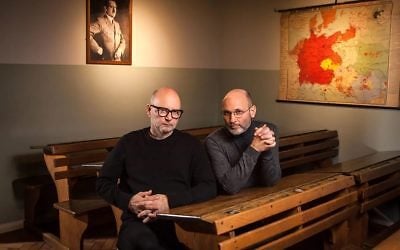
It was in that year, 1991, that brothers James and Stephen Smith, together with their mother Marina, visited Yad Vashem, Israel’s national Holocaust memorial and museum. The experience profoundly changed their understanding of the Holocaust and highlighted what they believed was a lack of Holocaust education in their own schooling and university experiences. Deeply moved by what they had learned, the family returned to England determined to establish a dedicated centre where the Holocaust could be taught, discussed and understood by future generations. Although neither brother was Jewish, they believed that understanding the Holocaust was a responsibility that extended across society and generations.
Following several years of fundraising, planning and dedicated work, the Beth Shalom Holocaust Centre was established and officially opened in September 1995 near Nottingham. Beth Shalom translates from Hebrew as “House of Peace”, reflecting the Museum’s wider commitment to peace education, dialogue and understanding. It became the first institution in Britain established primarily for Holocaust education and remembrance.
Built around the former Smith family farmhouse, it developed into a national museum featuring permanent exhibitions, educational facilities, a lecture theatre and Memorial Gardens. Its educational programme also places particular emphasis on younger visitors, including The Journey, an exhibition designed to introduce children to the experiences of the Holocaust through the story of a child refugee.
Over the years, the National Holocaust Museum has expanded its educational mission to address contemporary issues, including racism, antisemitism, Holocaust distortion and the spread of misinformation. Through historical evidence, survivor testimonies and educational programmes, the Museum encourages visitors to develop critical thinking skills and recognize the dangers of prejudice, stereotypes and conspiracy theories.
Its work has received support from individuals and organizations, including the Pears Foundation, whose longstanding contribution has helped sustain the museum’s activities. In recognition of their contribution to education and remembrance, James and Stephen Smithand their mother Marina were awarded honorary Doctor of Letters degrees by Nottingham Trent University on 21 July 2010.
The Smith brothers also extended their commitment to preventing genocide beyond Holocaust education. In July 2000, they established the Aegis Trust in response to the genocides in Rwanda, Bosnia and Darfur. The organization works to promote genocide prevention, peace education and international awareness.
One of its major initiatives was the Kigali Genocide Memorial in Rwanda, which opened on 7 April 2004, marking the tenth anniversary of the beginning of the genocide against the Tutsi. Modeled in part on the National Holocaust Museum, the memorial serves as a place of remembrance and education, reflecting the Smith family’s continuing commitment to ensuring that the lessons of past atrocities contribute to a more peaceful future.
The National Holocaust Museum in Nottinghamshire, England, stands as an important institution dedicated to preserving the memory of the Holocaust and educating future generations about its enduring lessons. Through its historical exhibitions, extensive collections, survivor testimonies, interactive experiences and Memorial Gardens, the Museum brings individual stories of loss, survival and courage into focus. Its commitment to educating young people, particularly those from non-Jewish backgrounds, reinforces the importance of understanding the Holocaust as a shared human responsibility.
In conclusion, to quote Abi Levitt, CEO of the National Holocaust Museum, “The National Holocaust Museum is a very special place of commemoration and learning, created through the extraordinary vision of a Christian family who believed that the history of the Holocaust must be shared with everyone. That founding spirit continues to shape our work today.
“The publication in October 2026 of the Independent Review into Antisemitism in Schools and Colleges, commissioned by the Department for Education and led by Sir David Bell, has reinforced the national importance of helping schools prevent, identify and respond effectively to antisemitism.
“By connecting the history of the Holocaust with the choices and actions young people make today, the Museum helps children understand the consequences of prejudice and the part each of us can play in building a more thoughtful and compassionate society.”
Beyond remembering the six million Jewish victims and millions of other victims of Nazi persecution, the Museum encourages visitors to recognize the dangers of antisemitism, racism, prejudice and misinformation in contemporary society. Ultimately, its work ensures that the voices of survivors and the lessons of the Holocaust continue to inform, educate and inspire generations to stand against hatred and promote peace.
Contact Information:
National Holocaust Museum of Nottinghamshire, England, Acre Edge Road, Laxton, Nottinghamshire, NG22 0PA
Phone: 01623 836627
Email: office@holocaust.org.uk
Website: https://www.holocaust.org.uk/