
Navigating the Complex Heart and Mind of Yom HaZikaron
This is the tale of two Memorial Days.
In the US, there’s the unofficial start of summer, a new season’s items on sale, BBQs, and an extra day off of work. That’s likely what’s on the average American’s mind when they think about Memorial Day. While there are parades and memorial services, overall national sadness and mourning are mixed with a solid dose of pride and celebration.
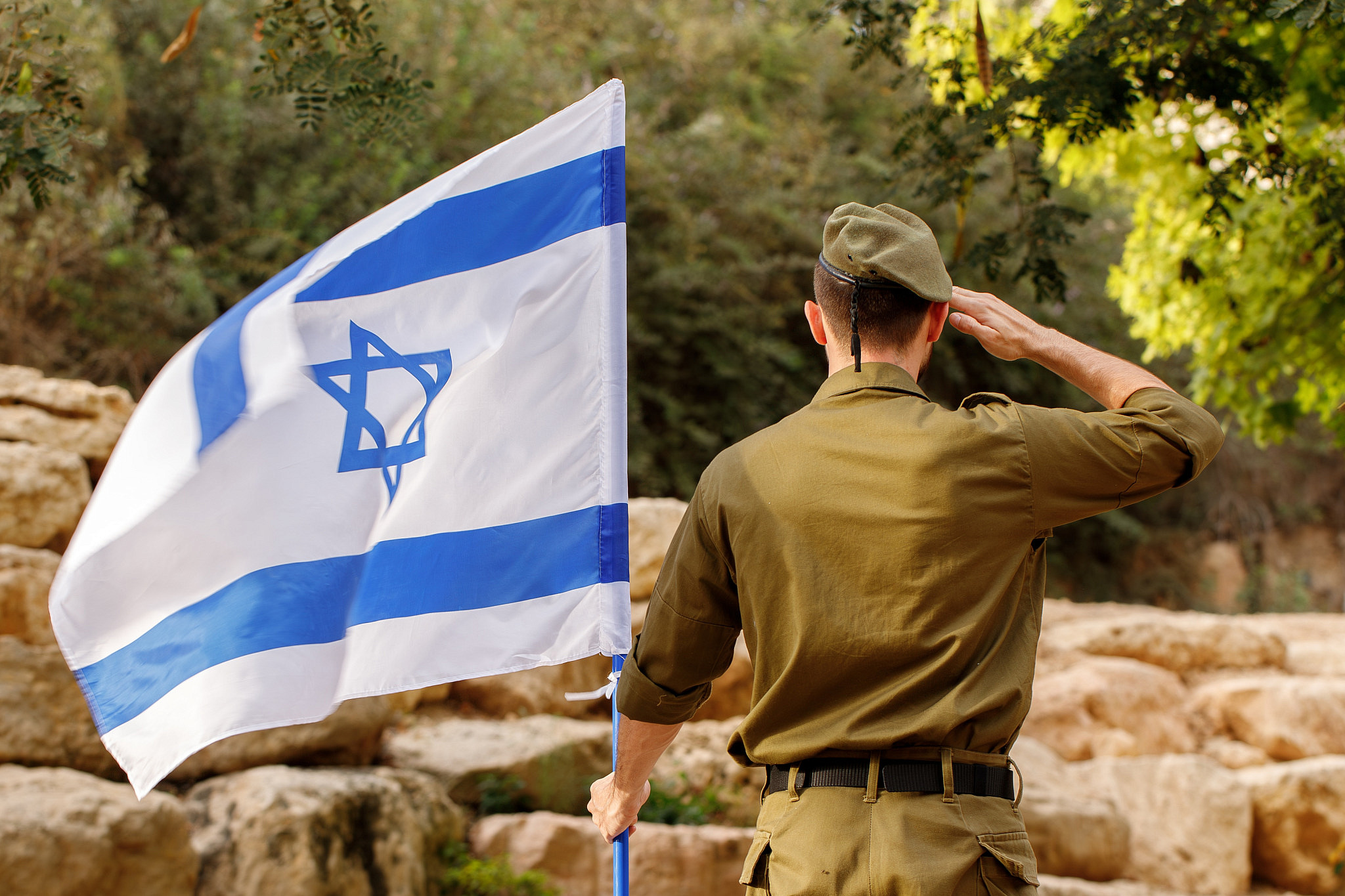
On the other hand, in Israel, there is Yom HaZikaron. In full Yom HaZikaron LeHalelei Ma’arkhot Yisrael ul’Nifge’ei Pe’ulot HaEivah is Israel’s Memorial Day. It’s the official day of remembrance for fallen soldiers and terrorism victims, enacted into Israeli law in 1963. The day carries a lot of weight for Israelis and is filled with enormous sadness, conflicted emotions, and hard to process memories.
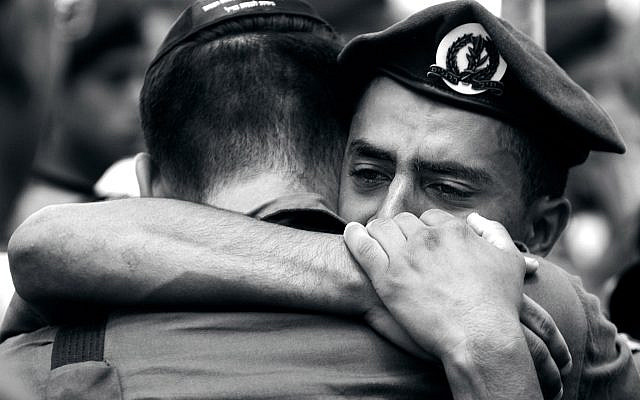
PHOTO: Shutterstock
Loss, Trauma, and a Deeply Shared National Sadness
To be Israeli on Yom HaZikaron is to experience a national sharp and shared ache. Because Israel is so small, nearly every citizen is a bereaved family member, a friend of the fallen, or knows someone who is. Television stations stop broadcasting entertainment, restaurants close, and the radio plays Hebrew songs about loss and longing.
Every Jewish event has its rules and rituals, and Yom HaZikaron is no different. Twice during the day, a piercing alarm sounds across the country. Everything stops for one minute to pause and remember. Most Israelis wear a small sticker featuring a Dam HaMaccabim (Blood of the Maccabees) flower, symbolizing the fallen.
And then there is the immediate transition at sundown into Yom Ha’atzmaut (Independence Day), moving from deep mourning to lively celebrations in what feels like just a few moments. This transition serves as a reminder that emotional duality is real and grief and joy can coexist.
Healing the Invisible Wounds of War
But what about the unseen wounds that people still carry past Yom HaZikaron? The loss, the trauma, the PTSD. The experiences that make it difficult to sleep, work, and function. Helping Israelis reach Post Traumatic Growth is the work of NATAL whose therapists and researchers are dedicated to implementing the tools to create, not a new or better, but a different future.
Dr. Boaz Shalgi, NATAL’s Chief Psychologist, describes the current reality as “rolling trauma” explained as continuous, cumulative exposure where one crisis is enveloped in layers of more trauma. Unlike a single event with a clear beginning and end, this seemingly endless state means that for many, the siren of Yom HaZikaron is every day.
The Battle for Peace in Heart, Mind, and Home
I want to share a story about Jon who sought counseling after being on reserve duty for over 400 days and feels that Yom HaZikaron is on his mind every single day.
Jon explained, “People around me did not understand that I see the friends I’ve lost every day, everywhere. Their images come back to me in budget meetings, the sounds and the smells can suddenly appear when I’m answering emails at my desk. I don’t need a remembrance Day, because I remember it every day.”
Dr. Hadar Ben-Sira Rothman, an occupational psychologist and trauma-focused psychotherapist at NATAL: Israel Trauma and Resiliency Center, explained the situation with Jon, and one that has become far too common for veterans. “Working as a mid-level manager in an insurance company, Jon had difficulty returning to his routine. He felt like he forgot all of his professional knowledge, and had a hard time trying to catch up with what happened at the office while he was away. He got frustrated, frequently lost concentration and felt angry and incompetent all the time. We worked on several techniques to help him regulate his emotions and his concentration. But he felt a setback a couple of weeks before Yom HaZikaron.”
“Luckily through the career counseling process I realized that I cannot be a living monument, because that keeps me from living my life. So, I am gradually noticing moments of joy and success in my personal and professional life. It’s all about savoring life’s simple pleasures and small wins,” Jon continued.
Hope is a Universal Lifeline that Supports Resilience
We must believe that there is always hope. It’s the strength that makes people understand that no one has to process their grief alone. That Yom HaZikaron should be observed and experienced, but it doesn’t have to be an emotional weight with no end.
In the United States, while Memorial Day often serves as the “unofficial start of summer,” there remains a quiet, underlying mix of happiness, sadness, pride, and support for those who fought for freedom. It is that very same spirit that unites American Jews and the global community with Israel.
Worldwide support from Jews is essential because trauma thrives in isolation, but resilience scales through connection. This global solidarity gives Israelis the emotional air they need to breathe, while giving the global community a way to transform their anxiety into action.
We support Israel, emotionally and in countless other ways, because we recognize that the freedom we cherish is never free. Whether it is “psychological first aid” being given or standing in solidarity from across an ocean, this support is our way of honoring that sacrifice, especially on Yom HaZikaron.