NBEC’s Darius Jones on the Black-Jewish Alliance 2.0
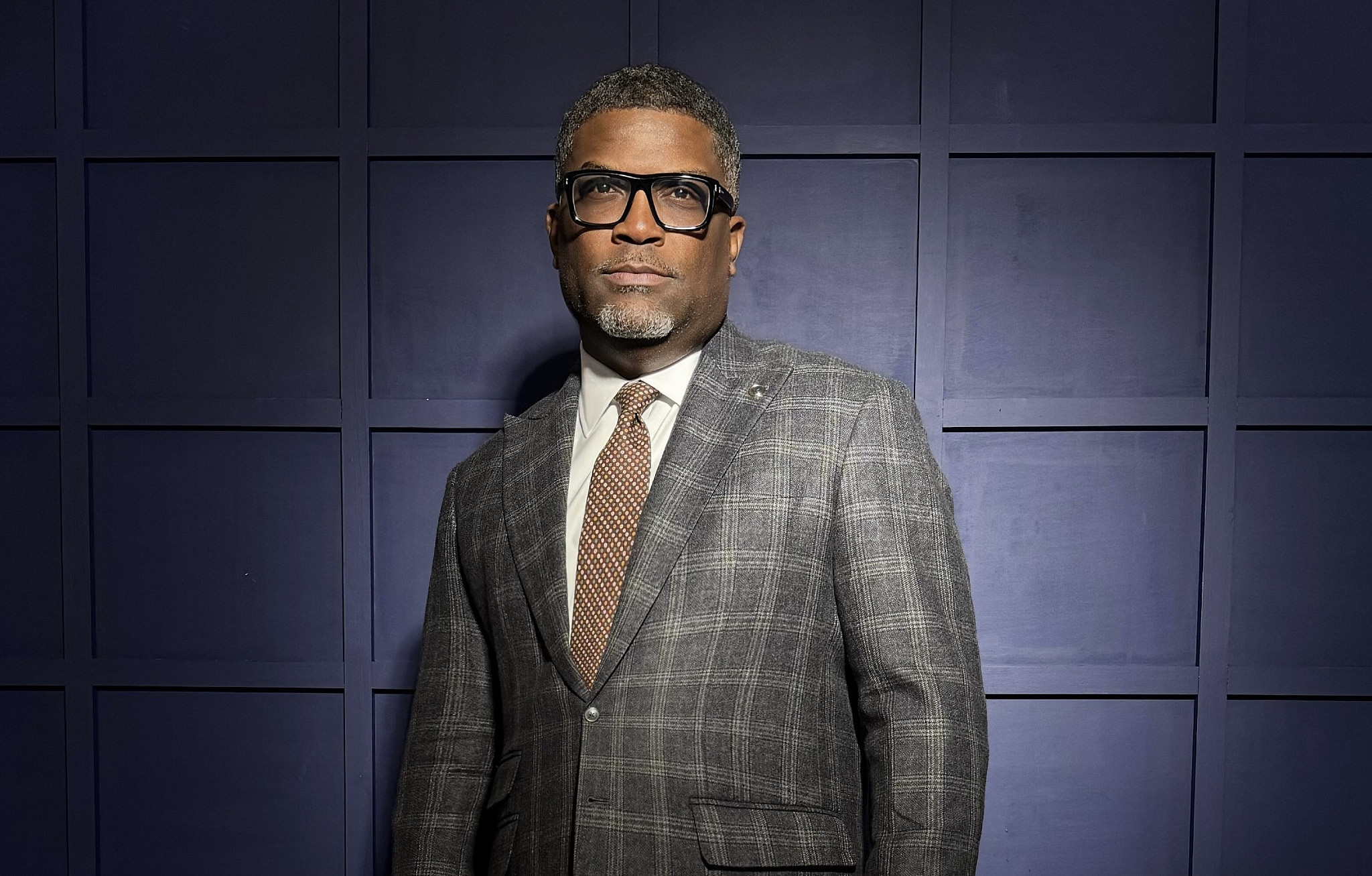
At a time when the Jewish community needs allies more than ever, we’re fortunate to have Darius Jones in our corner.
Darius is the Founder and Executive Director of the National Black Empowerment Council (NBEC), a membership organization whose mission is to close the systemic wealth, influence and achievement gaps between African Americans and more structurally advantaged groups. Darius previously served as the Deputy National Political Director for Michael Bloomberg’s 2020 presidential campaign. Prior to that, Darius spent a decade as National African American Constituency Director for the American Israel Public Affairs Committee (AIPAC).
On a recent podcast episode of A Moment with Erik Fleming, Darius offered his insight on the critical importance of the continued alliance between the Black and Jewish communities. Much of their compelling discussion is detailed below, followed by my own Q&A with Darius Jones.
To start their conversation, Erik asked Darius to react to the following quote:
“Jews cannot fight antisemitism alone. The victim cannot cure the crime. The hated cannot cure the hate. It would be the greatest mistake for Jews to believe that they can fight it alone. The only people who can successfully combat antisemitism are those active in the cultures that harbor it.”
Darius replied, “I agree with that one hundred percent. I’ve always been a firm believer that God doesn’t give any one group or any individual a monopoly on wisdom. It’s when we all come together and really collaborate and recognize the power in our interdependence that we can really force-multiply our efforts.
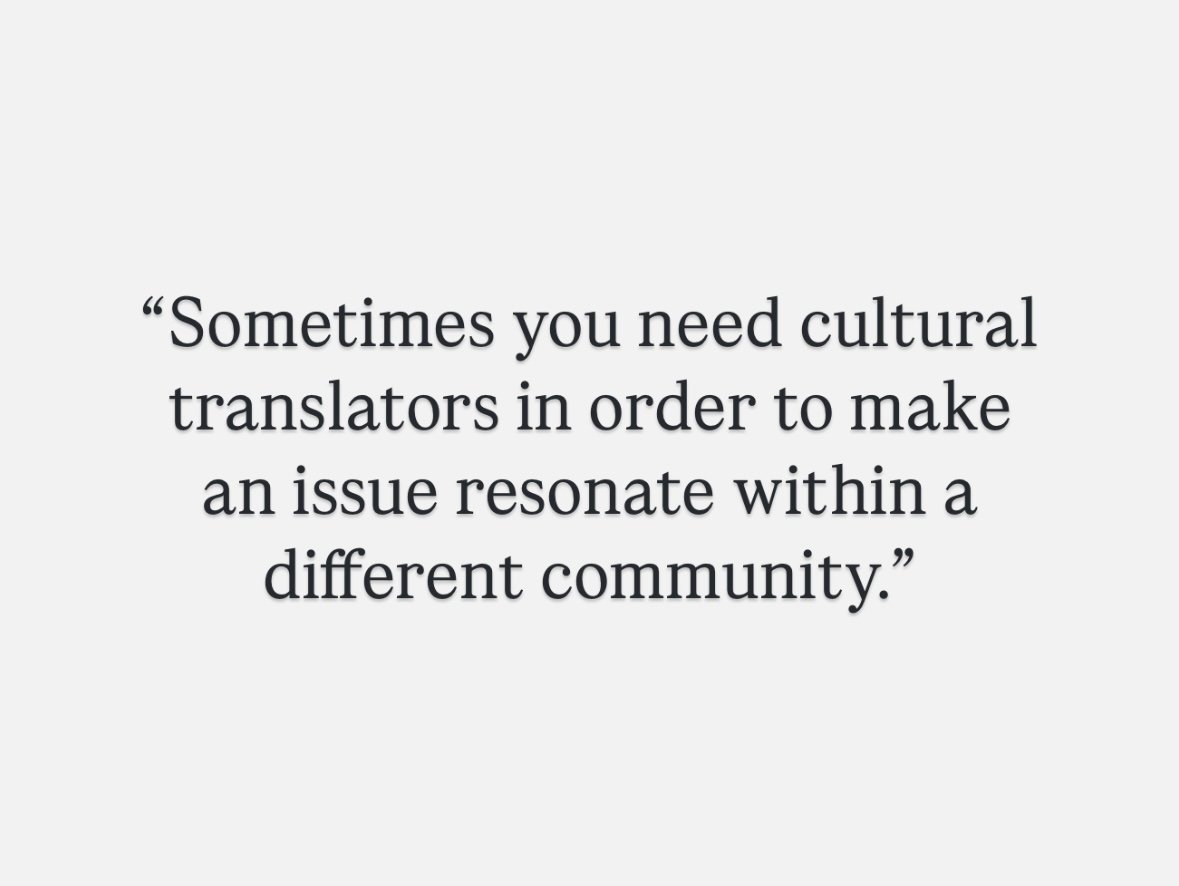
I have long believed that in having this relationship with the Jewish community, and trying to deepen the bonds between our two communities, that it is vitally necessary to have leaders who are able to go within their respective communities, be seen as highly credible individuals within those communities, and then are also unapologetic and compelling in articulating to their group the positions or the challenges or the outright discrimination that another group is facing. Sometimes you need cultural translators in order to make an issue resonate within a different community.
I’ve been involved in that work for a while, and I’m fortunate and blessed to have friends in the Jewish community who do the same thing in the Jewish community in terms of helping folks over there better understand issues of critical importance to the Black community as well. We stood together before—we came together and fundamentally changed this nation during the Civil Rights Movement. I think we face similar threats now, and it’s just as necessary and it’s just as incumbent upon us to stand together and join in this fight again.”
Erik recapped the recent tragedies and acts of violence that took place in Washington, D.C., and Boulder, Colorado. He continued, “USA Today asks: ‘Is anyone listening to the fears of Jewish Americans?’ What do you think?”
Darius responded, “I think that there are people listening, but not to the degree to which the urgency of the situation would demand—and I think that is very unfortunate. I think that in a lot of communities outside of the Jewish community, there’s the perception that the Jewish community is extraordinarily powerful, extraordinarily well-resourced. And because people are wedded to that idea, it’s very difficult for them to be able to understand and appreciate the vulnerability that the Jewish community actually faces. There’s something like fifteen million Jews in the world—and just a little over eighty years ago, six million of them were exterminated by the Nazis.
The Jewish community is unique in America in that they have people coming for them from the right and from the left. And I really deeply empathize with what it feels like to be under that level of constant threat. And to then have people who you would hope and expect to be able to understand your vulnerability just be absolutely unwilling to even entertain the notion of it because they are so convinced that you are just this invulnerable bastion of global power, based unfortunately on antisemitic tropes.”
Erik asked, “Why should Black Americans care about what is happening to Jewish or Palestinian Americans during this unsettling time?”
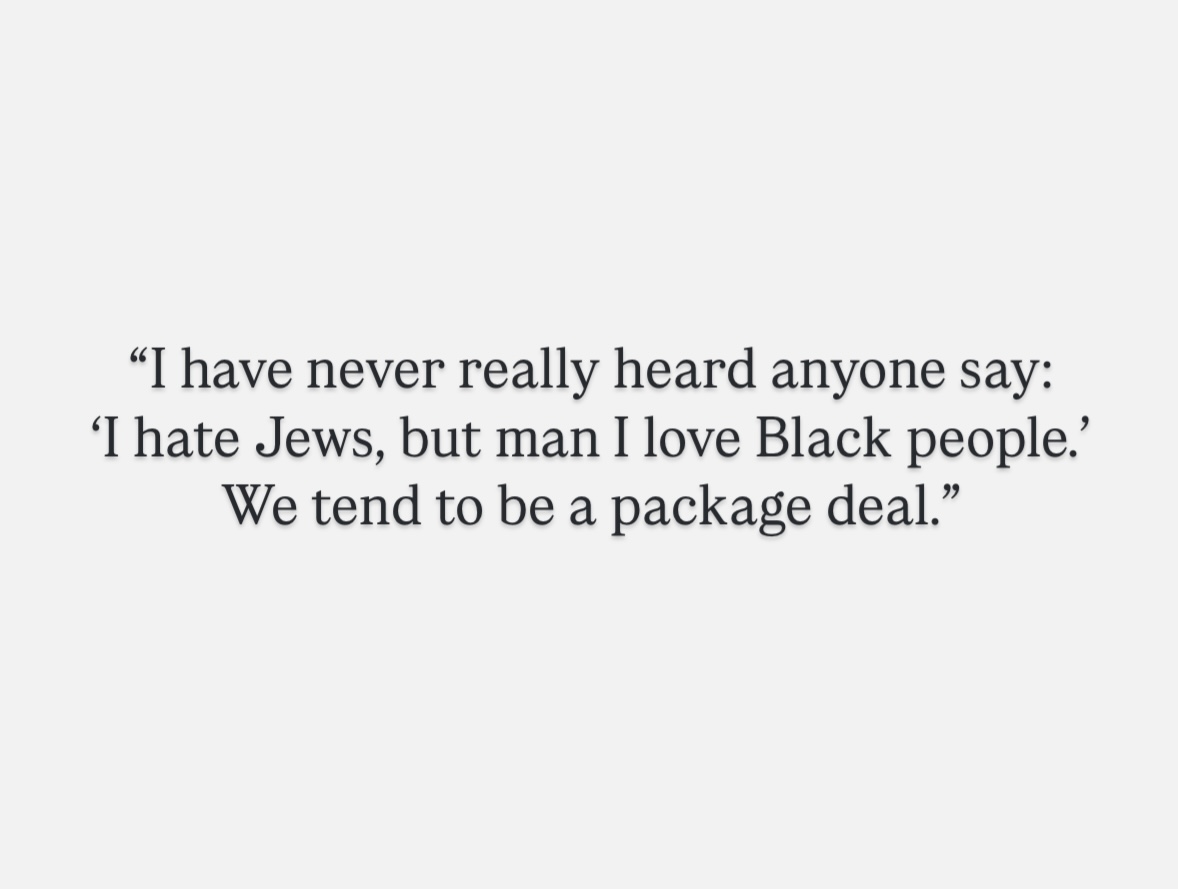
Darius explained, “I would say particularly as it relates to antisemitism, is that it’s not just a Jewish problem—it tends to be a societal red flag. What begins with them, historically, tends not to end there. They’re kind of like the warm-up act. And in all of my fifty-four years, when I’ve heard people—racists, white supremacists—talk about our people, I have never really heard anyone say: ‘I hate Jews, but man I love Black people.’ We tend to be a package deal. When you hear somebody start and their rhetoric begins to go in that direction—you know that if you let them talk long enough, they’re coming our direction. So my thing is, I don’t really understand how we as Black people can kind of turn a blind eye when we see that happening, because we understand human nature and we understand history.
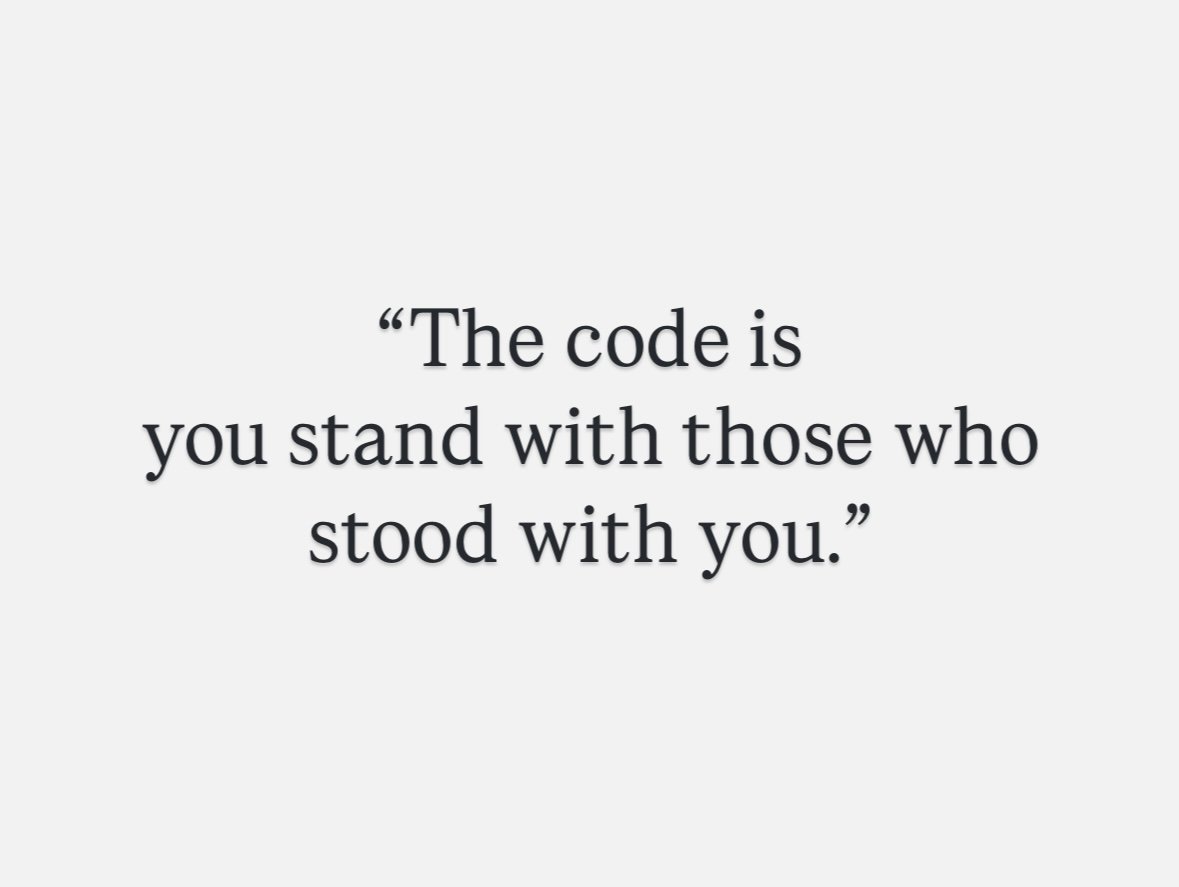
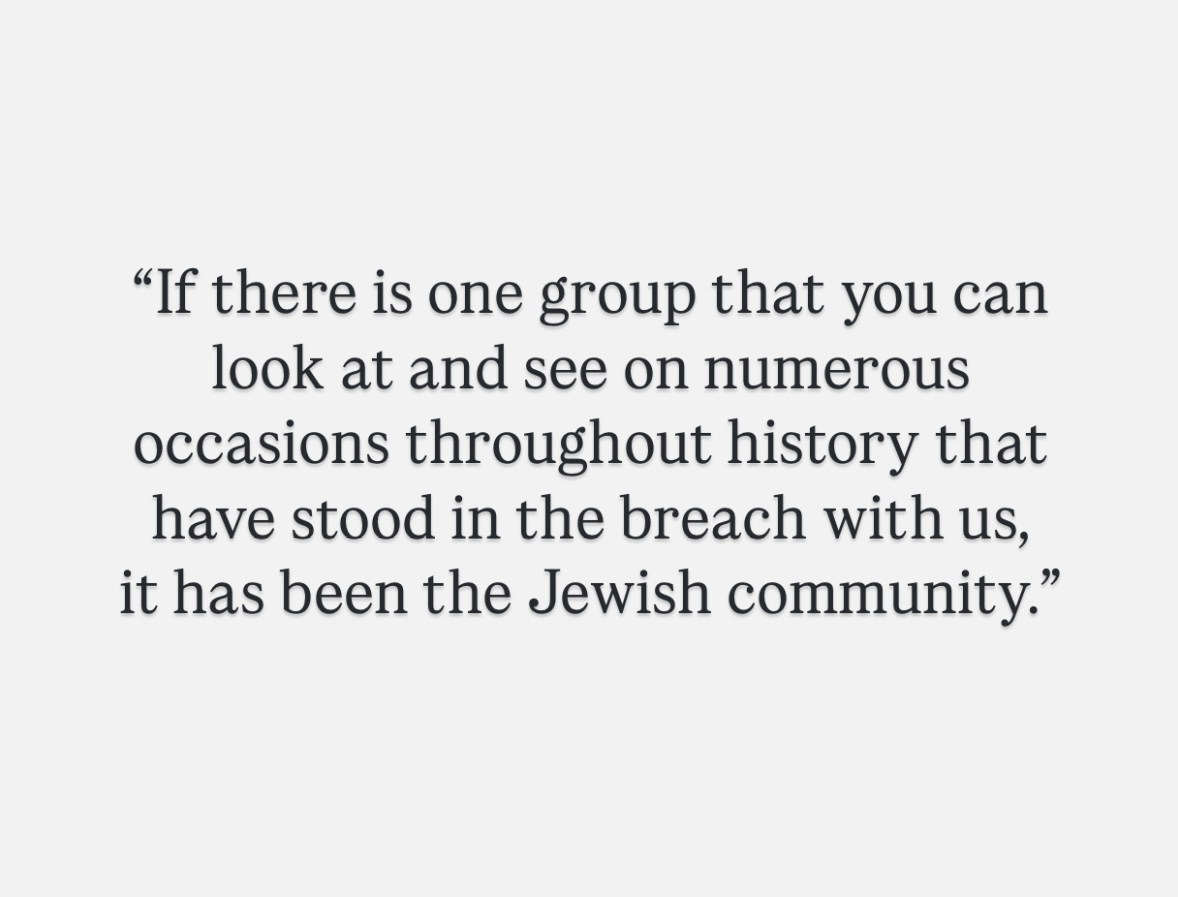
And then more specifically, if you think about our time as Americans—Black people—we’ve been here since 1619. During that period, we really haven’t had a lot of people who’ve made any effort whatsoever to try to stand with us and be our allies. But if there is one group that you can look at and see on numerous occasions throughout history that have stood in the breach with us, it has been the Jewish community. And just the notion of having a group stand with you in your times of trial—I mean think about how society has advanced now since the Civil Rights Movement. We have successful Black entrepreneurs, successful Black podcasters, we had a Black President of the United States. I mean, the yoke of white supremacy and Jim Crow and all the things which held us down…we came together with the Jewish community, broke that yoke, and now we live in a fundamentally different reality. And then to just stand in the positions that we hold now and to look to the side and see somebody who’s been with us in the trenches really going through it. And to be indifferent or to be nonchalant, or even worse—to kind of be indignant in trying to justify why it’s necessary for them to be alienated in that way—that’s objectionable to me, it’s not honoring the code. The code is you stand with those who stood with you. And I hate to see it happening.”
. . . . .
Leah Grossman: Darius, first, I want to thank you for standing with the Jewish community. Since October 7th, there’s been a startling and sad realization among Jews that we have stood with many other marginalized groups, but nobody is standing with us during this extremely difficult time. Your clarity and commitment to our partnership is refreshing and deeply appreciated.
In my attempt to grapple with the feeling of abandonment from the Black community in particular, I found some comfort in an explanation given by Van Jones on a podcast episode of Being Jewish with Jonah Platt. Van explained that this is new territory for Black people, who “never lived in a world where Jewish people needed help. We don’t have that committee, we don’t have that training, we don’t have that workshop. The idea that Black people are supposed to help Jewish people is, like, shocking for Black people.”
How do we overcome this obstacle? This seems like a great opportunity to utilize the “cultural translators” you spoke about with Erik Fleming—how can this concept be employed in a way that improves the ability for the Black-Jewish alliance to operate effectively in both directions?
Darius Jones: “Cultural translators” are indispensable to our alliance. They are the trusted insiders who can move fluidly between communities—not just linguistically, but emotionally, spiritually, and strategically. They help both sides understand one another’s trauma, priorities, language, and pain points in a way that resonates. In moments like this, when many Black Americans don’t fully grasp the depth of Jewish vulnerability, and many Jewish Americans don’t fully grasp the context behind Black silence or missteps, translators become the bridge—not just to communication, but to healing and recommitment. They ensure we aren’t just talking at each other but actually reaching each other. I see it as sacred work.
Leah Grossman: Have you been surprised by the overall response from the Black community since October 7th? Can you share some instances of support for the Jewish community that we might not be aware of?
Darius Jones: Yes and no. I’ve been saddened by some of the silence, but not surprised. As Van Jones rightly said, this is uncharted territory for many in the Black community—we’ve never been trained or socialized to see Jewish people as vulnerable or in need of support. That mental shift is disorienting, especially in a world where antisemitic tropes about power still cloud people’s ability to empathize.
That said, there has also been real, strategic solidarity—especially from the Black leadership class. Through the National Black Empowerment Council and our sister organization, the National Black Empowerment Action Fund, we’ve brought forward a new generation of Black leaders who understand both the historic and future stakes of this alliance. These are not performative allies; they are partners in action. We’ve worked closely with our Jewish friends to defeat elected leaders whose platforms were not only harmful to Black communities but also hostile to Israel and dangerously permissive of antisemitism.
We’ve also gone beyond rhetoric. Since October 7th, I’ve personally led three delegations of senior Black leaders to Israel—HBCU presidents, political power brokers, and top civic figures—because bearing witness matters. Our HBCU Initiative is forging deep academic and leadership ties between Black institutions and Israeli universities, anchoring our partnership in education and peoplehood. This year alone, the Israeli Deputy Ambassador and the Ambassador to the U.S. have met directly with our leaders at major Black political gatherings. These are not symbolic gestures—they’re high-level relationship-building moves that reaffirm our shared destiny.
So, while the broader public may not always see it, the work is happening. The real alliance is being fortified—quietly, strategically, and with integrity.
Leah Grossman: What do you envision as the best path forward for the Black and Jewish communities to carry our historical alliance into the present and future?
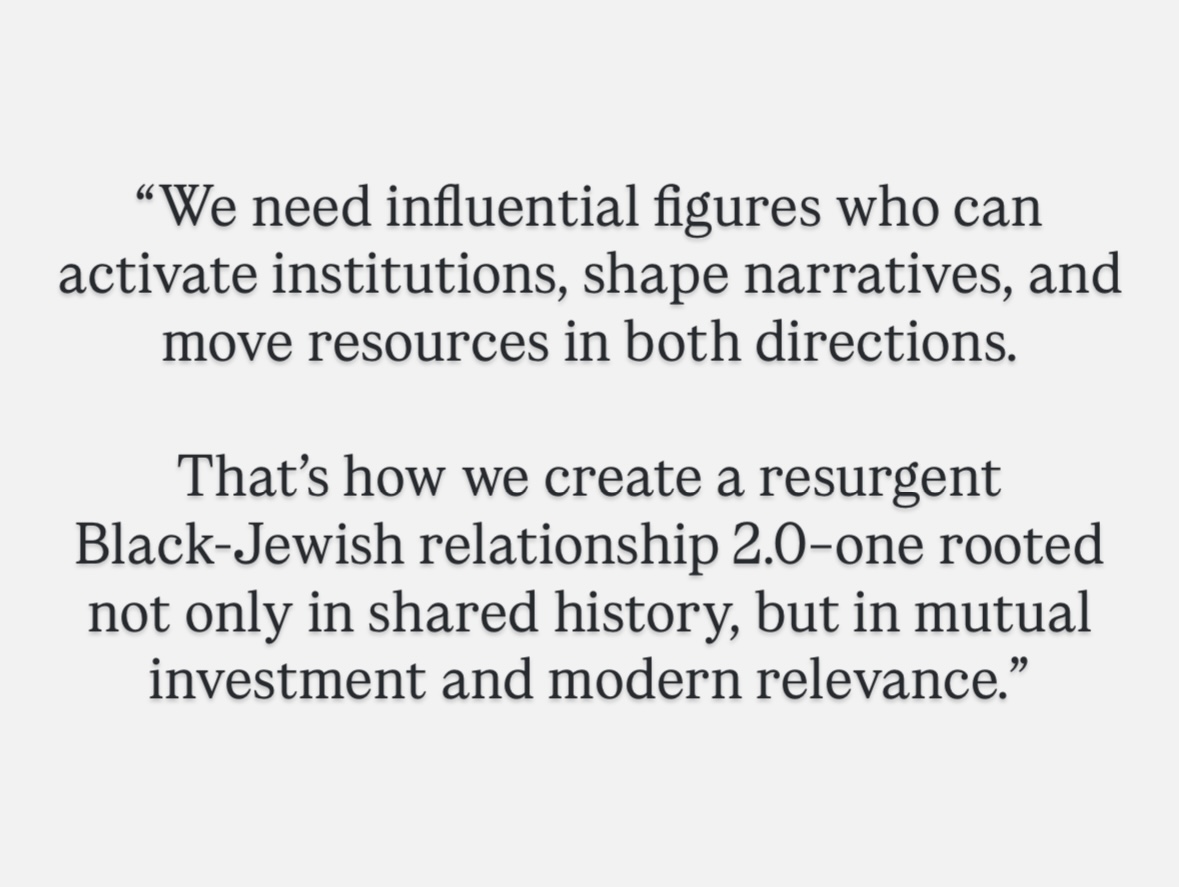
Darius Jones: The best path forward is to bring together leaders who hold real influence—both inside and outside of the Black and Jewish communities—and align them around a shared vision. These aren’t just symbolic partnerships. We need influential figures who can activate institutions, shape narratives, and move resources in both directions. That’s how we create a resurgent Black-Jewish relationship 2.0—one rooted not only in shared history, but in mutual investment and modern relevance.
We’re already laying the groundwork. Through our HBCU–Israel Initiative, we’re forging serious partnerships between historically Black colleges and universities and top Israeli academic institutions. This isn’t just cultural diplomacy—it’s economic, technological, and geopolitical alignment. We need more of that. Joint ventures. Shared investment vehicles. Coordinated advocacy that supports candidates who see the world the way we do—and pushes back against leaders whose policies are bad for both of our communities and for the country at large.
It’s time to move beyond rhetorical and performative allyship. The next chapter of Black-Jewish relations must be institutional, tactical, and sustainable. That’s how we protect our communities, amplify our shared values, and ensure this alliance thrives for generations to come.
. . . . .
“It’s in our mutual interest to stay together. It’s in our mutual interest to fight hatred in all of its forms. It’s in our mutual interest to not let the brain rot of anti-Jewish bigotry infect the Black community. This is a survival question for Black and Jewish people and for democracy itself.”
—Van Jones