Nepal’s GenZ protest: The Social Media Ban That Claimed 19 Lives
In Jerusalem’s Ramot neighborhood, Palestinian gunmen brutally opened fire, killing six innocent people. As this heartbreaking news spread, another tragedy surfaced from Nepal. During protests against the government’s social media ban, police turned on their own people—young GenZ voices demanding freedom. Many of those killed were just teenagers and youths between 15 and 30, some still wearing their school uniforms when they lost their lives
It breaks my heart to share the story , a story of young voices, hope, and an unimaginable tragedy. My mind is heavy, burdened by the events that unfolded when a new generation, full of dreams, dared to speak up, only to be met with a brutal crackdown by the state. This wasn’t just a simple protest; it was a cry from the youth for a better future, a stand against corruption and the suppression of their freedom of expression.
Questions weigh on my soul: Have we truly embraced democratic values? Isn’t it the state’s duty to listen to and address the concerns of its young people?
The Digital Silence: A Ban on Social Media Apps
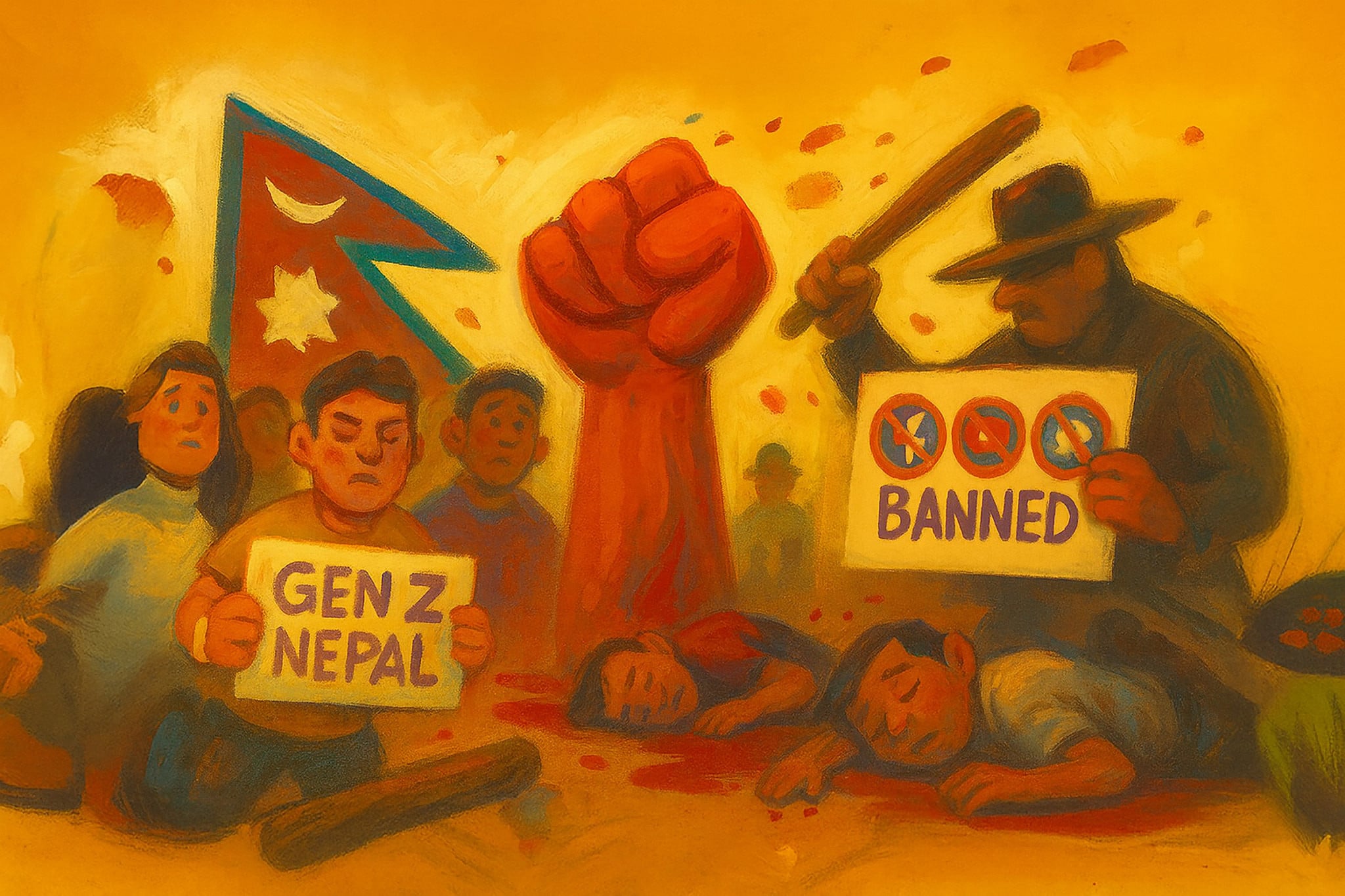
It all started with a shocking decision: a ban on 26 social media apps. Imagine losing access to Facebook, YouTube, X (formerly Twitter), WhatsApp, Instagram, and LinkedIn – platforms that are such an integral part of daily life for young people today. This ban came into effect on September 4th. The government’s justification was to make these platforms “properly managed, responsible and accountable” by introducing a bill in Parliament. However, many saw this bill as a tool for censorship, designed to silence opponents who voiced their dissent online. The government also argued that fake ID users were committing malicious acts and cybercrimes, disrupting social harmony.
This decision felt abrupt and sudden to many. These platforms were given just one week to register with the Ministry of Communications and Information Technology by September 3rd; those that didn’t comply were instructed to be shut down by the Nepal Telecommunications Authority (NTA). While some, like TikTok, Viber, and WeTalk, did register, many others did not.
This created immense difficulties for Nepalis, especially the estimated 7.5% of the population living abroad (as of 2021), who rely on these platforms to connect with their families back home. Many had to switch to Viber just to stay in touch. This ban wasn’t just a digital blockade; it felt like cutting off a vital connection to the world and stifling the flow of ideas, deepening the frustration among young people.
The Deep Scars of Corruption
But the roots of this movement run much deeper than just a social media ban. They lie in the widespread corruption and mismanagement plaguing the country. Generation Z (those born between 1995 and 2010) has long been troubled by the rampant corruption and irregularities in Nepal. Despite being regularly discussed publicly and in Parliament, these corruption cases rarely reached a fair conclusion.
Corruptions fueled a sense of injustice among the youth, who felt that their taxes were not being used properly. The core of their dissatisfaction was the feeling of being sidelined from decision-making and having their voices suppressed. Their demand was clear: fairness, accountability, and justice must triumph over favoritism and corruption.
Nepali youth also drew inspiration from successful movements in south asian countries such as Sri Lanka (2022) and Bangladesh (2024), which led to the removal of governments. Similar to how images of public figures’ children living lavish lifestyles in the Philippines sparked criticism, videos on TikTok showing children of Nepali politicians enjoying luxury in a country with a per capita income of $1,300 deeply angered the youth and propelled them to act.
Gen Z’s Uprising and the Unthinkable Crackdown
On Monday, thousands of young people from Generation Z took to the streets. They broke through barbed wire, surrounded the Parliament building, and even forced riot police to retreat. Waving national flags, they chanted, “Stop the ban on social media, stop corruption not social media!”. It’s crucial to understand: this was not a movement to overthrow the political system. Their demands were simply to exercise their basic civil liberties – to use essential social media platforms like Facebook and YouTube, to engage in simple online businesses, or to create content.
But what happened next, the state’s response to this peaceful demonstration, has shattered my heart. Nepal police fired rubber bullets, tear gas, and water cannons to disperse the protestors, resulting in the tragic deaths of at least 19 people. Some heartbreaking reports even described innocent schoolchildren being shot and killed “like a violent hunter kills birds”. Over four hundred people were injured and are now in hospitals. Victims received treatment in various Kathmandu hospitals, including Civil Hospital and National Trauma Centre. This is possibly the first time in the history of peaceful political movements in Nepal that so many people have been killed by state repression in a single day, in a single place. This wasn’t just the killing of bodies; it was the killing of future possibilities and dreams.
Following this brutal crackdown, Home Minister, responsible for the police deployment, has resigned. A curfew has been imposed in the Kathmandu Valley, and the army has also been deployed. The Nepal Government has reportedly lifted the ban on 26 social media platforms, as announced by IT Minister . The ban, which had restricted access to Facebook, Instagram, Twitter, YouTube, WhatsApp, and several others, has now been lifted, restoring access to users nationwide.
A Call for the Future
Many human right organisations, public figures and parties have called for an independent investigation into these events and urged the Nepali government to exercise maximum restraint. They strongly condemned the unlawful use of lethal force by law enforcement, which led to the deaths and serious injuries of many protestors.
This heartbreaking and tragic incident has deeply wounded my soul. We remember that during the 19-day People’s Movement, a similar number of deaths led to the then-king having to abdicate his throne. Today’s events carry the weight of an attack on new consciousness and spirit, something that words alone cannot fully describe.
This ruthless suppression, this merciless blood-stained terror imposed on Nepal’s youth, is a dire warning. Yet, I believe this generation will not remain silent in the face of injustice. Their voices, raised to demand an end to the social media ban and corruption, will not be silenced even by death. This is just the beginning – the dawn of a new consciousness, a new rebellion. In the future, we must learn to listen to our youth and address their legitimate demands, rather than resorting to suppression.