
Netanyahu and the American Gamble
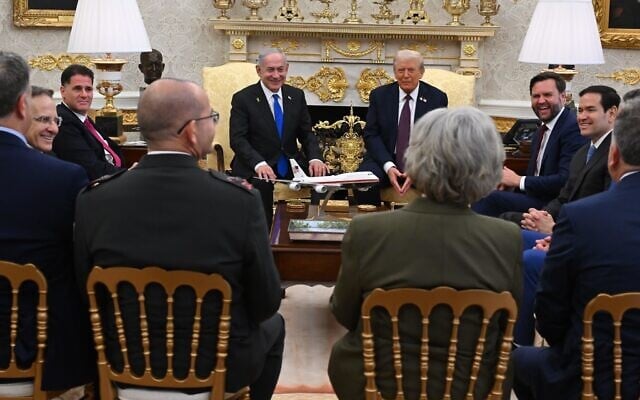
Benjamin Netanyahu finds himself once again at a crossroads. Accepting the US plan to resolve the crisis is a gamble with contradictory consequences. Domestically, the prime minister is taking a big risk: his coalition relies on ultra-nationalist and religious forces that are opposed to any compromise. For them, agreeing to Washington’s plan would be like going against the principles of their commitment. There is a real chance that the government could fall apart, and Netanyahu,who has consistently excelled at maintaining unity in parliament, is now at risk of harming the government . The threat of a government implosion is real.
However, this internal threat is countered by a potential strategic advantage.By accepting the American plan, the Prime Minister sends two clear messages. In Washington, he proves that Israel remains a reliable ally, aware of the importance of its strategic partnership with the United States. To Israeli public opinion, he appears as a pragmatic leader, capable of transcending ideological posturing to respond to the anxiety of a society weary of endless conflict and concerned about the fate of hostages. Paradoxically, this gesture could extend his political legitimacy beyond his traditional camp.
The central issue, however, remains Hamas. If Hamas rejects the plan—a highly likely scenario—Netanyahu would turn the diplomatic tables on it. Israel would appear to be the actor that reached out, while the Islamist movement would take on the role of the obstacle to any prospect of peace. International pressure, which today often targets Jerusalem, would shift to Gaza. In this narrative reversal, he would regain the initiative: he could justify continuing the confrontation while presenting himself as a man who tried the diplomatic route.
Finally, on a regional level, this choice allows him to avoid isolation. Saudi Arabia, Egypt, and Jordan are closely monitoring the situation and making any strategic rapprochement conditional on signs of flexibility. Rejecting the plan would lock Israel into a stalemate, while accepting it opens up the possibility of new regional dynamics.
Benjamin Netanyahu is therefore risking weakening his coalition, but he could gain international stature and turn the diplomatic equation against Hamas. It is a dangerous gamble, but perhaps the only way to become, once again, the man who, in the eyes of the world, wanted peace.