
Professor of Jewish Philosophy at Bar Ilan University
Featured Post
Netanyahu and the pro-Spartan Athenians
If it's the Battle of Thermopylae that caught the premier's admiration, he should note that the Spartans all died - and the war ended with a peace treaty
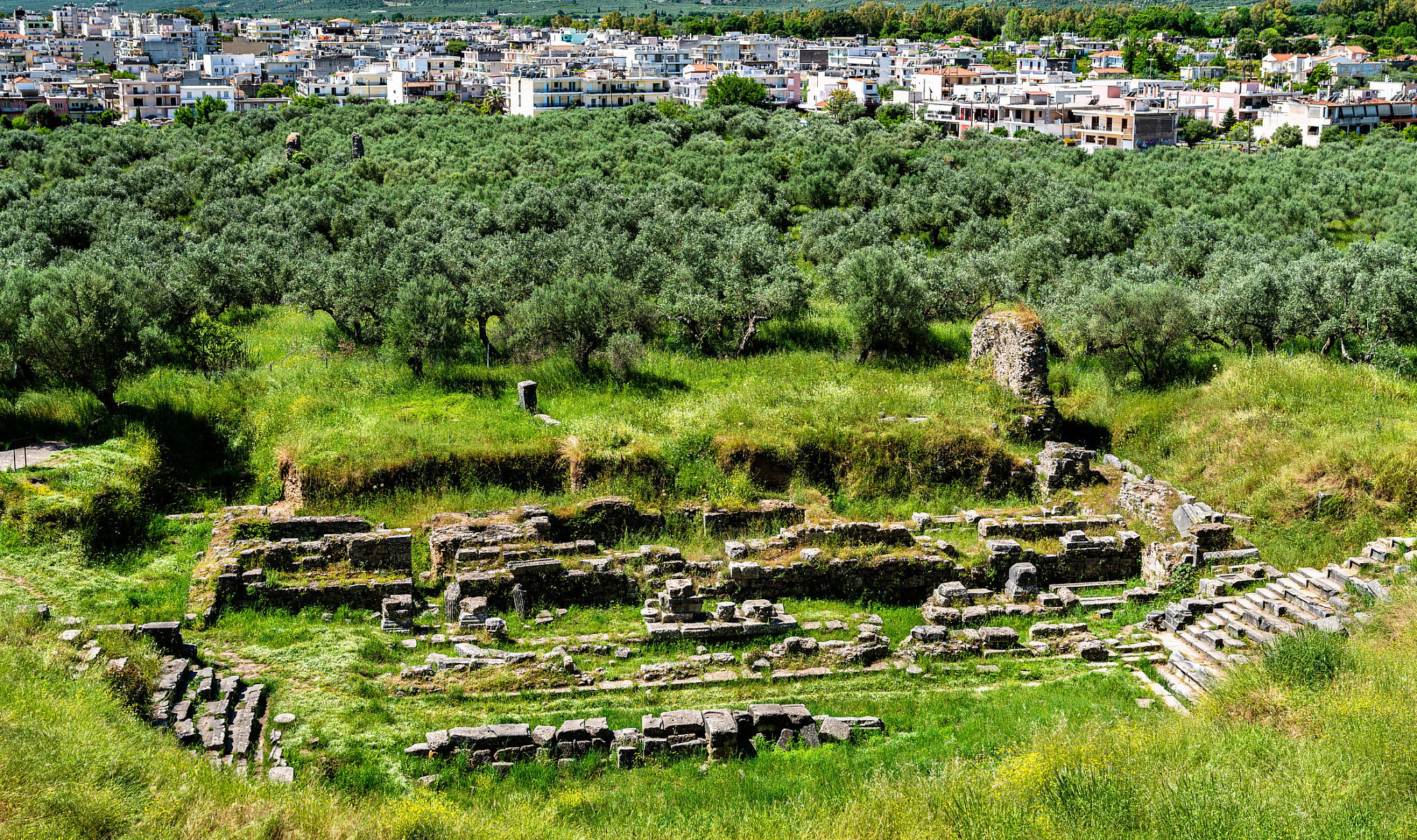
The ruins of Sparta. (Napoleon Vier at Dutch Wikipedia, CC BY-SA 3.0, https://commons.wikimedia.org/w/index.php?curid=3192639)
Monday night, after a presumably unsuccessful meeting with Marco Rubio, Prime Minister Netanyahu prophesied a future of economic isolation and continuous warfare. “We’re going to be Athens and super-Sparta,” he announced.
I assume that Netanyahu’s newfound Spartophilia is not based on Hitler’s 1928 praise of Sparta as “the first racialist state” or his admiration of Sparta’s “naked aggression.” I also do not assume that Netanyahu would follow the Nazis by institutionalizing Spartophilia through acts like appointing a “War-Representative of Jewish Classical Scholarship” (Kriegsbeauftrager der jüdische Altertumswissenschaft) or in forcing the Ministry of Education to adopt Sparta: der Lebenskampf as a school textbook.
Rather, I imagine Netanyahu has in mind an admiration for the battle of Thermopylae (480 BCE), during which a small Greek force of around 7,000 led by 300 elite Spartan fighters took on hundreds of thousands of Persian forces, managing to diminish significantly the strength of the Spartan army, eventually leading to the triumph of the Greeks over the Spartans. It is not difficult to imagine how this battle can fit into the imagery of the war between East and West in which Netanyahu so delights, in which Israel’s war in Gaza is the Thermopylae for the stand of Judeo-Christians against Muslim hordes.
Still, four things are worth remembering about the Battle of Thermopylae. One is that the 300 Spartans all died. The second is that it was not a battle fought in isolation, but as part of an alliance of numerous Greek states. After the battle, it was Sparta’s allies, especially the Athenians, who took up the fight and reached the defeat of the Persians. Sparta could not have won the war alone. Third, the Spartan king, Leonidas, fought and died alongside his troops. He did not hide in fortress, did not employ thousands of Spartans as his personal guards, nor is he known to have voiced complaints about death threats from any of his octogenarian subjects. Fourth and most importantly, the Spartans never achieved “absolute victory” over the Persians. The greatest achievement of the battle of Thermopylae was a peace agreement, negotiated by the Athenian Callias and called after his name. These are but a few of the dissimilarities between the Battle of Thermopylae and the Israel-Gaza war.
Yet, Netanyahu’s suggestion that we become both Athens and Sparta is perhaps more evocative of the years 404-403 BCE when a pro-Spartan oligarchy of 30 forcefully overturned the Athenian democracy. Weakened by Pericles’ removal of authority from the high court (the Council of the Areopagus), Athenian democracy was soon commandeered by the anti-democratic Critias who installed a council of 30 with explicit loyalties to Sparta. The rule of Critias and the Thirty was characterized by insecurity, civil unrest, and bloody subjugation of Athenians with outside support from Spartan soldiers. Their rule was short, however, and followed by the restoration of the courts and the subsequent brutal prosecution of anyone associated with them, probably including Socrates, who had once taught Critias philosophy.
Athenian democracy did not really survive its Spartan phase. Its restoration was unstable; it collapsed frequently, and was eventually conquered by Phillip of Macedon, whose son, Alexander the Great, later successfully vanquished the Persian Empire. Athens, then, never really survived its becoming both Sparta and Athens, but ended up broken and conquered.
Thucydides begins his fifth century BCE account of the Peloponnesian War by noting that while ancient wars, such as the Trojan War, may loom large in literature, the ancient civilizations that fought them have left us only few buildings and monuments behind. He conjectures that in the distant future, the city of Sparta will leave behind so little that very few would believe it was once so great a force. This is so largely because most elite Spartans lived unadorned lives in small, short-lasting wooden buildings, dedicating most of their lives to military pursuits. In contrast, he imagines that Athens will seem much greater, because of its many temples, theaters, monuments, colonnades, and adornments. In saying this, he is reminding his readers that as human beings we tend to judge the quality of nations not by their military achievements, but by their peace-time pursuits.
Related Topics
Related Posts