


Netanyahu: The Balance Sheet of an Era, the Anatomy of an Obsession
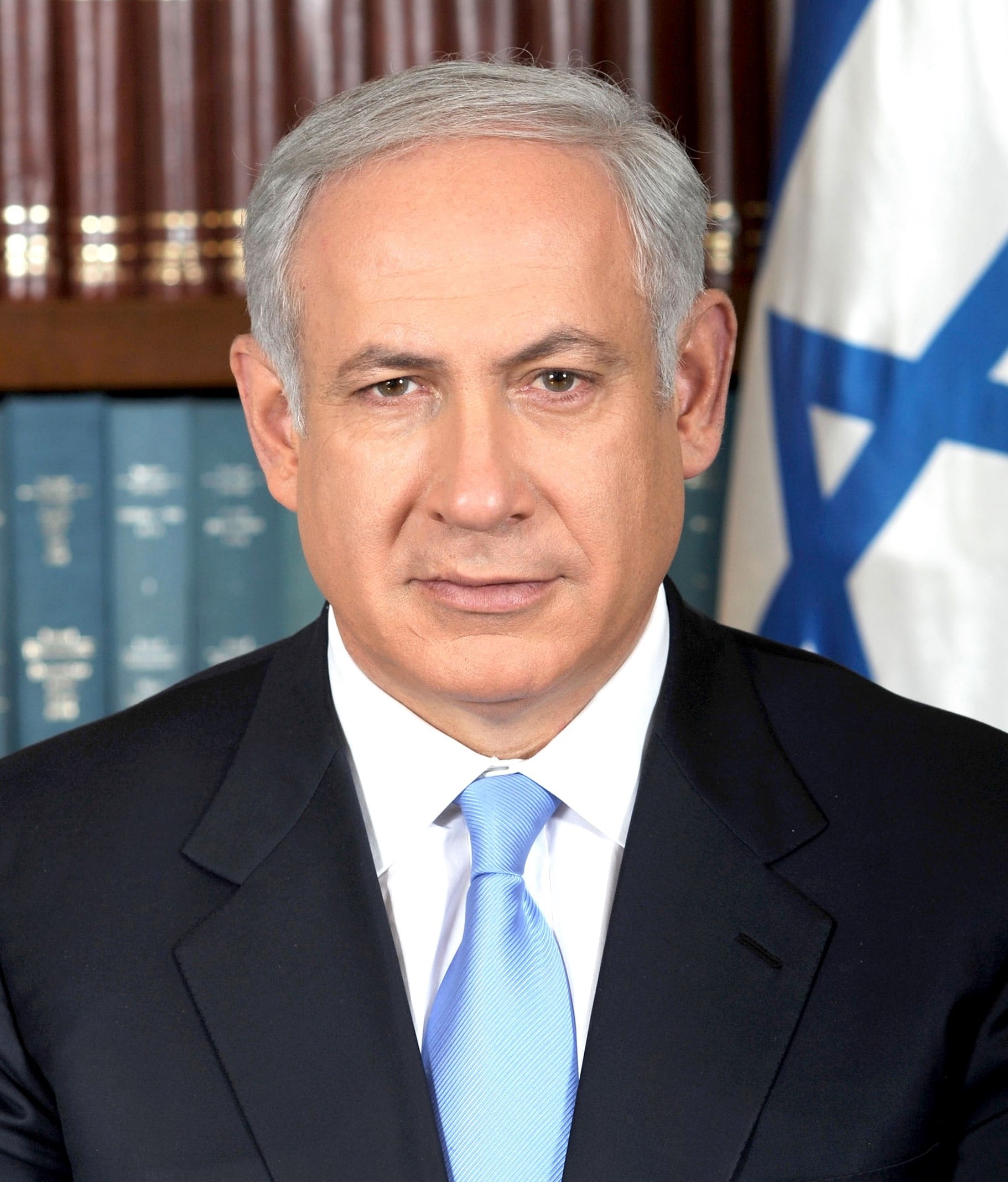
Benjamin Netanyahu has long since ceased to be merely an Israeli politician. After nearly nineteen years in total at the head of government, he has become a political and social phenomenon around whom much of Israel’s public debate has come to revolve.
To his admirers, “Bibi” is the statesman who helped turn Israel into an economic, diplomatic and military power; the leader who resisted international pressure, recognized the Iranian threat early on, and transformed Israel’s regional standing. In the aftermath of the October 7 trauma, he is also, in their eyes, the man who led what his supporters call the “War of Revival” with exceptional determination and audacity, restoring Israel’s ability to strike its enemies and reshape the regional balance of power.
To his opponents, October 7 tells precisely the opposite story. Far from vindicating his stature as a statesman, it represents the historic failure for which Netanyahu, as Israel’s long-serving prime minister, bears ultimate political responsibility. In their eyes, he also embodies the corruption of power, the weakening of institutions, the deepening of social divisions – and, for some, a threat to Israeli democracy itself.
Between these diametrically opposed portraits, it is difficult to reach a dispassionate judgment of Netanyahu. The task, then, is to return to the facts, his record and his choices: to weigh his achievements against his failures, distinguish legitimate criticism from what has sometimes hardened into political narrative -and understand why no other Israeli leader has inspired such profound identification and such intense hostility.
Strength as a Worldview
To understand Netanyahu, one must begin with his worldview. An heir to the Likud’s national-liberal tradition and to Jabotinsky’s doctrine of the “Iron Wall,” he believes that Israel can base its security neither on the goodwill of its enemies nor on the guarantees of the international community. The country must be strong enough -militarily, economically and diplomatically – to make its destruction impossible and cooperation with it advantageous.
This conception also explains his approach to the United States. While regarding the American alliance as an essential pillar of Israel’s security, Netanyahu has always insisted on Israel’s freedom to defend its vital interests, even at the cost of confrontation with the White House. His public opposition to Barack Obama over the Iranian nuclear issue -culminating in his 2015 address to Congress -was its most dramatic expression. His supporters see this as the mark of a leader willing to stand up even to Israel’s most powerful ally when he believes the country’s security is at stake; his detractors argue that he has at times unnecessarily politicized and strained an essential strategic relationship.
As finance minister in the early 2000s, Netanyahu introduced sweeping free-market reforms: cuts in public spending and some welfare benefits, privatization, incentives to return to work, and measures to encourage investment and competition. The policies were painful and controversial, but they contributed to the recovery of an economy in crisis and to the emergence of a more dynamic and competitive Israeli economy.
The same conception underpins his foreign policy. The 2020 Abraham Accords challenged the assumption that normalization with the Arab world necessarily had to await a resolution of the Palestinian conflict. They demonstrated that Arab states could also seek relations with Israel because of its military, economic and technological strength.
The same is true of Iran. For years, Netanyahu’s insistence on the Iranian threat was portrayed as an obsession. His style and theatricality could be criticized; it is far harder today to argue that the threat itself was imaginary. Iran’s nuclear program and the “ring of fire” Tehran built around Israel have vindicated the centrality of the danger Netanyahu had been warning about for decades.
Between Ideology and Pragmatism
Alongside Netanyahu the ideologue stands a Netanyahu far more pragmatic and cautious than his image might suggest. The Hebron Agreement, the Wye River Memorandum, the Bar-Ilan speech, his decision not to proceed with annexation, and successive ceasefires in Gaza all show that, in practice, he has often positioned himself on the more moderate wing of his own camp.
This is one of the paradoxes of the man: Netanyahu holds a deeply rooted ideological worldview, yet in exercising power he has often favored pragmatism and caution.
October 7: The Collapse of a Doctrine
October 7 deserves particular attention because it encapsulates much of the electoral debate surrounding Netanyahu. For his detractors, the catastrophe is the failure that disqualifies him politically. Gadi Eisenkot, like other former senior figures in Israel’s security establishment, has argued that the failures surrounding October 7 render him unfit to hold positions of national leadership again.
For his supporters, by contrast, the war that followed has demonstrated Netanyahu’s extraordinary ability to lead Israel through one of the most critical periods in its history -when, in their view, few other leaders would have been able to stay the course, assume such enormous risks and withstand such intense pressure.
For years, Israel operated on the assumption that Hamas could be contained and deterred. The reasoning was that an organization responsible for the fate of two million people would ultimately prefer the survival of its regime and the benefits of quiet to all-out war. Military deterrence was therefore combined with economic measures, work permits and Qatari funds.
This doctrine was not Netanyahu’s alone. It was broadly shared across the security establishment and did not disappear when he left office in 2021. That does not, however, diminish his share of responsibility: Netanyahu was prime minister for most of the period during which Hamas dramatically strengthened its capabilities. On October 7, 2023, that conception collided with reality in one of the gravest security catastrophes in Israel’s history.
Direct responsibility for the operational and intelligence failures of that day cannot be laid at Netanyahu’s door. Political responsibility for the strategic doctrine that preceded the disaster, however, is also his – alongside the security establishment, which played a central role in shaping and implementing it.
This may be the cruelest irony of his career: the man who built his worldview on a profound distrust of Israel’s enemies fell into the very trap he had so often warned against. He believed that Hamas could be contained through deterrence, economic incentives and calculations of costs and benefits. October 7 revealed the terrible price of that assumption.
From Containment to the Pursuit of Victory
But Netanyahu’s responsibility for what preceded October 7 is only one part of the balance sheet. The way he led Israel through the war that followed must also be examined.
Faced with a conflict that expanded from Gaza to the broader Iranian-backed regional axis, Netanyahu displayed a willingness to take risks that contrasted sharply with the caution that had characterized his policies for years. He authorized high-risk military operations despite the possibility of regional escalation and resisted intense international pressure. Gradually, a transition emerged: from a policy aimed primarily at containing threats and buying periods of quiet to a strategy designed to strike at the centers of power of the Iranian axis and alter the regional balance.
In Gaza, the military results of that strategy have been considerable. The Hamas that remains today no longer possesses the military capabilities that enabled it to launch the October 7 assault. Much of its command structure has been eliminated, its infrastructure and tunnel network have suffered massive destruction, and its ability to subject nearby Israeli communities to sustained rocket fire has been drastically reduced. Israel also retains military control over roughly 60 percent of the Gaza Strip and continues operations against Hamas commanders, cells and infrastructure as the organization attempts to rebuild.
The human and material cost of the war for Gaza has been immense and will continue to fuel debate over the conduct of the campaign. But in strictly military terms, the organization that inflicted the disaster of October 7 on Israel has been profoundly weakened.
Under US leadership, the international framework now being considered for postwar Gaza makes the disarmament of Hamas and other armed groups a central condition for the territory’s future, backed by a verification mechanism and an International Stabilization Force. Implementation remains uncertain and depends on complex negotiations, but the terms of the debate have changed: the objective is no longer simply to restore quiet while leaving an armed Hamas in place and in control of Gaza.
The Lebanese front constitutes another essential part of this balance sheet. Beginning in September 2024, Israel dealt Hezbollah a series of blows of exceptional magnitude. The coordinated explosions of thousands of pagers and hundreds of radios used by the organization severely disrupted its communications networks and affected thousands of its members. Days later, Hassan Nasrallah, who had led Hezbollah for more than three decades, was killed in an Israeli strike in Beirut, while much of the organization’s senior military command was also decimated. Hezbollah’s command structure, operational capabilities and significant parts of its infrastructure were severely degraded, while Israeli operations against its attempts to rebuild continued. Here again, the objective was no longer merely to restore deterrence temporarily, but to alter the balance of power over the long term.
On the hostage issue as well, Netanyahu refused to regard bringing the hostages home and defeating Hamas as necessarily contradictory objectives. He maintained military pressure while accepting agreements and tactical concessions that enabled hostages to return, without abandoning the strategic objective of preventing Hamas from deriving political benefit from their captivity – at the cost, according to his opponents and some hostage families, of missed opportunities to reach a broader agreement earlier.
Taken as a whole, if October 7 will remain the defining failure of the containment doctrine long pursued under Netanyahu, the war that followed may represent the most profound shift of his career: from a strategy aimed at containing Israel’s enemies to one seeking to deprive them, over the long term, of the ability to threaten it.
When Netanyahu Became the Fault Line
A balance sheet of the statesman’s achievements and failures, however, is no longer enough to explain Netanyahu’s place in Israeli society. At some point, he ceased to be simply a prime minister whose policies were contested: he himself became the fault line of Israeli politics.
That divide did not emerge from nowhere. Among parts of the Israeli left, the accusation took hold as early as the 1990s that Netanyahu had contributed to the climate of incitement preceding Yitzhak Rabin’s assassination -an accusation that has profoundly shaped the way he has been perceived in that camp ever since.
His 1996 election victory deepened that hostility. In the eyes of many in the peace camp, only months after the assassination of the leader who had embodied their hopes for a historic agreement with the Palestinians, power passed to the man they regarded as the political and ideological antithesis of the Oslo process. The feeling had an almost biblical quality – something akin to: “Have you murdered and also inherited?”
Over the years, other grievances accumulated: the extraordinary length of Netanyahu’s tenure, his confrontational and highly personalized political style, an image of arrogance among some of his opponents, public controversies surrounding members of his family, and the sense that Israel’s political system was becoming increasingly centered on a single man.
The criminal investigations and Cases 1000, 2000 and 4000 added a new dimension to this opposition. Once Netanyahu was indicted on charges of bribery, fraud and breach of trust, many of his opponents ceased to regard him as merely a political rival and came to see him as a corrupt leader fighting above all for his personal and legal survival.
The picture, however, deserves qualification. The most serious charge – bribery in Case 4000 – has been viewed by the panel of judges at the Jerusalem District Court as particularly difficult to prove. The judges recommended that prosecutors drop it in June 2023 and again in June 2026; on both occasions, the prosecution declined to do so.
These developments have reinforced a diametrically opposed interpretation within the Netanyahu camp. To his supporters, the cases increasingly appear less like proof of his corruption and more like the product of a political effort to achieve through the media and the judicial system what his opponents had failed to achieve at the ballot box. Netanyahu himself has for years denounced what he calls a “witch hunt.” A trial that began in 2020 and remains unresolved six years later, combined with the judges’ reservations about the most serious charge, has only deepened that conviction among his supporters.
The crisis surrounding the 2023 judicial overhaul brought these sentiments to a new peak. The original plan was introduced by Justice Minister Yariv Levin, but Netanyahu, as prime minister, naturally bore responsibility for his government’s policy. To his opponents, the conflict of interest was obvious: a prime minister himself standing trial was leading a government seeking to curtail the power of judicial institutions. Hence the suspicion that the overhaul stemmed not only from a principled constitutional vision, but also from personal interest.
From “Anyone but Bibi” to “Bibism”
The accumulation of these grievances gradually transformed the very structure of Israeli politics. The repeated elections between 2019 and 2022 had already demonstrated that the traditional divide between right and left was no longer the only fault line. Right-wing leaders who shared many of Netanyahu’s views ultimately preferred to govern with the center, the left and even Ra’am rather than serve under him. Alongside the traditional right-left divide, a new political axis emerged: “Only Bibi” versus “Anyone but Bibi.”
The radicalization of anti-Bibism, in turn, strengthened identification with Netanyahu. For part of his electorate – particularly among the traditional, Sephardi and Mizrahi, religious and peripheral right – he became more than a successful leader: he became the symbol of a confrontation with the media, judicial, academic and cultural elites.
When these voters repeatedly hear that the man they support is corrupt, dangerous or anti-democratic, the criticism can be experienced not merely as an attack on Netanyahu but as a judgment on his voters and on their choice. “Bibism” thus acquired an additional dimension: admiration for the leader and his achievements became intertwined with identification with him against those perceived as seeking to deny his legitimacy -and, implicitly, that of his voters.
Professor Avi Bareli has described this oscillation between “Only Bibi” and “Anyone but Bibi” as a “collective bipolar syndrome,” even a “psychosis” swinging between the image of Netanyahu as a “supervillain” and that of the “King of Israel.” The language is harsh, but it captures something real: Netanyahu has ceased to be merely a leader whose policies are debated and has become a lens through which a significant part of Israeli society interprets political reality.
The Balance Sheet of an Era
After nearly nineteen years in power, part of Netanyahu’s legacy is already coming into focus: an Israel that is economically, technologically, diplomatically and militarily stronger, more autonomous in its decision-making and more central to its regional environment. But that legacy also bears the shadow of October 7, now inseparable from his long tenure and, for his opponents, the central argument for why he should no longer lead the country.
The Palestinian question equally illustrates how difficult it is to reach any consensual judgment of Netanyahu. His opponents see the failure to achieve a resolution as an enduring strategic failure; his supporters, by contrast, see one of the most consistent threads running through his years in power: preventing international pressure or the Oslo paradigm from leading Israel to accept a Palestinian state under conditions he considered incompatible with its security.
This may be the most striking feature of the Netanyahu era: he is no longer judged solely by his actions – his actions are now judged according to what each person already thinks of him. Israel today is stronger, more autonomous and more central to its region. But the country’s deep social divisions have also crystallized around Netanyahu himself and will probably continue to shape Israeli public life long after he has left the political stage.