


Netanyahu’s cryptocurrency gambit is really about the West Bank
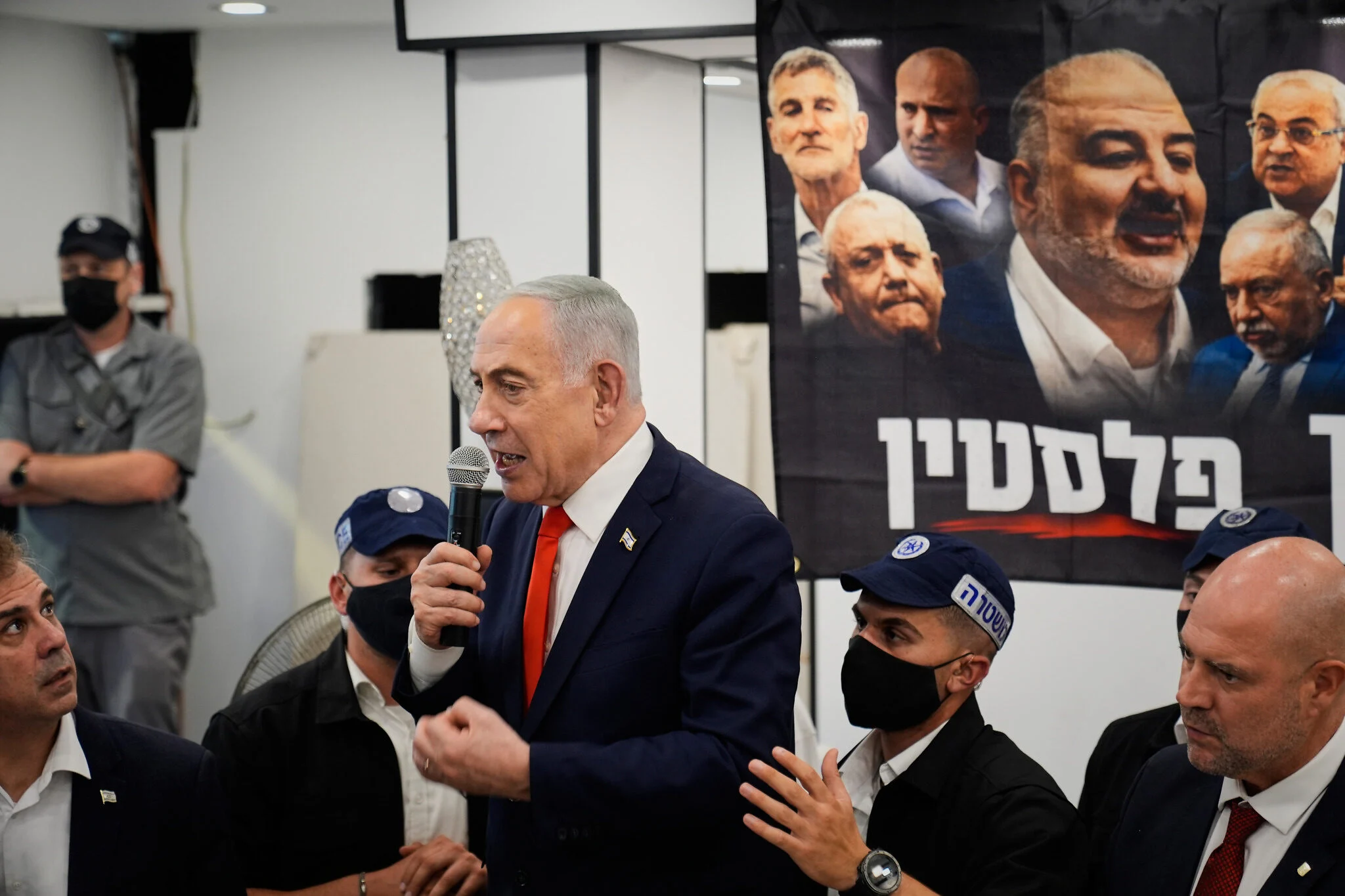
Nobody knows yet why Prime Minister Benjamin Netanyahu told a business news channel on Friday that Israel should brace for international banking sanctions and floated cryptocurrency as a way around them. But let me hazard a guess: Netanyahu wants to make the final days of the election campaign – and the coalition negotiations – about the future of the West Bank.
Since Israel announced plans for new settlement construction in the E1 corridor between Jerusalem and Maale Adumim, a growing number of countries, led by the UK and including Canada, France, Spain, Ireland, Poland and Denmark, have threatened measures against settlement expansion. Supporters of a two-state solution argue that building in E1 would jeopardize the territorial continuity of a future Palestinian state. When Finance Minister Bezalel Smotrich announced the construction, he presented it as a critical means of preventing such a state from taking shape.
The sanctions in the works include asset freezes and visa bans targeting people and companies involved in settlement building, along with restrictions on imports of settlement goods. Democrats in the US Congress have also introduced legislation addressing the issue.
Economists and bankers have warned for weeks that the consequences could extend far beyond the settlements. In an October 18 letter, 61 senior economists cautioned that sanctions could “extend beyond the settlements to the Israeli economy as a whole.” The Association of Banks in Israel has likewise warned of increased scrutiny by international financial institutions. The sensible defense is to distinguish sanctioned activity from the banking transactions of customers who are not implicated, so that the risk of sanctions can be contained.
The Bank of Israel has sought to preserve that distinction. In February 2024, after the Biden administration sanctioned settlers implicated in violence against Palestinians, Israeli banks moved to freeze their accounts. Smotrich called it “unthinkable” for an Israeli bank to act against an Israeli citizen because of an American decision, and pressed the central bank to intervene. It declined, warning that circumventing sanctions could expose banks to “significant risks.” At the end of 2025, the banking supervisor issued Directive 412, a framework for assessing sanctions-related risks and determining when restrictions on individual customers are justified. Its purpose is not to deny banking services indiscriminately, but to manage exposure without putting the wider financial system at risk.
Smotrich opposed this approach. In June 2025, he urged banks to reject what he called a “zero risk” policy and threatened legislation forcing banks to compensate sanctioned clients. His position effectively asks Israel’s banking system to shoulder greater risk in order to resist any distinction between West Bank settlements and Israel itself.
Gadi Eisenkot, by contrast, has opposed building in E1 because of the international backlash. “Not now,” he said in August. “This is a mistake that costs us an international price.” He has also noted that Netanyahu himself long held back on E1 before giving in to coalition pressure. Eisenkot’s position illustrates a real political difference over the price Israel should be prepared to pay for settlement expansion.
Seen in this light, Netanyahu’s remarks about preparing for international sanctions and using cryptocurrency as a workaround begin to make political sense. I suspect he is trying, in the campaign’s final days and ahead of the scramble to form a coalition, to make the future of Jewish settlement in the West Bank a dividing line between his camp and the opposition. The implied message is that his opponents would yield to international pressure, while he would keep building – even if doing so exposed the broader Israeli economy to banking sanctions. The Bank of Israel’s publicly expressed skepticism about cryptocurrency as a sanctions workaround underscores the gap between this political message and the practical limits of financial policy.
Some commentators have suggested that Tuesday’s election is unlikely to change Israeli policy toward the West Bank and the Palestinians very much. That view overlooks a consequential disagreement – not only about where to build, but about the diplomatic and economic costs Israel is willing to bear.
On Tuesday, Israelis will choose between competing paths. One would continue expanding Jewish settlement throughout the West Bank despite the growing risk of international isolation and economic wreckage. The other is a saner policy that many opposition leaders have embraced: building only within areas that do not prevent a future agreement with the Palestinians, dismantling illegal outposts and farms, putting an end to settler violence, and seeking to repair relations with Israel’s closest allies. Those differences deserve to be at the center of the election debate.