
Netanyahu’s Hollow Security: A Green Light for the IRGC’s Rise
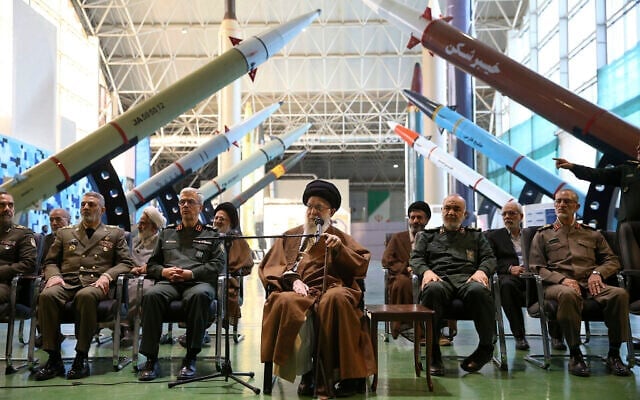
As news breaks regarding the emerging contours of a U.S.-Iran deal—one that promises sanctions relief in exchange for a cessation of hostilities—the Israeli public is once again confronting a bitter, familiar paradox. We are told this deal is a path to stability. Yet, beneath the diplomatic veneer, a far more ominous reality is taking shape: the Islamic Revolutionary Guard Corps (IRGC), the primary architect of Israel’s regional insecurity, stands to be the deal’s greatest beneficiary.
For years, the IRGC has operated as a shadow state, leveraging sanctions to build a sprawling, illicit commercial empire that spans oil, telecommunications, and infrastructure. Now, with the potential influx of hundreds of billions of dollars, this designated terrorist organization is poised to solidify its economic grip on Iran, effectively insulating itself against future Western pressure. For an elite Israeli audience, the question is not merely one of Iranian regional aggression; it is a question of how we arrived at this precarious juncture. The answer, unfortunately, lies in the strategic bankruptcy of the Netanyahu era.
A Decade of Diplomatic Isolation
For over a decade, Benjamin Netanyahu marketed himself to the Israeli public as the only figure capable of navigating the Iranian threat. His rhetoric was consistently bellicose, defined by a public, often abrasive, confrontation with the Obama administration over the 2015 JCPOA. Netanyahu staked his political capital on the promise that he could prevent a nuclear Iran while maintaining the “maximum pressure” of American sanctions.
Yet, as we survey the landscape in 2026, that strategy has collapsed under the weight of its own hubris. By treating Israel’s security as a partisan issue in Washington, alienating traditional democratic allies, and pursuing a policy of absolute, binary confrontation, Netanyahu squandered the diplomatic leverage necessary to ensure that any future agreement with Iran would be comprehensive and binding.
Instead of building a robust, international consensus that could isolate the IRGC economically and politically, the Netanyahu government’s focus remained internal—prioritizing political survival over strategic foresight. We are now left with a scenario where the U.S., desperate to exit the current conflict, is pursuing a deal that treats the IRGC as an inevitable, if not rehabilitated, stakeholder in the Iranian economy. The paradox is as sharp as it is cruel: the very force that has spent years working to dismantle our security will now be empowered by the economic dividends of a deal brokered in the vacuum left by our own failed diplomacy.
The IRGC: Gatekeeper of the Iranian Economy
The danger inherent in this deal cannot be overstated. As current reporting indicates, the IRGC is not merely an ideological military force; it is an economic behemoth. Through its engineering arm, Khatam al-Anbia, and a labyrinth of front companies, the IRGC has deeply enmeshed itself in the Iranian commercial infrastructure.
Any influx of foreign investment or lifting of sanctions provides the IRGC with a direct path to liquidity. Because Iranian investment law mandates that foreign firms partner with local entities, the IRGC-linked corporations are effectively the gatekeepers of the Iranian market. Western firms, in their rush to return to Tehran, will find themselves—intentionally or otherwise—fueling the coffers of the very entity that funds Hezbollah’s northern front and coordinates ballistic missile attacks on our cities.
This is the tangible result of a “maximum pressure” strategy that lacked a corresponding “maximum diplomacy” initiative. By isolating Israel from the nuanced, multilateral discussions that determine the rules of global finance and sanctions, Netanyahu ensured that when the inevitable geopolitical shifts occurred—as they have—Israel would be a spectator to its own peril, rather than an architect of its security.
The Cost of Internal Division
The failure to contain the IRGC is inseparable from the broader degradation of the Israeli state under the current cabinet. A government that prioritizes judicial overhaul and ideological purity over professional, long-term strategic planning is incapable of holding the line on national security.
When the state is consumed by internal friction, when the diplomatic corps is hollowed out, and when the relationship with our most vital strategic partner is strained by personal political vendettas, we become vulnerable. We have spent years shouting warnings at the world, yet by failing to provide a credible, unified alternative, we have made those warnings sound like background noise.
Toward a New Strategic Realism
The threat of a resurgent, wealthier IRGC is real, and it is immediate. If this deal proceeds, the IRGC will be better positioned to threaten Israel in 2027 than it was in 2025. This is not just a failure of Washington’s policy; it is a failure of our own.
To recover, we must abandon the performative, slogan-heavy diplomacy that has defined the last decade. We need a leadership that understands that Israel’s security is fundamentally tied to our integration into a sophisticated, global alliance structure—one that cannot be maintained by antagonizing our friends or ignoring the complexities of global economics.
We must press our allies for rigorous, transparent mechanisms that prevent sanctions relief from financing the IRGC’s regional operations. More importantly, we must return to a model of governance that prioritizes the stability and resilience of the state over the career longevity of its leaders.
The IRGC thrives on division and geopolitical drift. By continuing down our current path, we are not just witnessing the rise of our adversaries; we are inviting it. It is time for a strategic pivot that recognizes that our future security depends not on shouting at the world, but on being a clear-headed, indispensable partner in securing the stability of the entire region. The alternative, as we are now seeing, is a future where we are left to confront a stronger, better-funded enemy, alone and largely to blame for our own isolation.