Teacher and activist in Jerusalem
Featured Post
When a nun is knocked down in Jerusalem’s Old City, help her!
Violence against Christians and Muslims, and the silence surrounding it, is corroding the very Jewish values we claim to defend

Still from footage that shows a nun being assaulted by a man in Jerusalem on April 28, 2026, released by the police two days later. (Israel Police)
When I saw the video of a Jewish man intentionally and viciously pushing down a nun in the Old City of Jerusalem earlier this week, and then returning to kick her while she lay on the ground, I was sickened. What made me feel equally ashamed was the other Jewish man who stood there and looked on, doing nothing.
Both these men had violated the Torah in so many ways. They brought shame on our people and thus, shame on God’s name – chillul Hashem.
Sadly, this incident was not an isolated one. The desecration of Christian sites by Jews who claim in some way to be upholding Judaism, spitting on Christians, and disrespectful slanders of Islam and the Prophet Muhammad are frequent. The claim that they are born out of fear and ignorance no longer seems sustainable. In many cases, they come from a sense of self-righteousness and superiority – characteristics that the Torah abhors.
I was brought up to believe that, in Judaism, we did not talk about “rights,” but about “responsibilities.” Nevertheless, our responsibilities to uphold the dignity of the other and to pursue justice bestows, albeit indirectly, rights on others in our society. In the same vein, we should be able to count on others to behave towards us in the same way and uphold our “rights.” Our rights and responsibilities are reciprocal.
The basis of demanding respectful behavior towards others is that every person is created in the Divine image (Genesis 1:26). We are urged to see the Divine in others and our treatment of other people is the best indicator of our respect and awe for the Divine.
That ideal is upheld by the Torah’s legal system. “One law for you and the stranger” is a biblical principle (Exodus 12:49, Numbers 15:15-16) emphasizing equal justice and legal rights for both native-born citizens and resident foreigners.
It is no surprise that the early liberal thinkers drew heavily on the Tanakh as they developed their theories of human rights, and, in the 20th century, the UN Declaration of Human Rights was based on values derived from Jewish (and Christian) sources.
It opens, “All human beings are born free and equal in dignity and rights” (UDHR, Article 1). This is an article of faith. It is shared by secular and religious thinkers, but its earliest expression is in the Torah.
The declaration is infused with ideas found in the Torah, especially concepts of justice which go beyond the procedures in a courtroom and extend into every aspect of social life.
The UN General Assembly has also passed a Declaration on the Human Right to Peace, reflecting the value in the Torah to seek peace and pursue it.
There can be no basis for suggesting that human rights are not part of Jewish thinking, even if we prefer the language of responsibility, focusing on the duties of the person with the power to bestow rights rather than on the person seeking protection or benefits.
What I have said here about Judaism is relevant also for our daughter religions, Christianity and Islam, both of which are based on responsibilities and upholding human dignity. All our religions believe that human beings are all descended from one original human being, who was brought to life with the breath of the Divine (Genesis 2:7).
Yet, watching what is going on in the world today, the dehumanization, the vilification, the demonizing of the other, it seems that our basic religious values are being ignored or distorted.
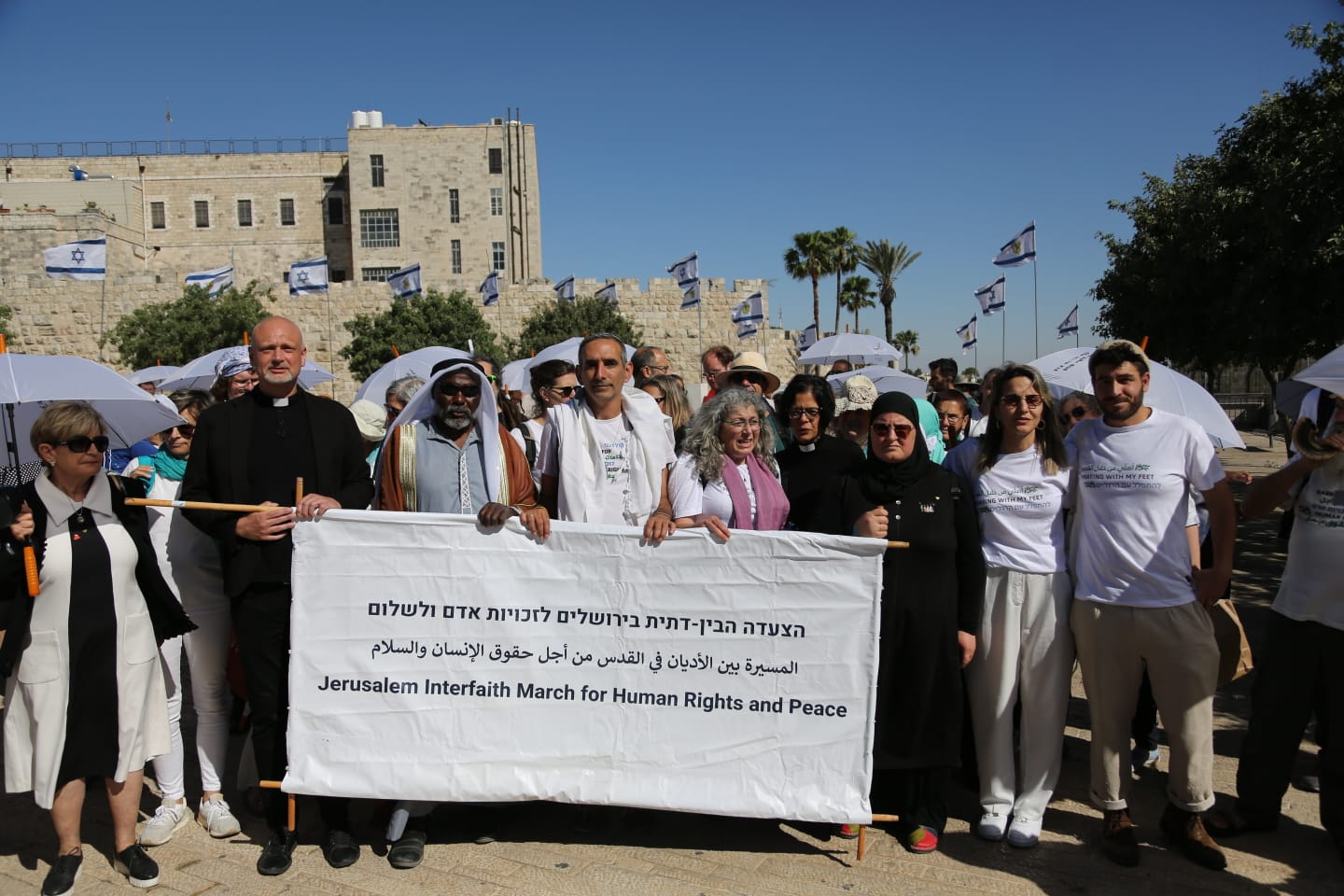
There is nothing more urgent at the moment than for us to stand together and declare that the sorts of behaviors we are observing are abhorred by our religions. People of faith, particularly religious leaders, need to be visible in their condemnation of all that they know is wrong.
The bystander who watched the nun being viciously attacked and did nothing was violating the commandment not to stand idly by while blood is spilled (Leviticus 19:16).
We have been relentless in our condemnation of those who stood by during the Shoah, labelling the bystanders as guilty of the atrocities perpetrated. It began when they did not stand up as the rights of Jewish people were gradually eroded or when small acts of violence took place.
We may not stand idly by, watching the erosion of our religious values.
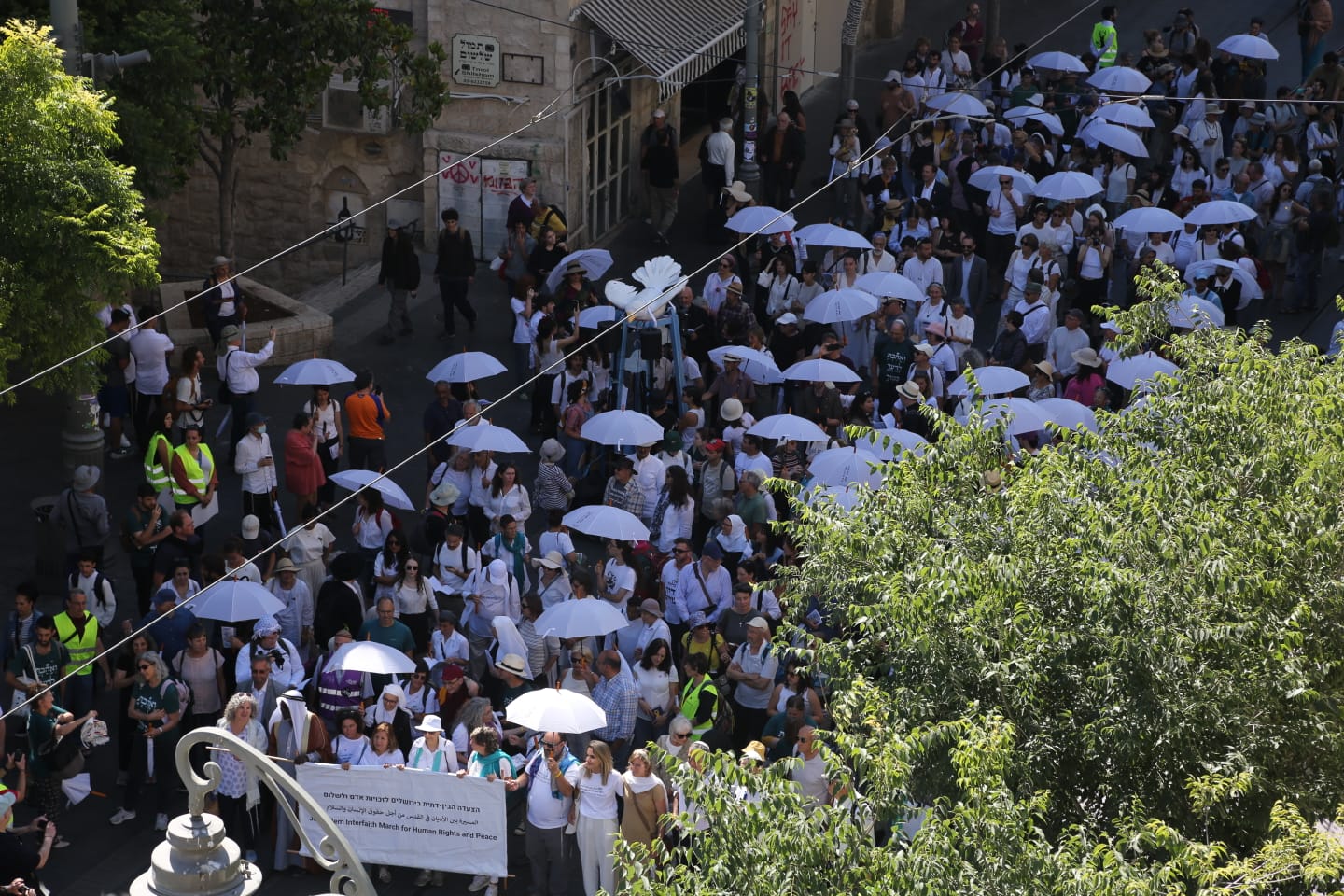
This year will be the fourth year that Christians, Muslims, Jews, Druze, and others march in the streets of Jerusalem in the Interfaith March for Human Rights and Peace.
–
If you know that what is happening in your name is wrong, join us for the Interfaith March for Human Rights and Peace, on Monday, May 18th. Never has it felt so urgent. (https://www.interfaithhumanrights.com/)
Related Topics
Related Posts