


New Strategy of War
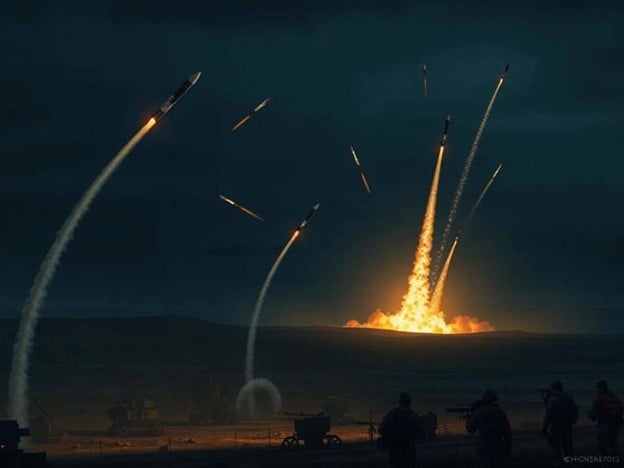
Endurance, Perception, and the Power of Asymmetry
The New Logic of Asymmetric War: How Endurance, Symbolic Victory, and Pain Tolerance Reshape Modern Conflict.
While the Vietnam War carries a painful historical legacy, one of its core strategic lessons remains deeply relevant today. Secretary of Defense Robert McNamara later argued that America’s willingness to absorb heavy casualties demonstrated resolve to its adversaries and reinforced deterrence in Europe during the Cold War. As the West faces a renewed crisis of deterrence across multiple theaters, understanding this relationship between sacrifice and credibility has never been more urgent.
Does Military Superiority Matter?
For centuries, traditional military superiority; measured by industrial capacity, manpower, technological dominance, and territorial control, was assumed to translate directly into political victory. That model still applies in classic conventional conflicts. Recent wars, however, increasingly demonstrate that weaker actors can decisively shape political outcomes without ever winning on the battlefield. In modern conflict, the decisive variable is frequently endurance rather than raw capability alone.
Asymmetry of Objectives
Modern asymmetric conflict is defined more by divergent goals than uneven weaponry:
- The stronger side typically seeks decisive closure: the destruction of military capacity, regime change, or stabilization.
- The weaker side often requires mere survival, continued relevance, symbolic success, or preventing total political defeat.
When these objectives collide, victory itself becomes asymmetric. The stronger side must fully succeed to win, while the weaker side must merely persist to fight another round, creating a structural imbalance in time horizons and political pain tolerance.
Gaza, Ukraine, and Iran: Shared Logic, Different Fronts
We see this dynamic playing out globally. In Gaza, overwhelming military superiority has not automatically yielded political closure. In Ukraine, a combination of distributed defense, foreign material support, and low-cost systems shifted the metric of success away from rapid territorial gains toward sustained, grinding cost imposition.
Iran represents the apex of this strategy: achieving deterrence through dispersion, strategic depth, and prolonged asymmetric pressure rather than conventional parity.
Different wars; different actors; yet each demonstrates that superior force no longer automatically dictates the terms of peace.
[Remarkably, Israel’s counterstrategy relies on continuous deterrence and a strict refusal to play by its adversary’s long-term rules of engagement.]
Algeria: The Turning Point in Modern Asymmetric Thinking
Modern theories of asymmetric endurance were deeply shaped by the Algerian War of Independence. France possessed overwhelming military superiority and consistently won direct tactical engagements, yet the conflict did not resolve in Paris’s favor. The Algerian National Liberation Front (FLN) sustained a protracted campaign by blending urban insurgency, political subversion, international diplomacy, and a grim willingness to absorb extreme internal suffering.
The resulting asymmetry in human cost—where between 500,000 and 1 million Algerians were killed compared to roughly 23,000 French soldiers over an eight-year war—cemented political endurance as the primary metric of modern conflict.
Fanon and the Evolution of Endurance Strategy
The intellectual framework behind the Algerian experience was captured in Frantz Fanon’s seminal work, The Wretched of the Earth (Les Damnés de la Terre). Colonial domination, he argued, is not merely physical but internalized, creating a psychological structure of inferiority within the colonized society. In this environment, revolutionary violence was interpreted by Fanon not simply as a tactical tool, but as a transformative psychological force that shattered imposed hierarchies and forged a new political identity.
Regardless of how one evaluates Fanon’s normative claims, his analytical contribution remains undeniable: asymmetric conflict is fought as much in the psychological and political arenas as on the battlefield. His insights became foundational for 1960s and 1970s revolutionary theory. Arab and Global South thinkers; including Palestinian intellectual Ghassan Kanafani and Iran’s Ali Shariati built upon this to emphasize Muqawama (resistance) and Sumud (the idea of steadfastness).
These concepts fundamentally reframed conflict as a prolonged struggle where time itself is weaponized as a strategic resource.
From Guerrilla War to Symbolic Strategy
Modern Asymmetry Focuses on Low-Cost Tech, Global Media, & Perception Shifts.
Territorial control is no longer the sole measure of success. Today, low-cost technologies and global media give weaker actors an expanded toolkit. Drones, asymmetric missiles, cyber operations, and high-visibility symbolic strikes can produce massive political shockwaves despite their limited military scale. Highly visible disruptions easily substitute for traditional conquest as the battlefield expands into the realms of perception and legitimacy. It’s the new guerrilla warfare of our times.
Historical Lessons: Endurance and Strategic Credibility
During the Second World War, the United States absorbed devastating early defeats at Pearl Harbor and across the Pacific, then mobilized its industrial base for a prolonged conflict—victory ultimately depended on sustained national endurance.
Similarly, Cold War deterrence relied heavily on credibility; specifically, in the unshakeable belief that the United States and its allies would absorb immense risk and cost rather than retreat quickly. Deterrence functioned through perceived resolve just as much as through raw nuclear capability.
The Vulnerability of the Public Arena
Modern democracies now fight under the microscope of continuous public visibility. Casualties, economic disruptions, and tactical setbacks are instantly amplified, turning domestic public patience into a critical strategic variable.
We must relearn the lessons of historical mobilization during WWII, where industrial output combined with a systematic psychological preparation for prolonged sacrifice won the war. For modern democracies, matching this does not require suppressing debate; it requires cultivating realistic expectations.
If open societies project an assumption of rapid, low-cost conflicts, adversaries will naturally conclude that sustained pressure will reliably yield political concessions.
“Wars often emerge from failures of deterrence, uncertainty about resolve, and the belief that opponents prefer short-term comfort over sustained commitment.” Donald Kagan, On the Origins of War and the Preservation of Peace
Under modern asymmetric conditions, Kagan’s warning becomes even sharper. If revisionist, weaker actors believe that stronger Western societies are structurally or culturally unwilling to absorb prolonged economic costs, military losses, or strategic uncertainty, then endurance itself becomes their primary weapon.
Has the Western Alliance Lost Its Way?
A deeper, more troubling question lurks beneath this entire framework: can the West — and the United States in particular, still summon the unity and clarity of purpose this kind of doctrine demands?
Internal division, a drift from foundational values, and a growing uncertainty about what is actually worth defending raise doubts about whether an endurance-based strategy is even viable for societies that can no longer agree on what they are enduring for. It is not yet clear whether the West has passed a genuine point of no return, or if it is approaching a severe moment of crisis; a precipice forcing a return to sober, value-based clarity, and to unite around it before the dangers gathering at its borders, in both time and distance, arrive in full.
A Roadmap for Adaptation
To survive and prevail in this new paradigm, the United States and its allies must fundamentally shift their strategic approach:
- Redefine Victory: Anchor strategic goals around durable, long-term objectives rather than demanding rapid, clean closure.
- Prepare the Public: Condition democratic populations for strategic campaigns measured in years and increments rather than weeks and soundbites.
- Protect Democratic Legitimacy: Preserve vibrant domestic debate while actively resisting the dangerous expectation of entirely painless conflict.
- Institutionalize Resilience: Treat societal and political resilience as a core component of hard national capability, on par with industrial and military output.
Recent experiences in Israel illustrate the reality of this challenge. Campaigns against entrenched security threats have repeatedly evolved across multiple rounds rather than ending in a singular, decisive settlement. This adaptation shows that strategic goals—such as maintaining deterrence, degrading capabilities, shifting adversarial incentives, or weakening hostile governing structures are frequently cumulative rather than immediate.
The Long Horizon
Major political transformations require time, and time can favor democracies if leveraged correctly. The greatest structural vulnerability of authoritarian regimes is that ruling populations through force or fear historically fails to sustain itself indefinitely. The West can achieve its goals with a focused, long-term strategy.
- The Soviet collapse emerged from decades of prolonged economic and ideological pressure, not a single battlefield victory.
- Pan-Arabism under Nasser declined gradually through successive political and strategic failures.
- Militant Islamist movements have similarly adapted and persisted despite decades of direct military pressure. Western democracies continue to battle radical networks globally—from al-Qaeda and ISIS to Iranian proxies like Hezbollah, Hamas, and the Houthis, alongside Africa’s Boko Haram and al-Shabaab.
Military pressure can successfully crush operational capacity, but ideological movements easily survive through decentralization, adaptation, and generational renewal.
The lesson here is not an argument for endless war.
It is an acknowledgment that durable political outcomes require much longer timelines than democratic societies typically expect. If the defining feature of modern asymmetric conflict is endurance, strong states must stop thinking like short-term campaign planners and start acting like long-term competitors. The ultimate objective is not permanent warfare, but sustained credibility, patience, and the alignment of political expectations with strategic reality.
[This piece should be shared & read by people who shape the war and the theater of operations.]