

No ceasefire for the Jews
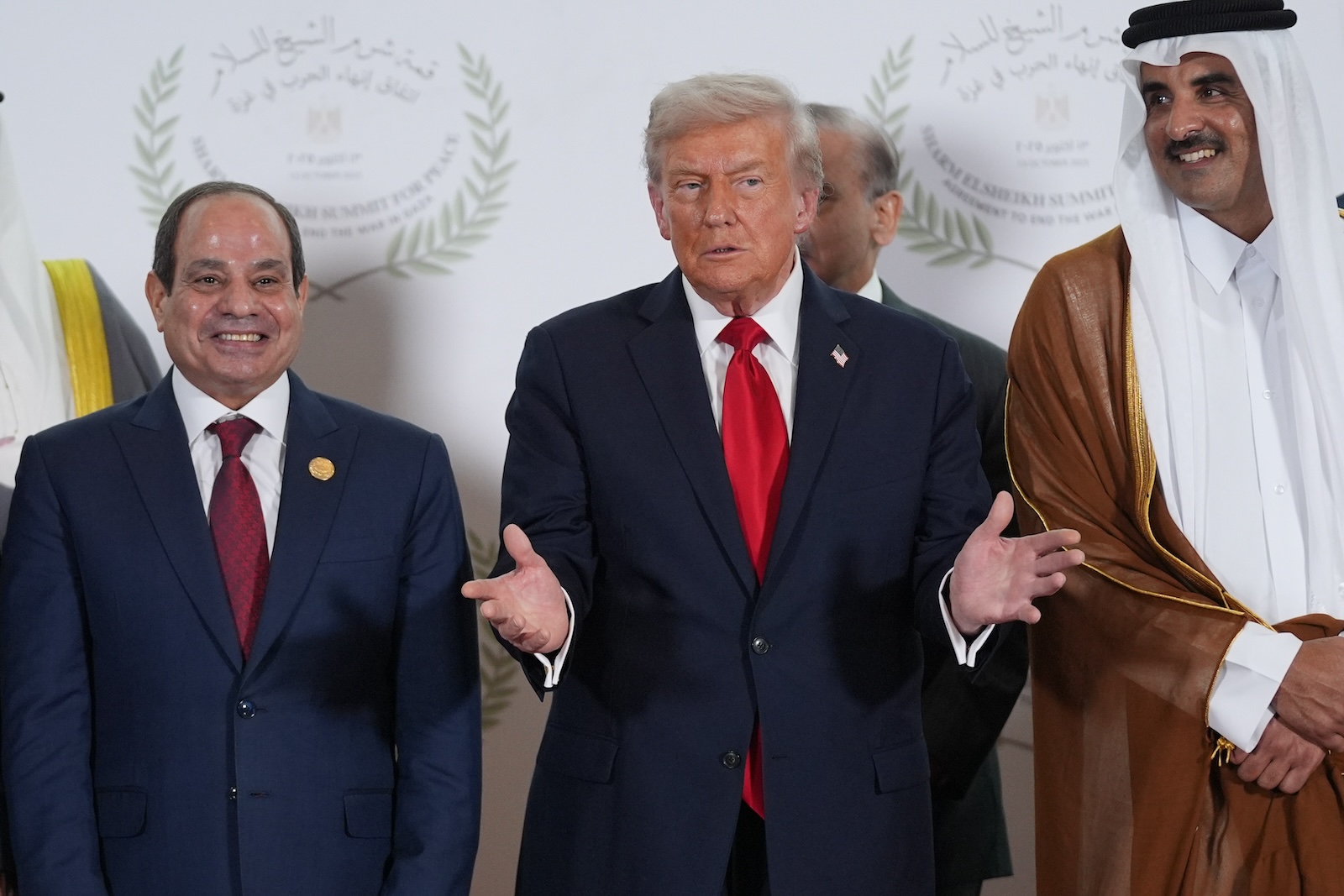
The ceasefire agreement between Israel and Hamas is fragile but seems to be holding up thanks to the continued US efforts. International media is now focused on the release of the deceased Israeli hostages and on the rehabilitation of Gaza. Yet one key victim of the October 7 atrocities and the war that followed was not present at the negotiation table in Sharm el-Sheikh and is not mentioned in the discussions on the “Day After”: the Jewish Diaspora.
For Jews outside Israel, the impact of October 7 and the war that followed has already been devastating. Across Europe and the United States, Jewish life has been disrupted by a wave of violent antisemitism. Synagogues, schools, and campuses now demand heightened security. And though the cease-fire has been brokered, there will be no cease-fire for Jews abroad.
The deal may pause the fighting in Gaza, but it does nothing to protect Diaspora Jews from the ideological consequences of this conflict. Qatar, the major funder of Hamas and a likely geopolitical beneficiary, now stands in an even stronger posture. Qatar’s soft power — through funding universities, cultural institutions, and media such as Al Jazeera — has already reshaped public discourse. Its narratives have normalized Jew-hatred across the Middle East and on Western campuses.
Israel’s government must reckon with its role in elevating Qatar. By treating Qatar as a “stabilizing intermediary,” it has conferred legitimacy on an actor whose media and institutional reach undermines Jewish life worldwide.
France and the United States, whose Jewish populations are the largest, must also be held to account. While they celebrate the ceasefire, they have allowed Qatari influence to penetrate their political and academic institutions. That is not mere diplomacy; it is complicity.
Sadly, the betrayal extends to segments of the Jewish elite as well. Some New York and London financiers could apparently not resist the extra management fees and continue to partner with Qatar’s sovereign wealth fund, turning a blind eye to its role in financing Hamas and spreading its ideology. These relationships are not just business; they enable the very forces that threaten Jewish life globally. Meanwhile, countries such as Saudi Arabia, the United Arab Emirates, and Morocco — which have made genuine progress toward religious tolerance — are left to wonder why the West rewards Doha instead of them.
I write as an Israeli reservist who faced Hamas and Hezbollah in Gaza and Lebanon, but also as a French Jew who has watched his country cede moral ground, and as a Moroccan Jew who knows what coexistence can truly look like. There is a vast ethical gulf between Rabat and Doha — a gulf that this cease-fire deal should not obscure.
Israel often claims to speak for Jews everywhere, but this agreement underscores how little attention is paid to the Diaspora. The Israeli minister of Diaspora Affairs recently invited a far-right British politician to Israel — even as British Jews were reeling from a terror attack in Manchester. That tone-deaf move remains a stark reminder: Diaspora voices are not being heard.
In the wake of the ceasefire, Diaspora Jews have concrete expectations. Their safety must be included in any post-agreement framework. That begins with pressing for accountability from Qatar and demanding that Al Jazeera be shut down or reformed into a genuine news organization, not a propaganda outlet for the Muslim Brotherhood.
It is astonishing that the US administration has extended unprecedented security guarantees to a regime that bankrolls Hamas, while offering none to the Jewish people who suffer the consequences of its influence.
History shows that when Jewish communities are threatened, the danger rarely remains confined to them. Antisemitism metastasizes beyond any one religion or group. The protection of Jews worldwide is a test of whether the free world is ready to defend its values. We have won a temporary reprieve in Israel and Gaza. But unless Diaspora Jews are integrated into the next chapter, this cease-fire will be incomplete. The time to act is now.