


No Country for Leftists
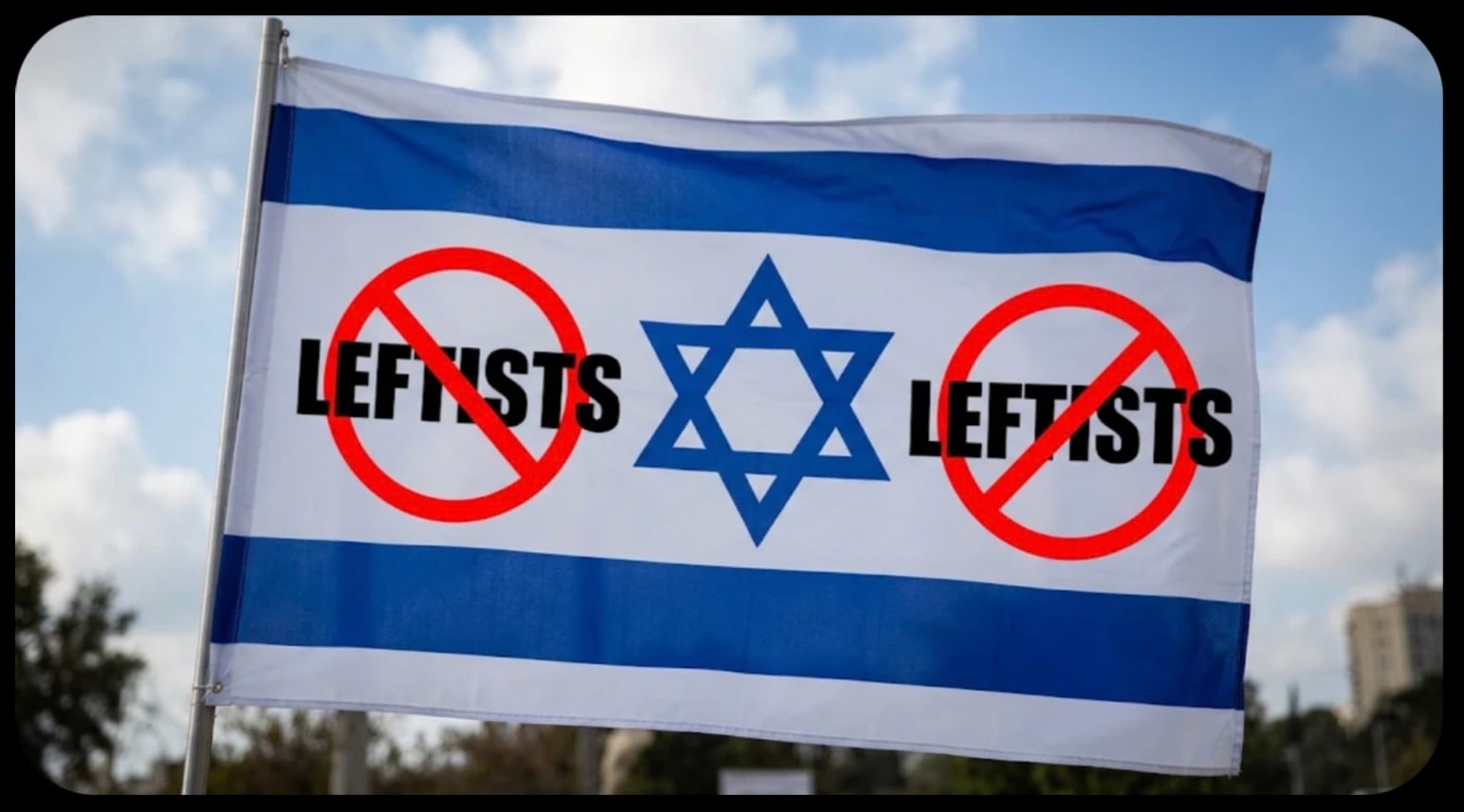
The precipitous decline of the traditional left wing in Israel is primarily shaped by security concerns, the centrality of the Israeli-Palestinian conflict rather than economics, and a major rightward shift in the electorate over the last few decades.
In many Western democracies, the “left-right” spectrum is defined by differing approaches to labor, welfare, taxation, and the size of government. In Israel, politics is dominated by existential questions of security, military defense, the status of occupied territories, and Jewish sovereignty. Because security is a top priority for most voters, mainstream perceptions often associate the right with a tougher, more reliable stance on defense.
In Israel, the left is associated with the two-state solution and trading land for peace. The historic Israeli left (led traditionally by the Labor Party, which governed the country for its first 29 years) built its platform around the Oslo Accords and a two-state solution. Subsequent events—such as the violence resulting from the Second Intifada, the threats from Iran, the rise of Hezbollah in South Lebanon, the rise of Hamas in Gaza, and ongoing rocket fire—led an overwhelming majority of the Jewish public to conclude that territorial compromise and peace initiatives failed to yield security. This conclusion largely ignores the role played by Israel’s right wing in undermining and destroying the peace process through internal terror, political obstruction, and ongoing efforts to place obstacles in the path of peace and reconciliation. To generalize, the Israeli right is nationalist, racist, religious, supports settlement, supports discrimination against Palestinian Israelis, supports the de facto annexation of the West Bank, and the denial of equal rights to Palestinians under Israeli rule.
Successive conflicts, including the aftermath of October 7, have further hardened public Jewish sentiment. Studies and polling indicate that a significant majority of Jewish citizens identify as right-wing or center-right, leaving traditional Zionist left-wing parties like Labor and Meretz (now merged into The Democrats – Hademokratim) with a very small fraction of seats in the Knesset. The party of Ben Gurion, Golda Meir, Yitzhak Rabin, Yigal Allon, and other key figures responsible for founding the state of Israel, and leading it through its first 29 years, has been reduced to an irrelevant remnant of its former self. The Democrats won a mere eight seats, or 6.7% of the total vote, in the recent elections. The left has been relegated to near irrelevance in Israeli politics, except in the current situation where every seat is required to build a coalition.
For many Jewish Israelis who oppose the current right-wing leadership, the label “left” has faced heavy stigmatization. Rather than rallying behind a distinct socialist or peace-oriented left agenda, much of the political opposition has shifted into a broad, pragmatic, and often security-minded centrist-to-right-of-center space. The label “leftist” has almost become a curse word in Israel. Right-wing political messaging and public discourse have frequently framed opposition to government policy, advocacy for Palestinian human rights, and international law as a lack of patriotism, or even betrayal of the state during existential threats. Newspapers, NGOs, and individuals who oppose the occupation and publish or disseminate stories detailing government, IDF, and settler abuse of Palestinian human rights are labeled as lying traitors who should be prosecuted, jailed, and shut down. Right-wingers frequently equate mainstream left-wing or anti-occupation activists with radical fringes, labeling them “anarchists” or traitors to portray them as enemies of the state and military. Furthermore, culturally the label smolani (leftist) has entered daily Israeli slang as a generic insult, used to criticize anyone seen as out-of-touch, overly elitist, or unpatriotic.
Further exacerbating the situation are the demographic realities of the state. Ultra-Orthodox families have 7 or more children, National Religious families have 4 or more children, while secular families have 2.2 children. The ultra-Orthodox and the National Religious are overwhelmingly right-wing while the left derives most of its support from the secular. An added factor is the growing emigration of secular elites from Israel, who are the core supporters of the left.
The combined Israeli Jewish swing to the right from all sectors, added to the demographic imperatives, has doomed any prospects of revival or growth of the Israeli left wing for the foreseeable future. What then are the implications of a minimal left-wing in Israeli politics?
In the absence of an influential, sizable Israeli left we can safely assume that settlement and de facto annexation of the West Bank will continue unabated. One must also consider that with the lack of a political settlement, at best the West Bank will continue with a simmering low-level insurgency, violently resisting Jewish settlement and military rule. At worst the wars with Hezbollah in South Lebanon, Hamas in Gaza, and an increased Hamas presence in the West Bank will continue unabated for the foreseeable future resulting in an Israel at war – forever, with resulting lack of security, loss of life, and the need to maintain a large military presence, with troops on the ground in the north, south, and east of Israel.