Person-centred physician
No other lands
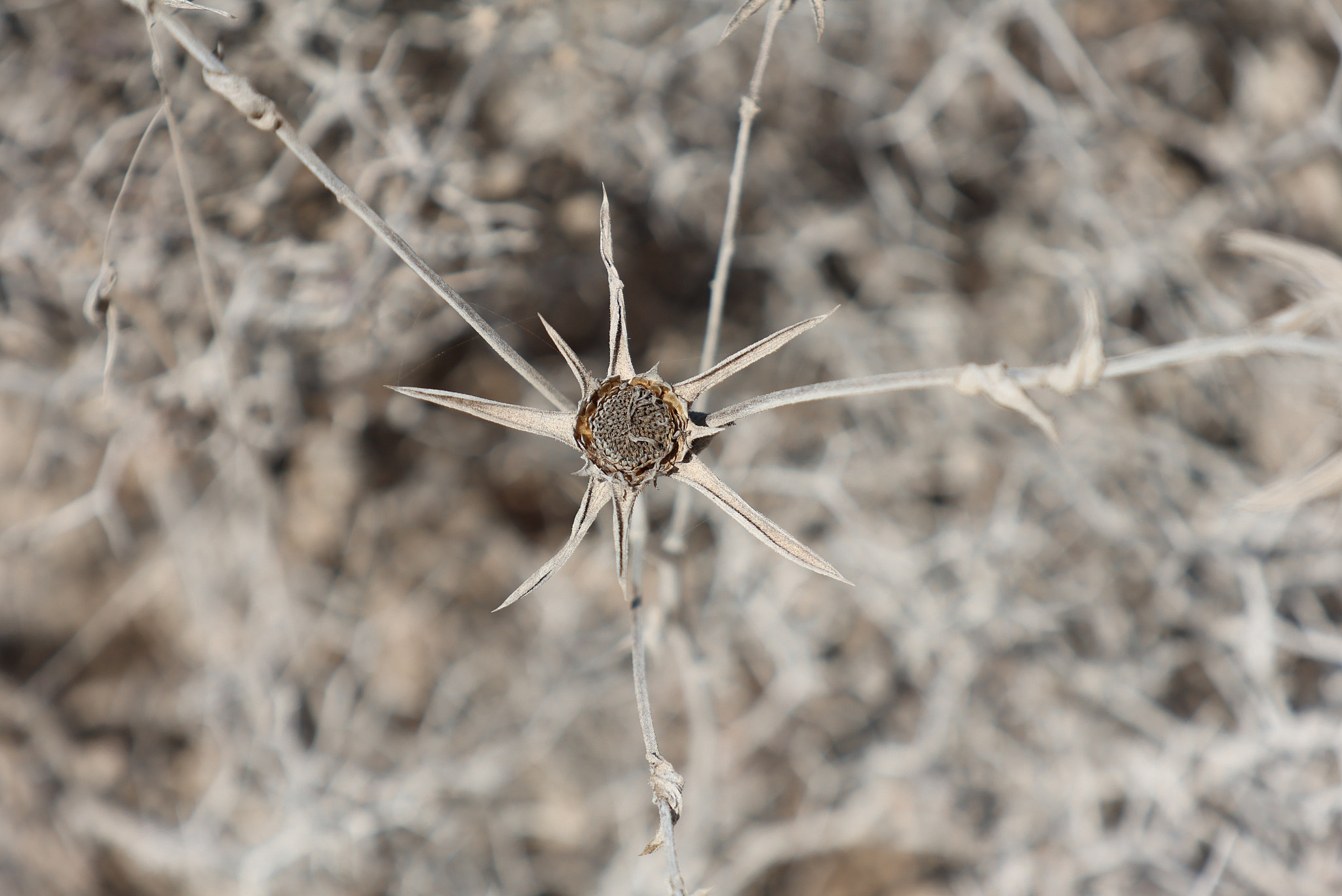
Photo by Rod Kersh, Israel. September 2025
Last night I watched No Other Land. The Palestinian/Norwegian documentary that made headlines in 2023.
The film tells the story of Basel Adra, his family and the residents of Masafer Yatta which is in the West Bank.
You might want to call it The Territories or Occupied Palestine. Others prefer Judea and Samaria.
It took me a couple of years to watch as there have been things going on in the meantime.
The filming ended in October 2023.
Before October 23, I didn’t find the Palestinian flag triggering.
Indeed, when someone in my Jewish congregation showed me her bag that had an Israeli and a Palestinian flag embroidered side by side, I thought it a positive gesture, a means of demonstrating solidarity, perhaps to initiate a conversation.
Then it all changed.
And I won’t go into the details; I have written enough already.
Listening to the What Matters Now Podcast with Amanda Borschel-Dan and Jordan Hoffman, the first of a ‘yet to be named series’ I was reminded of the film; this was in the context that all Israeli films have been banned from the forthcoming International Documentary Festival Amsterdam (IDFA).
As No Other Land was funded by the Palestinian Authority and Norway, and despite it featuring a Jewish Israeli journalist, Yuval Abraham it, had it come out this year, would have been an exception and passed the censors.
I won’t discuss the wrongs and rights of this or the reality that the most recent award-winning documentary from Israel and Palestine, The Sea, would be banned from; in a similar way to BDS disapproving of No Other Land as it in some way legitimated Israel by acknowledging its existence.
(The BDS prefer for people to place their heads deep in the sand and hope that by not purchasing Jaffa Oranges, or listening to Radiohead, the conflict will be resolved)
The film is based on family recordings made by the main character Basel and his family over the preceding 20 years alongside interviews and conversations between Basel, resident of Masafer Yatta and Yuval Abraham, Israeli journalist, human rights advocate and Arabic speaker.
It was moving. It made me angry. The senselessness of destroying homes and schools, of pouring cement into irrigation wells to prevent access, all of that made me sad, furious, disappointed.
The scene where the Israeli army are removing the community’s generator leading to a man, Harun Abu Aram being shot, paralysed from the neck down and subsequently dying of complications was just one episode that left me reeling.
And yet.
There is always an and yet.
I can’t help thinking that the film was not balanced.
Does a documentary have a duty to demonstrate balance? I guess that depends on who is editing or directing and the message they wish to convey.
The scenes of bulldozers crushing chicken houses or toilets was bizarre, petty and pointless. The camera zooming-in on an escaped pigeon poignant.
The dove, metaphor for peace, hidden in a bucket.
There is more to the story. More background.
It is sometimes impossible to disentangle truth from fiction by superficial Googling; postings tend to have extreme views either from the Pro-Palestine / Anti-Israel camp or those on the opposite, Anti-Palestine, Pro-Israel.
Never the twain shall meet.
And what a shame.
I found one scene fascinating. When Yuval is talking with one of the Massafer Yatta residents, just after one of the demolitions.
The man, demonstrably angry, frustrated, was asking why he should trust him, Yuval, a Jew, why he should welcome him when it could be his brother or cousin who is driving the bulldozer or holding the gun (I paraphrase).
It was tense. One sided. I was thinking, Yuval is innocent, a good guy, look at the efforts he has made to bridge the divide and yet you also understand the emotion. At one point it is not clear where the conversation will lead.
Another man appears and asks them what is happening, ‘debating,’ says the man, ‘We need you to help us move some debris,’ replies the other and they walk off together, Israeli and Palestinian, talking, joking, collegial again.
How many times have I heard people respectfully debating, discussing the hard stuff that lies between this divide? None over the past two years.
Discussions mostly deteriorate into shouting if not screaming; ‘A conversation between the deaf’ ‘שיח חרשים’ goes the Israeli idiom (I appreciate no longer politically correct).
I can’t hear what you are saying, I am not listening, and you aren’t hearing and don’t want to hear my position.
We raise our voices. We argue. If a debate, one side applauds, then another, egos are stoked, people go home, and the Palestinians are left in limbo.
Another recent podcast with Haviv Rettig Gur interviewing Daniel Balson and Danielle Haas, former employees of Amnesty International and Human Rights Watch respectively discussed the ways in which the organisations pay less attention to balanced argument than accelerating social media likes, money raising and shouting in echo chambers.
Recently Amnesty International closed its branch in Israel because the leadership disagreed with the use of the term ‘genocide’ in relation to Gaza.
I accept genocide is a hot topic. It is inflammatory. Unhelpful, and yet; the Israel branch was closed, the team disbanded and the organisation now has no representation in Israel.
Yet, the first thing you realise when you arrive in Israel or the West Bank or Judea and Samaria is the way in which the two communities are entangled, inextricably connected one to the other.
Trying to help the Palestinians without engaging Israelis is ego based and motivated by a desire for cool or inclusion.
Imagine being a counsellor working with a family when you refuse to acknowledge or engage some of the members. It won’t work. Sure, you will keep yourself busy, but you won’t affect change, at least not in a constructive way.
I guess this is my hope, my wish, that with the move into a new stage of ‘the conflict’ the heat will start to reduce.
Politicians pushing populism, ego and self-interest will be seen for what they are, others will come forward, to listen, to hear what the other side is saying.
I watched the documentary last night, saw the flags, tried to understand the Arabic and did not feel triggered or upset (except for the bulldozers).
The inherent beauty and dignity of the villagers was apparent, in the same way that the very few non-military Israelis who appeared in the film also showed their beauty.
I accept this is currently not conceivable, however, unless we accept that we are all created in God’s image (acknowledge one another’s humanity, dignity, serenity), that we all the same, there cannot be much hope.
Yes, people will seek to pull us apart. To find friction and sow division. That is one strategy for gaining votes, for selling newspapers and social media clicks. And yet, there must be another way.
Looking at what we have rather than what we have not is another angle.
We forget the richness of our lives and focus on the threat, the fear, the danger of the other.
The film moved me. And yet, because I am aware of the history, to events of the past, because I see the limitations of a reel or a hashtag I am able to pause, breathe and consider what next.
Unfortunately, far too little is known, talked about or understood today of history (Jewish, Israeli, Palestinian, Arab).
This week saw the Maccabi Tel Aviv match against Aston Villa, where supporters of Maccabi were banned from the stadium, supposedly, for their own security. The area around the stadium filled with banners and posters publicising the atrocities committed by the Israelis and so on.
How many of those people, up their ladders with Sellotape and plastic ties know that they Jews were expelled as a group, en masse from England in 1290. How many know the history of the Inquisition, the Pogroms, Babi Yar and the Holocaust, Camp David, Oslo or the Abraham Accords?
None of this is part of a game of ‘my suffering is greater than yours’ – suffering, like Victor Frankl says is a gas, it permeates the space available to it.
The reason for my mentioning these events is not to begin a game of comparative pain, more to demonstrate that it is not only the Palestinians who have intergenerational trauma; so too the Jews, so too the Israelis (Jew, Christian or Muslim).
A game of one-upmanship does not benefit anyone, least of all those who are disenfranchised, caught in the middle, in no man’s land.
No other land. This title was taken from the Israeli song, ‘Ein li eretz-acheret’ (I have no other land) – there is no mention of this in the film. And yet, to me, it is of critical importance.
It is not just the Palestinians who have no other land, it is the Israelis. ‘Go back to where you came from’ doesn’t work as no one will have us, either of us. We are stuck with each other and only one choice, only one solution will result in prosperity for both sides.
x
I considered not writing this blog.
I was recently cautioned by AI that my writing was provocative.
What is the alternative?
I could remain silent.
AI also questioned whether my discussing these difficult subjects was ‘good for me’ – what else can I do?
As my big brother used to tell me, ‘A problem shared is a problem halved,’ I guess that is my aspiration. To share, to break apart some of the challenge into pieces that can accommodate solution.
If I have offended, I apologise. If I have represented your position. You are welcome.
For the moment I will keep going.
x
I couldn’t figure out why Yuval never took a puff from the hookah.
Related Topics