
Bridging faith. Defending truth. Confronting hate
No Peace in Israel Without a Muslim Reckoning
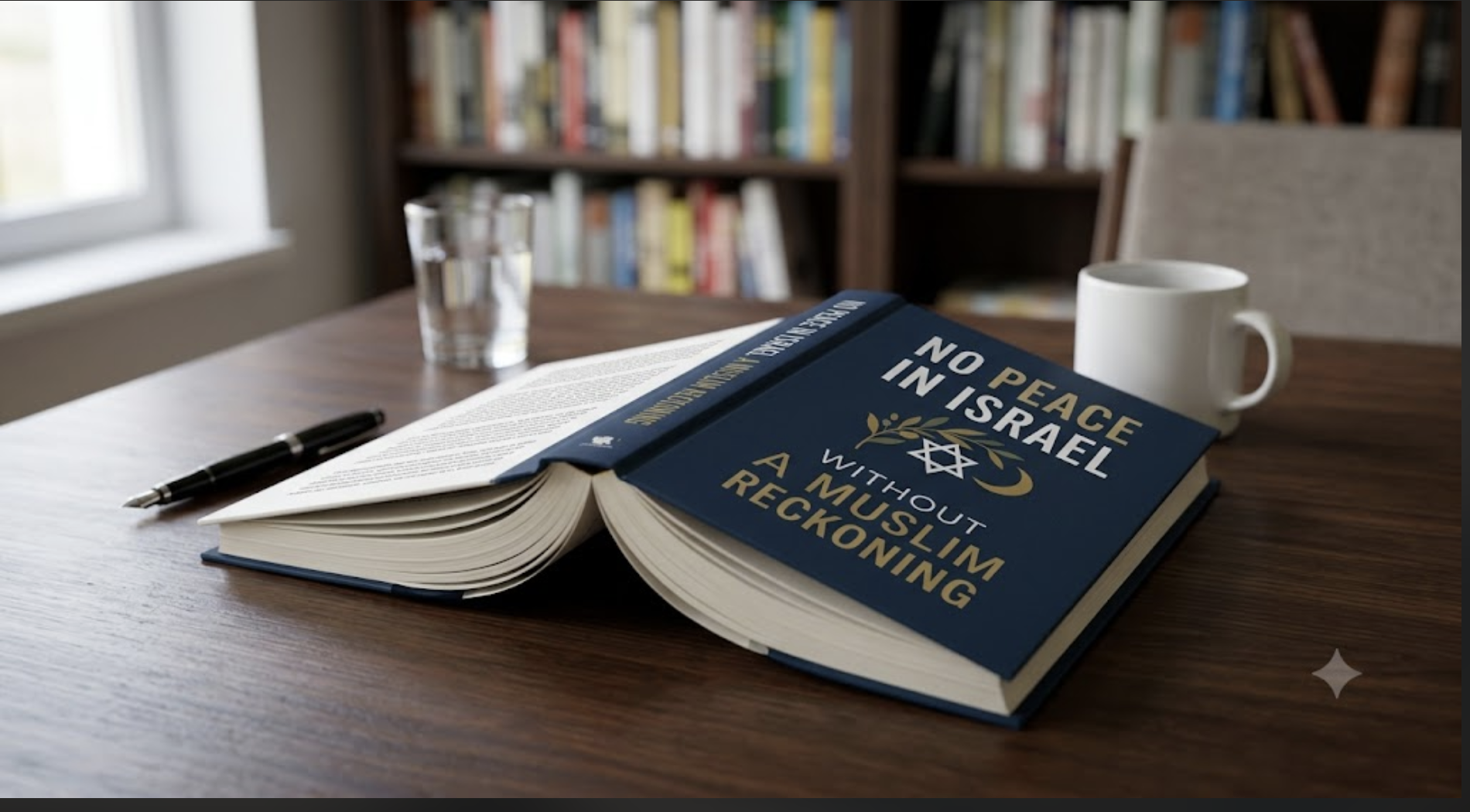
The argument I want to make is this: for peace in the Middle East to happen, the Muslim religious and political culture must change and affirm a permanent moral order in which Jewish sovereignty is legitimate, equal, and cannot be changed in the future.
When I say this, I am not saying that this is only a Muslim phenomenon, nor am I attempting to marginalize Muslims. Far from it. In this article, I deal with Muslims because, one, this is my area of expertise and two, because this group represents over one fourth of the world’s population. The religious ideas I explore here continue to exert significant influence around the world.
Right now the public’s focus is on Iran and Hamas, and wondering if they can change. But there are deeper questions that linger. Will the Muslim world as a whole change? Of course, Muslims should not be looked at as a monolith, but these ideas exist and are reinforced through religious leaders, political institutions, schools, activist movements, media outlets, and Muslim communities throughout the world. With this globalized network, there also lies a possible path to establish a new moral consensus concerning Jews.
The transformation required for peace cannot remain the private conviction of individual Muslims or the marginal position of a few reformers; it has to become institutionally authoritative.
Interfaith Interaction Must Change
Much contemporary Western interfaith engagement is shaped by moral idealism, and is partly rooted in liberal Protestant and Catholic traditions. This approach has real value as it emphasizes things like goodwill, shared values, common ground. It holds firmly to the hope that greater understanding can reduce conflict and encourage lasting cooperation. These aims are valuable, but they can sometimes underestimate the depth of the disagreements involved or cause one to see things as much better than they actually are. Moral realism, on the other hand, begins by recognizing that religious communities may hold conflicting truth claims, historical narratives, and moral frameworks that goodwill alone cannot resolve. Dialogue still matters, but it must take those differences seriously rather than assuming that better relationships will eventually make them disappear.
That gap matters most when interfaith dialogue turns to Israel and the Jewish people, where conciliatory language can easily mask deeper convictions. When moral idealism is employed, the assumption is that something of significance has been accomplished when Muslim leaders condemn antisemitism, then use moderate language and express a willingness to coexist with Israel under present conditions. Moral realism, on the other hand, goes much further. It seeks to answer a deeper question by looking beyond the superficial and examining religious and political convictions beneath the conciliatory language. Do they truly hold to the conviction that Jewish sovereignty should be morally legitimate and permanent?
Moderation Is Not Yet Recognition
There are Islamic nations that may accept Israel as an existing state based on pragmatic motivations. They may even maintain diplomatic relations that help start economic ties and restrain violence. Yet merely acknowledging that Israel exists is not the same as affirming that Jewish sovereignty is morally legitimate and has a right to endure.
Israel can be tolerated because it is powerful and presently cannot be defeated. None of these positions necessarily recognizes that the state has a moral right to endure.
This distinction is very important because when peace depends solely on a strong Israel can collapse if the balance of power ever changes. In effect, Israel is just being tolerated only for as long as it remains too strong to defeat. Instead, it is a strategic postponement of aggression when the situation ever presents itself, and may represent the present position of many Muslim nations and governments.
It would require a broad and unambiguous affirmation within Muslim religious and political culture that Jews possess a legitimate right to collective self-government and self-determination. It would require saying that Jewish sovereignty is not an offense against Islam simply because it is Jewish.
On the other hand, this affirmation would not require Muslims to approve of everything the Israeli government does. Nor would it mean that Palestinians must give up their national identity, stop seeking freedom, or remain silent about suffering.
The resistance to permanent Jewish sovereignty goes beyond antisemitism; it is rooted in a wider theological and political framework in which several ideas reinforce one another.
- Muhammad’s conflicts with Jewish communities as they are presented in Islamic tradition.
- Jihad as a means by which Islamic political authority was historically expanded and defended.
- The “house of Islam” and the “house of war,” or in Arabic, Dār al-Islām and Dār al-Ḥarb. The “house of Islam” broadly means the lands governed by Muslim authority. The “house of war” refers to the lands outside Muslim rule.
- The dhimma system, under which Jews and Christians could be protected but occupied a subordinate political position. This system continues to influence conditions to varying degrees in some Muslim-majority countries
The difficulty created when territory once governed by Muslims passes permanently under non-Muslim sovereignty. i.e. Israel. The word for this in Arabic is Waqf. The idea is that once Islam conquers a nation, it is theirs forever. Islamists use this term to describe all of Palestine as an Islamic waqf. Historically, using Waqf as Islamists is a tough idea to defend. The Islamic literature doesn’t seem to support this reading.
Modern Islamists have used the above narrative to spread the idea that Zionism is evil.
The leading way these ideas are distributed is through YouTube, social media, and podcasts. It has digitized the Islamist narrative and many Muslims have adopted it.
The chief offenders, meaning those who have actively spread this narrative to large online or political audiences, include Mohammed Hijab, Daniel Haqiqatjou, Ali Dawah, Muslim Lantern, Omar Suleiman, Yasir Qadhi, Mufti Menk, Nouman Ali Khan, Hamza Tzortzis, Uthman ibn Farooq, Dalia Mogahed, Linda Sarsour, Rashida Tlaib, Ilhan Omar, and Noura Erakat.
Toward Territorial Finality in Muslim Political Thought
The next transformation I would like to address concerns territory, which follows directly from that sovereignty argument. Muslim political and religious thought teaches that all the land between the Jordan River and the Mediterranean Sea must eventually be removed from Israeli sovereignty. This continues to be the mantra for the far left and is echoed on college campuses. Whatever language is used to express it, the result is the same: Jewish sovereignty is treated as temporary, while Muslim or Palestinian sovereignty is treated as the only morally acceptable final outcome. This position, according to its own logic, makes permanent peace impossible.
A transformed Muslim political theology would have to give up the belief that land under Jewish sovereignty is merely waiting to be reclaimed by Muslims at some point in the future. It would have to say clearly that no future generation is religiously obligated to reverse Israel’s existence. It would also have to recognize that Palestinian dignity and political rights do not require the disappearance of Jewish sovereignty.
Modern Jews Must Be Released From Ancient Religious War
One of the central problems that affects how Muslims see Israel and Jews points back to their holy books. Therefore, no transformation will be complete until contemporary Jews are no longer forced into the roles assigned to them in certain readings of the Qur’an, Hadith, and tafsir. For instance, traditions about Khaybar, an apocalyptic conflict, or the end times cannot be treated as political instructions for how Muslims should relate to Jews today. Thus, what needs to happen is that many mainstream Muslim scholars need to argue that these traditions describe a specific seventh-century conflict and are not timeless commands.
Muslim scholars and thinkers must situate these religious texts historically, debate them theologically, read them metaphorically, or confine them to the particular contexts in which they arose. As I see it, what must be rejected is the habit of turning ancient conflicts and end-times imagery into a permanent way of defining Jewish communities today. Without substantial change, modern Jews will be presented as participants in an eternal religious war. This means that realpolitik becomes almost impossible to overcome.
When this happens, Jewish individuals cease to be judged by their own conduct and instead become representatives of a timeless enemy, where collective guilt replaces individual responsibility. Instead the following happens:
- They become representatives of a timeless enemy.
- Collective guilt replaces individual responsibility.
- Compromise becomes apostasy.
- Political defeat becomes religious humiliation.
- Violence acquires cosmic meaning.
Under this worldview, the conflict cannot end because the problem is no longer what the government does. The real problem becomes what Jews are. That is where political criticism turns into civilizational hatred.
What exactly would a Muslim moral transformation look like? I believe it would require religious authorities within the Muslim world to state clearly that contemporary Jews are not characters in an inherited apocalyptic drama. This means that they do not bear collective responsibility for ancient conflicts. They are not religious symbols on whom the grievances of history should be taken out.
Thus, modern conflicts must be judged according to the conduct of modern actors. No people can be permanently imprisoned within an enemy role inherited from antiquity.
Civilian Immunity Must Be Absolute
Muslim religious and political institutions must teach that Israeli civilians remain civilians. Their nationality does not make them legitimate instruments of pressure. Nor does being Jewish make them personally responsible for the actions of the Israeli government, and their deaths cannot be justified as revenge, deterrence, liberation, or religious duty.
No injustice suffered by Palestinians can make the deliberate murder of Israeli children, families, commuters, elderly people, or residents of civilian communities morally acceptable. The same moral principle applies in the other direction. Deliberate or reckless violence against Palestinian civilians is equally wrong. If the immunity of civilians is to mean anything, it must apply to every civilian, not only those on one side of the conflict.
A Different Peace Requires a Different History
Political movements pass their ideas from one generation to the next through the stories they tell about the past. Those stories do not simply explain history. Those stories teach people who are innocent, who are guilty, and what the future should look like.
Governments can sign peace agreements, but peace will never last if the next generation is still taught that Jews are foreign intruders, perpetual conspirators, descendants of an ancient enemy, or temporary rulers whose sovereignty must one day come to an end. A peace agreement signed by leaders will mean very little if children are still being taught that accepting Israel is an act of betrayal.
The Transformation Must Become Institutional
There is a key role to play for religious scholars. They are in charge of explaining difficult traditions in ways that prevent them from being used to demonize Jews. There are roles for others to play in the Muslim world. For example, political leaders must stop speaking the language of peace abroad while allowing dreams of Israel’s eventual destruction at home.
The real test is not whether every Muslim agrees about Israel’s borders, history, government, or policies.
No democratic society requires everyone to think alike. The question is whether certain principles become nonnegotiable. Below are a few of those principles.
- Jews are a people, not merely a religious minority.
- Jews have a legitimate right to self-government.
- Jewish sovereignty is not inherently opposed to Islam.
- Contemporary Jews are not part of an eternal religious conspiracy.
- Israeli civilians do not lose their civilian status because of collective accusations.
- The deliberate killing of noncombatants can never be called martyrdom.
- Justice for Palestinians cannot be defined by the eventual destruction of Jewish self-government.
- A peace agreement cannot simply hide a theological or historical expectation that it will one day be undone. None of these principles requires Muslims to abandon Islam.
The Test of Finality
The real question is not whether Muslims can live alongside a Jewish state as long as it cannot be defeated. Living with Israel because it cannot be defeated is not the same thing as accepting that it has a permanent right to exist.
The real question is whether the Muslim world can accept a morally legitimate end to the conflict. An end means more than stopping the fighting. It means giving up the belief that a future generation must begin it again.
Can Muslim religious and political leaders recognize a permanent Jewish state not simply as an unavoidable fact, but as a legitimate expression of Jewish self-government?
Can they imagine justice without conquest?
Can they affirm that Jews and Palestinians both possess equal political rights? Peace becomes possible only when the existence and dignity of one people are no longer treated as obstacles to the existence and dignity of the other.
That is the real test.
The change that is needed goes far beyond Iran or Hamas. It must reach the religious ideas, historical narratives, political goals, and moral assumptions through which much of the Muslim world understands this conflict. Removing one organization while leaving the ideas that sustained it untouched will not bring the conflict to an end.
This does not mean that Muslims alone are responsible for bringing about peace, or that Israeli leaders bear no obligation to recognize Palestinian political rights. There are also Israeli and Jewish extremists who deny that Palestinians are a people, defend permanent domination, or justify violence against Palestinian civilians. They, too, must confront the beliefs that allow them to treat another people as though they have fewer rights, less dignity, or no rightful claim to the land.
Muslim moral responsibility begins with what Muslims teach, approve, celebrate, and refuse to condemn. It will begin when Muslim institutions can say—clearly, publicly, and without an unspoken reservation—that Jewish political existence is legitimate, that Jewish civilians are inviolable, and that no religious prophecy, historical grievance, or future change in power grants anyone the right to take that existence away. Without that condition, recognition is real rather than temporary.
A ceasefire can interrupt a war.
Only a transformed moral vision can declare that the war is over.
Endnotes
- Conrad Hackett, “Islam Was the World’s Fastest-Growing Religion from 2010 to 2020,” Pew Research Center, June 10, 2025, doi:10.58094/yy8g-2490.
- Mark R. Cohen, Under Crescent and Cross: The Jews in the Middle Ages (Princeton, NJ: Princeton University Press, 1994); and Yohanan Friedmann, Tolerance and Coercion in Islam: Interfaith Relations in the Muslim Tradition (Cambridge: Cambridge University Press, 2003).
- Moussa Abou Ramadan, “Muslim Jurists’ Criteria for the Division of the World into Dar al-Harb and Dar al-Islam,” in International Law and Religion: Historical and Contemporary Perspectives, ed. Martti Koskenniemi, Mónica García-Salmones Rovira, and Paolo Amorosa (Oxford: Oxford University Press, 2017), 219–38.
- Miriam Hoexter, Endowments, Rulers, and Community: Waqf al-Haramayn in Ottoman Algiers (Leiden: Brill, 1998); and Hamas, “The Covenant of the Islamic Resistance Movement,” August 18, 1988, art. 11, Avalon Project, Yale Law School.
- Hamas, A Document of General Principles and Policies, official English trans., May 1, 2017, paras. 16, 19–20.
- Gordon D. Newby, A History of the Jews of Arabia: From Ancient Times to Their Eclipse under Islam (Columbia: University of South Carolina Press, 1988); Ṣaḥīḥ Muslim, “The Book of Tribulations and Portents of the Last Hour,” no. 2922, book 54, hadith 103; and David Cook, Studies in Muslim Apocalyptic (Princeton, NJ: Darwin Press, 2002).
- Robert S. Wistrich, A Lethal Obsession: Anti-Semitism from Antiquity to the Global Jihad (New York: Random House, 2010); and Matthias Küntzel, Jihad and Jew-Hatred: Islamism, Nazism and the Roots of 9/11, trans. Colin Meade (New York: Telos Press Publishing, 2007).
Related Topics