
No, We Don’t Eat Kosher Meat Either.
What I’m about to say may surprise you, given that I am a rabbi who keeps strictly kosher in accordance with the Orthodox halakha I live my life by, but sadly, the current state of kosher eating (“kashrut”) is not morally superior to non-kosher eating. Yes, it fulfills the technical biblical requirements, but it does not rise beyond.
Of course, I consider kashrut holy. It is a set of ancient, sacred laws from the Torah. However, that does not make it inherently aligned with the values of ethical consumption. In an ideal world, the ethical and the religious would be braided together inexorably. I believe that before the era of industrialized meat and dairy, this was the case. But the advent of factory farming has resulted in kashrut becoming uncoupled with moral choices around food. Until the kosher industry can disentangle itself from the most pernicious sides of hyper-capitalism in general, and from factory farming in particular, the only true form of ethical eating in line with Jewish values is a plant-based one.
I have felt real reservation about making this argument publicly. Am I feeding into the antisemitism of anti-kosher rhetoric, I asked myself? After all, the European Union has become notorious for attempting to ban shechita (Jewish ritual slaughter). Kosher animals suffer no more than any other factory-farmed animal. For the EU to pick on minority eaters- not just kosher-keeping Jews but also Muslims who follow halal- is plainly prejudiced. But in the end, I have decided that the message is too important to leave unshared. Because while it’s true that the EU targeting of religious minorities is wrong, and the kosher meat and dairy industries are no worse than their secular counterparts, it’s also true that, in today’s current state, they are no better. We can and should do better- and a growing number of rabbis and Jewish community leaders have begun building movements, including efforts like Jews Against Factory Farming, around exactly that conviction: that kashrut was never meant to stop at the letter of the law.
In general, I consider the discussion of the final moments of the animal’s life to be a red herring. The argument over which methods of slaughter are more humane misses the point entirely. The issue is not the animal’s final moments before death; the issue is the entirety of farmed animals’ suffering from birth until slaughter, and the utter lack of regard for the sentience of these animals whose bodies are exploited for profit.
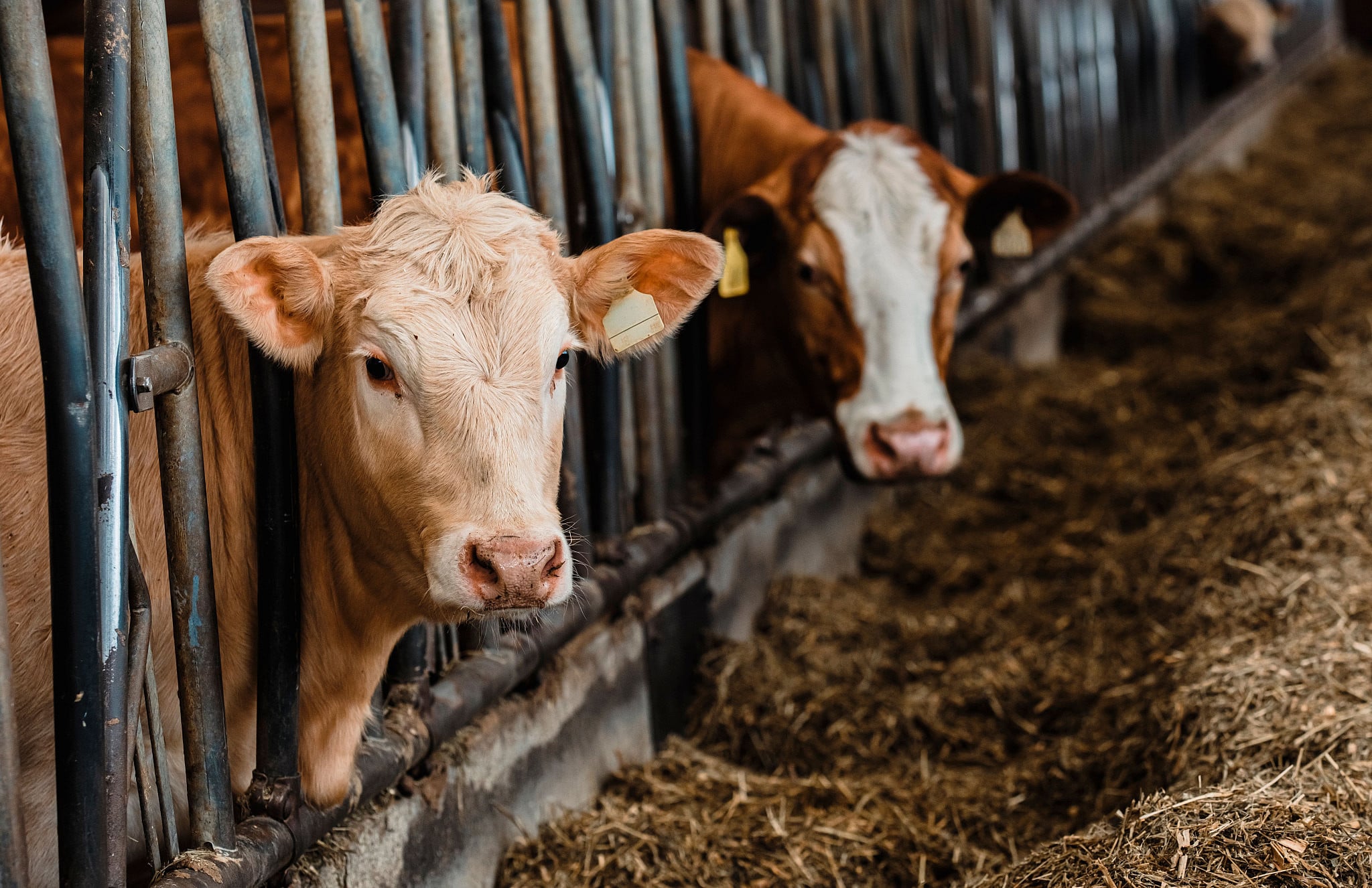
In these regards, kosher and non-kosher products are identical. A factory-farmed chicken destined for kosher slaughter will live its life in filthy, cramped conditions just like a non-kosher one; it will have been subjected to the cruelties of beak-breaking and other cost-saving measures just like a non-kosher one; it will suffer like a non-kosher one.
What’s more, kosher factory farms exploit their workers as much as non-kosher ones. They are no different in their devastating environmental impact, or their potential as sites of foodborne illnesses. This is true of kosher milk and eggs as well.
You may be saying to yourself, But Rabbi Shmuly, it’s the USDA’s job to monitor the conditions of farms and slaughterhouses. I am sorry to report that experts continue to share that the USDA is woefully underfunded, and in no way equipped to properly inspect or regulate animal-product industries. It is, therefore, totally inappropriate for kosher certification agencies to rely on the USDA as adequate: their standards are not high enough, nor enforced enough.
This is not meant as an attack on kosher certification agencies. I do not blame them for being profit driven and uninterested in the morality of animal welfare – that is not their expertise or their focus they claim, nor is it something that kosher-keeping consumers have demanded of them. They deem those to be driven by ethical consumption to be marginal and dismissed as liberals not truly concerned with kashrut in the first place. That needs to change. As consumers who are committed robustly or loosely to kashrut, we need to demand that kosher certification include a higher standard of humane conditions for animals – not just in how they die, but in how they live. Until that happens, a plant-based diet is our only option for true compassion.
This is not just a Jewish issue. I encourage our Muslim and Christian brothers and sisters to consider whether factory farming is in keeping with their religious values. There is tremendous potential for interfaith solidarity here, for people across faiths to rethink what it actually means to eat in line with religious principle, rather than simply within its technical bounds.
Efforts like Jews Against Factory Farming are one small piece of that broader reckoning – proof that this conversation is already underway inside religious communities. But the deeper shift has to happen at the level of everyday choices: what we buy, what we cook, what we consider acceptable to put on the table in the name of tradition. May our everyday habits, not just our holiday ones, be the place where that sanctity actually shows up.