Noah’s Leadership: Perfectly Imperfect
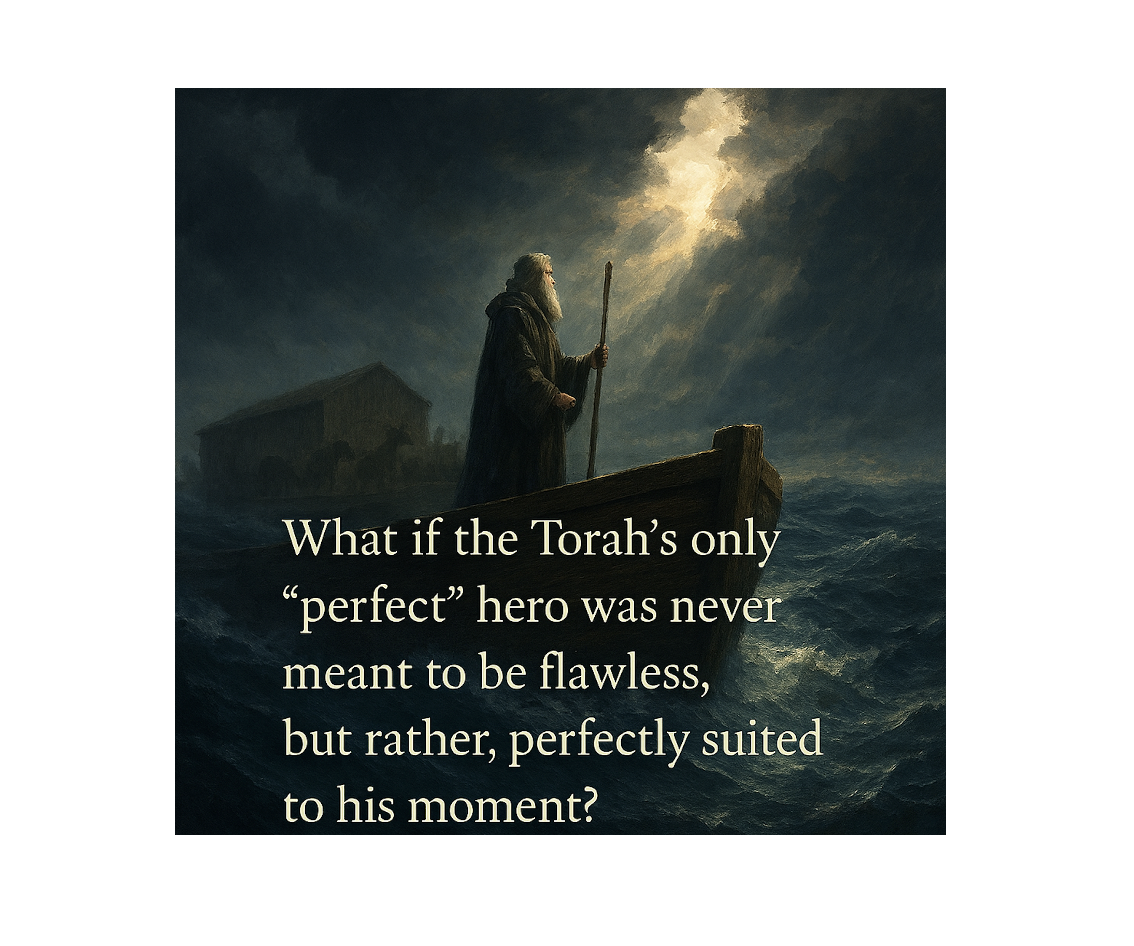
What if the Torah’s only “perfect” hero was never meant to be flawless, but rather, perfectly suited to his moment?
Years ago, I attended a lecture at London Business School where the speaker introduced a compelling idea: the concept of an “allowable weakness” in leadership. The premise was simple but profound, leaders who appear flawless often alienate others. People instinctively search for cracks. But when a leader is open about their limitations, ones that don’t undermine their credibility, it builds trust. It makes them human.
Abraham Lincoln understood this. He spoke openly about his melancholy and used self-deprecating humor to disarm critics. His vulnerability didn’t weaken him; it deepened his connection with others.
This lens helps us reframe Noah. His imperfections, far from diminishing his leadership, may actually define it. His quiet faithfulness, his integrity in isolation, made him the right leader for a world on the brink of collapse.
Noah is the only person in the Torah described as tamim, often translated as “perfect.” Yet paradoxically, he’s also one of the most criticized figures in the Torah. Why?
Perhaps because the Torah uses this word deliberately, not to declare Noah flawless, but to provoke a deeper question: What does “perfect” mean in leadership? Is it moral courage? Charisma? Strategic brilliance? Or is it something quieter, something contextual?
Consider the verse that introduces him:
אֵלֶּה תּוֹלְדוֹת נֹחַ נֹחַ אִישׁ צַדִּיק תָּמִים הָיָה בְּדֹרֹתָיו אֶת־הָאֱלֹהִים הִתְהַלֵּךְ־נֹחַ (Genesis 6:9): “These are the generations of Noah: Noah was a righteous man, tamim in his generations; Noah walked with God.”
Just one verse earlier:
וְנֹחַ מָצָא חֵן בְּעֵינֵי יְהוָה (6:8): “But Noah found favor in the eyes of the Lord.”
This juxtaposition stirs grace on one side, hard-won righteousness on the other. Why frame Noah this way?
Rashi famously presents two opposing views on the phrase בדרתיו (“in his generations”). One praises Noah, even in a corrupt generation, he was righteous. The other critiques him, compared to Abraham, he falls short, had he lived in Abraham’s time, Rashi writes, he would not have been considered significant.
Rabbi Jonathan Sacks ZT’L sharpens this second view. In Covenant and Conversation, he notes that Noah is silent. He doesn’t protest G-d’s decree. He doesn’t plead for humanity. He builds the ark and saves his family, but not the world.
Abraham, by contrast, argues with G-d over Sodom. He challenges divine justice. He leads through moral persuasion.
Noah’s leadership is quieter. But is it lesser?
Ramban (Nachmanides) defends Noah. He reads בדרתיו as a compliment, Noah was righteous despite his generation. Ibn Ezra and Radak agree, Noah’s virtue shines brighter in contrast to the moral darkness around him.
This tension invites us into a broader conversation, leadership is not one-size-fits-all. It’s shaped by the needs of its time.
Rabbi Levi Yitzchak of Berditchev adds a beautiful nuance. In Kedushat Levi, he distinguishes between two types of tzaddikim, those who challenge G-d’s decrees, and those whose humility leads them to accept them. Noah, he says, was so humble he didn’t feel worthy to intercede. His tamimut, his wholeness, was not passivity, but profound alignment with G-d’s will.
Yet this humility reveals a different kind of strength, the courage to endure, not to argue.
Maybe tamim was never about perfection anyway? In Devarim (18:13), we’re told: תמים תהיה עם־יהוה אלהיך. You shall be tamim with the Lord your G-d. Here, tamim doesn’t mean flawless. It means whole. Integrated. Spiritually aligned.
Noah’s tamimut wasn’t about charisma or activism. It was about integrity in isolation. In a world collapsing, he walked with G-d.
We often compare biblical leaders. But maybe we should celebrate their diversity.
Noah was quiet and dutiful, the preserver in apocalypse. Abraham was persuasive and outward-facing, the challenger in moral crisis. Moshe was introspective and mission-driven, the lawgiver in wilderness. David was expressive and passionate, the unifier in conquest.
Each rose to meet the needs of their generation. Noah’s introversion and precision were exactly what was needed to save humanity. His leadership wasn’t about changing the world, it was about preserving it.
From my personal perspective, when I think about Noah’s task, it’s truly astonishing that he held onto his faith through it all, pulling through what must have seemed an impossible burden. This wasn’t mere survival, it was a unique skill, a quiet mastery of steadfastness that turned isolation into sanctity.
If we demand perfection, we won’t get it, we’ll only be disappointed, settling for one polished type of leader who feels distant and scripted. We won’t get true, human leadership. But if we allow for imperfection and authenticity, we might discover integrity, and the right leader for the right time.
Noah wasn’t perfect. But he was real. He was righteous in his generation. And that’s not a caveat, it’s context. It’s complexity. It’s the beauty of leadership shaped by divine wisdom for its time. He walked with G-d when no one else did. He built when others mocked. He endured when the world collapsed. And that, too, is greatness.