
Nobel Gold Cannot Conceal Pillay’s Genocide Travesty
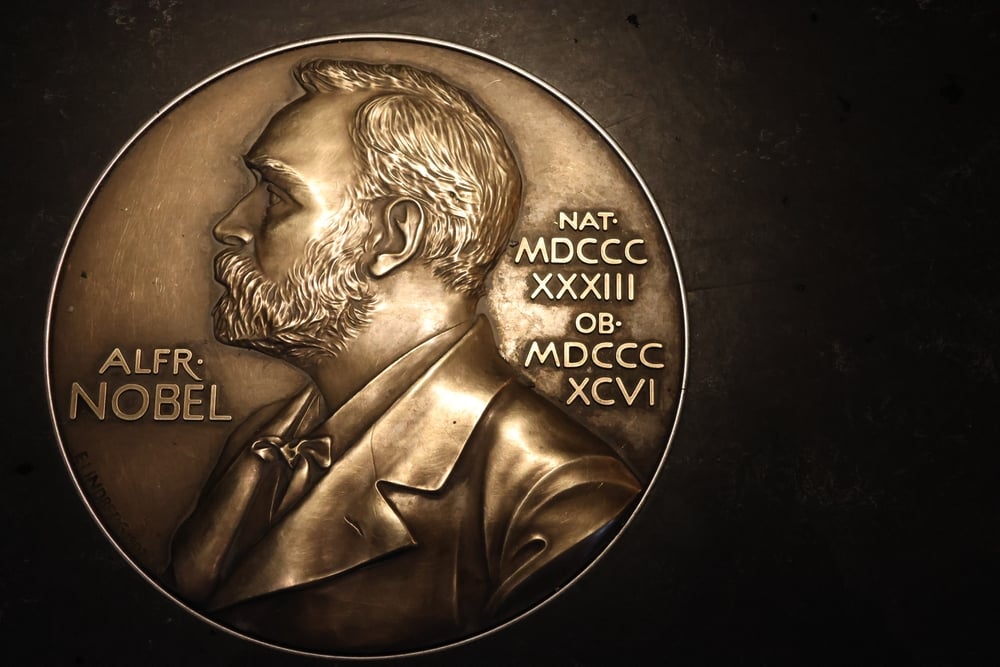
The Nobel Committee can award Navi Pillay a medal. It cannot award her commission the evidence, credibility or judicial authority its accusation against Israel so conspicuously lacks.
As Pillay receives the 2026 Nobel Peace Prize, the foundations of her commission’s genocide declaration are buckling under scrutiny, including admissions from one of its own members. What was presented as a triumph of international justice increasingly resembles political activism wearing a judge’s robes.
Begin with the commission’s appropriation of the International Court of Justice’s authority. Its report asserted that the Court had put states on notice of the plausibility of Israel committing genocide. That formulation supplies something politically invaluable: the impression that the world’s highest court had already lent judicial credibility to the accusation.
Yet Joan Donoghue, who presided over the Court when it issued its January 2024 provisional measures order, explicitly corrected that interpretation. Speaking to BBC HARDtalk, she explained that the Court had recognized Palestinians’ plausible rights to protection from genocide. It had not decided that the allegation itself was plausible: “It didn’t decide that the claim of genocide was plausible.”
The distinction is fundamental. Protecting rights while a case proceeds is different from endorsing the accusation being litigated. Donoghue’s explanation did not exonerate Israel or dispose of the case. It did demolish the convenient claim that the Court had already found the genocide allegation plausible. Pillay’s commission nevertheless deployed language that blurred the very distinction the Court’s former president had clarified.
For a body demanding deference to international law, that is an extraordinary failure. The authority of a court cannot be borrowed while the meaning of its ruling is rewritten.
Then comes the commission’s own evidentiary retreat. According to reports of a recent Melbourne debate, commissioner Chris Sidoti acknowledged that the panel had not independently verified the claim that 83 percent of those killed in Gaza were civilians. Asked whether it had checked that figure, he replied: “No. We didn’t, because we don’t have that information.”
An unverified casualty ratio cannot reliably establish deliberate civilian targeting. Still less can it carry an accusation requiring proof of an intention to destroy a people. This admission does not reveal the correct percentage. It reveals the gulf between the commission’s public certainty and its actual knowledge.
Sidoti also stressed that the commission was an investigative body, operating on a reasonable-grounds standard, rather than a court. Pillay, meanwhile, reportedly described its process as resembling a court and asserted that every fact had been verified. These competing accounts cannot both sustain the sweeping authority projected onto the findings.
The commission wants its declaration received with the force of a judgment, then invokes the limitations of an investigation when its methods are challenged. Judicial prestige at the microphone; investigative qualifications under questioning. That is an intolerable arrangement for an accusation of this magnitude.
The legal obstacle remains specific intent. The ICJ’s Croatia–Serbia judgment makes clear that, where genocidal intent is inferred from conduct, it must be the only reasonable inference. The Court rejected genocide claims despite establishing killings and serious harm. Those crimes did not automatically prove an intention to destroy the protected group.
Pillay’s commission cannot overcome that requirement through the sheer accumulation of horrific images. Nor can it convert every statement about destroying Hamas into a declaration of war against Palestinians. UN Watch’s detailed rebuttal challenges that interpretive practice, identifying statements targeting Hamas and passages recognizing innocent Palestinians that complicate the commission’s reading of Israeli leaders’ rhetoric.
Offensive language deserves condemnation. Criminal orders deserve prosecution. But establishing genocidal intent requires disciplined analysis of context, authority, policy and conduct. A prosecutor’s most hostile interpretation is not automatically the only reasonable one.
There is also the commission’s record. In 2022, member Miloon Kothari invoked a “Jewish lobby” controlling social media and questioned Israel’s UN membership. Pillay defended him, claiming his comments had been taken out of context. Kothari subsequently apologized for the remarks. The episode exposes a disturbing imbalance: generous contextual interpretation for a colleague’s remarks about Jews, followed by an aggressively incriminating interpretation of Israeli rhetoric.
Most telling, all three of the commission’s members, including Pillay, resigned before the report was released so they would not face scrutiny or have to answer difficult questions about its content. It has been clear from the beginning that this was a predetermined political indictment. Israelis deserve the same legal standards applied elsewhere.
Pillay’s defining pronouncement on Israel should be judged by its reasoning, not her decorations. Mischaracterized judicial authority, unverified statistics and selective interpretation cannot be redeemed by Nobel applause. Together, they make a compelling case that this was ideologically motivated activism dressed as jurisprudence. The medal shines; the argument underneath is coming apart.