
Middle East Analyst
Normalization from the Saudi Perspective: Part I
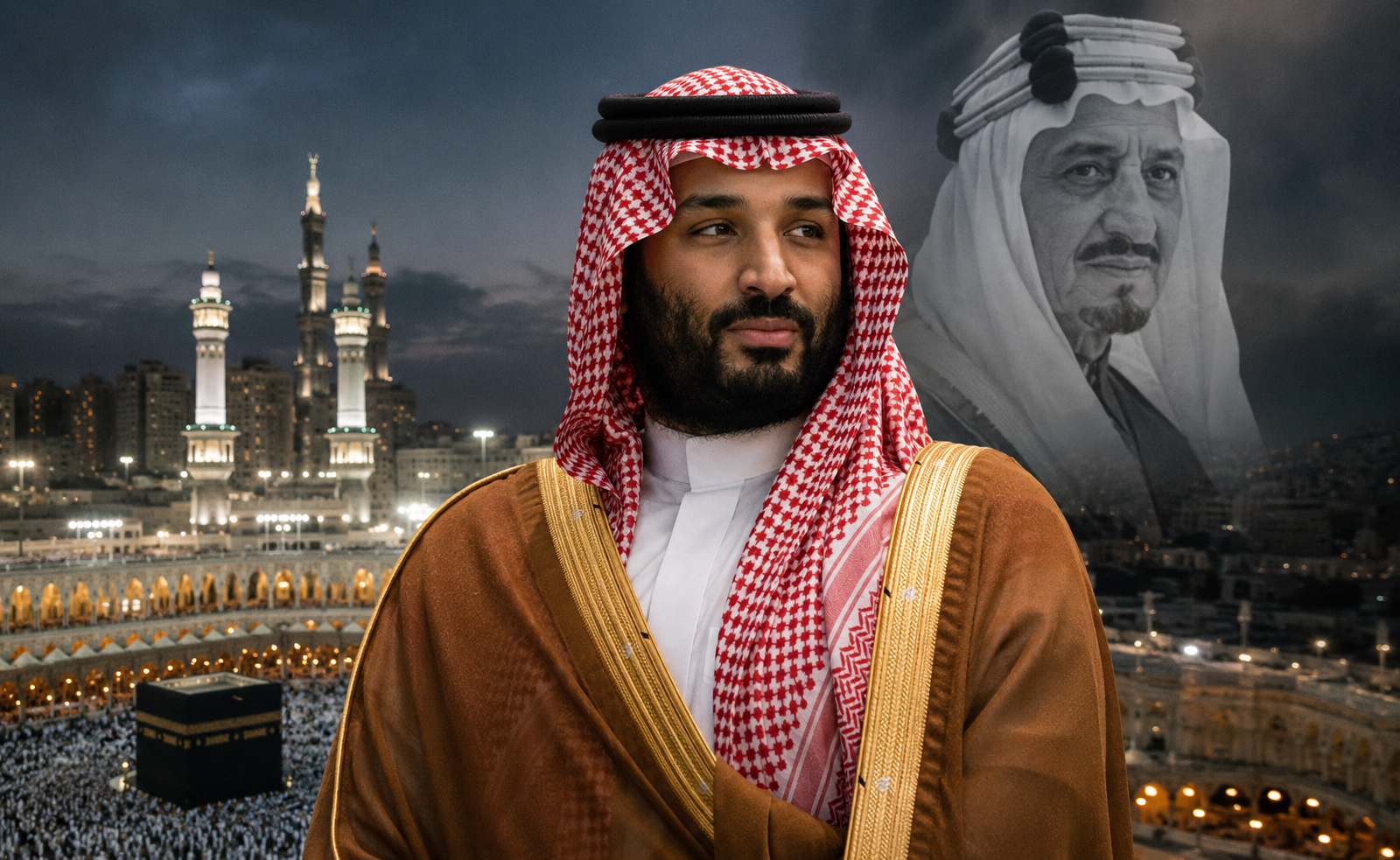
by author (AI)
The Definition of a “Normal Country” and the Ghost of King Faisal
In a rare, paradigm-shattering engagement with the Israeli media via The Times of Israel, Prince Turki al-Faisal—the long-serving former chief of Saudi Arabia’s General Intelligence Directorate—issued a conceptual ultimatum that completely bypassed the standard talking points of Western diplomacy. When asked about the prospects of a grand diplomatic breakthrough between Riyadh and Jerusalem, Prince Turki remarked with deceptive simplicity: “Saudi Arabia is not considering a normalization deal with Israel. Should Israel become a normal country with normal acceptance of international law, then Saudi Arabia will consider normalization.”
To the casual Western observer or the technocratic planners inside Israel’s political echelon, the comment might have sounded like standard, boilerplate diplomatic obstruction. But for those who have spent decades tracking the subterranean realities of the Al Saud monarchy, the statement was a devastating, structurally precise critique. It exposed a fundamental civilizational gap in how the very concept of “normalization” is understood.
For the West “normal” means transactional
For decades, Western diplomatic initiatives and Israeli strategic planning have operated almost exclusively within an institutionalized, bureaucratic register. In this transactional worldview, a state is “normal” if it possesses the functional machinery of modern governance: a centralized legal apparatus, embassies, trade policies, and technological corridors. Under the framework of the recent Abraham Accords, normalization has been treated as a highly complex corporate merger. The underlying assumption is that regional peace can be achieved by engineering a hundred-billion-dollar development architecture, implementing high-tech integrated air defense corridors, and signing artificial intelligence partnerships. It is a world where security is an algorithm and diplomacy is a trade balance.
But Prince Turki’s formulation forces a jarring confrontation with a entirely different conceptual register—one rooted in an honor-based social universe and an ancient Islamic symbolic geography. To the Al Saud, “normalcy” is not an institutional status; it is a behavioral and moral benchmark. A normal country does not permanently swallow neighboring territory through military occupation; it does not treat international law as a disposable inconvenience; and it does not operate as an expansionist, un-bounded entity. The irony, as Prince Turki has noted elsewhere, is that while the Arab world has fundamentally shifted its historic stance away from the absolute non-recognition of Israel, Israel has simultaneously shifted its stance away from accepting the basic prerequisite of regional coexistence: a viable two-state solution.
This civilizational disconnect is not new. It is the direct inheritance of a deep-seated historical trauma that continues to quietly govern the modern U.S.-Saudi-Israeli matrix. To understand why Prince Turki uses the language of moral normalcy, one must understand the ghost of his father, King Faisal, and the bitter architecture of the 1973 oil embargo.
Nixon’s betrayal of King Faisal
In the early 1970s, the Nixon administration approached King Faisal with the exact same transactional arrogance that characterizes modern diplomacy. Facing an energy squeeze, Washington viewed Saudi Arabia purely as an economic valve—a swing producer that could be managed with private verbal reassurances while the United States maintained an unshakeable status quo in the Levant. Declassified diplomatic archives confirm that President Richard Nixon sent direct, personal letters to King Faisal promising that resolving the Arab-Israeli conflict and addressing the Palestinian crisis would be a “first order of business” for his administration.
King Faisal, operating within an Arab register where a monarch’s personal word is an ironclad, sacred covenant, took Nixon at his word. He protected American corporate assets, resisted immense pan-Arab pressure to deploy the “oil weapon,” and waited for Washington to deliver on its moral promises. Instead, National Security Advisor Henry Kissinger pursued a quiet strategy of deliberate neglect, viewing King Faisal’s warnings as empty tribal rhetoric. Kissinger believed that the Saudis were ultimately captive to Western security dependencies and would never jeopardize their bottom line over abstract regional grievances.
The betrayal came to a head on October 14, 1973. Despite frantic personal appeals from King Faisal begging Nixon to act as an objective mediator during the Yom Kippur War, the White House authorized Operation Nickel Grass—a massive, highly visible $2.2 billion military airlift to unconditionally resupply Israel. To King Faisal, this was not a mere shift in foreign policy; it was a profound breach of personal honor and a shattering of an explicit covenant. Declassified notes from the Office of the Historian reveal that before unleashing the historic oil embargo, Faisal literally appealed to American envoys with tears in his eyes to hold Israel accountable to international law.
The Al-Saud family wound that never healed
Decades later, I sat only a few feet away from Prince Turki al-Faisal as we discussed this very history. As the memories of his father’s struggle surfaced, I watched his eyes swell with tears. The raw emotion in that room was a stunning revelation. To a Western analyst trained in the cold mechanics of realpolitik, the 1973 embargo is a historical data point, a case study in macroeconomic price shocks. But to the Al Saud, it remains an open, living family wound.
The tears of Prince Turki tell us what the State Department has consistently failed to comprehend: for a Saudi monarch, national security is completely inseparable from personal honor and religious legitimacy. King Faisal was the Custodian of the Two Holy Mosques, and his self-professed lifetime dream was to pray in a liberated Al-Aqsa Mosque in East Jerusalem. When the Nixon administration treated Jerusalem and Palestinian self-determination as minor real estate variables to be bartered away, they weren’t just practicing diplomacy; they were actively undermining the religious and moral legitimacy upon which the Saudi throne rests.
This is the precise logjam that paralyzes contemporary normalization efforts. The current Israeli leadership, operating under the delusion that its military and technological dominance exempts it from the requirements of international law, expects Crown Prince Mohammed bin Salman (MBS) to simply sign a transactional peace deal in exchange for American security guarantees and high-tech integration. They view MBS through a purely mirror-imaged lens, assuming he is a Western-style corporate CEO who will ultimately abandon the Palestinian cause if the economic incentives are high enough.
The Custodians of the Two Holy Mosques
But MBS, like his uncle King Faisal, is bound by the rigid grammar of Islamic symbolic geography and regional reputation. The custodianship of Mecca and Medina confers an automatic moral seniority across the global Sunni landscape. If Riyadh normalizes relations with an Israeli government that refuses to grant a credible, irreversible pathway to a Palestinian state, it effectively abdicates its spiritual leadership. It would hand an absolute ideological victory to its bitterest rivals in Tehran, who would instantly brand the Al Saud as traitors to the Islamic sanctuary.
When Prince Turki tells the Israeli public that they must first start acting like a “normal country,” he is sending a clear warning across generations. Saudi Arabia will not rescue Israel from its self-inflicted global isolation in return for a corporate transaction. True normalization requires a shared moral grammar. Until Israel recognizes that its security cannot be built on the permanent denial of Palestinian dignity, any American-brokered handshake will remain a strategic illusion, haunted by the very same ghosts of betrayal that fractured the world in 1973.
Related Posts