


Northern Israelis are paying the price for their resilience
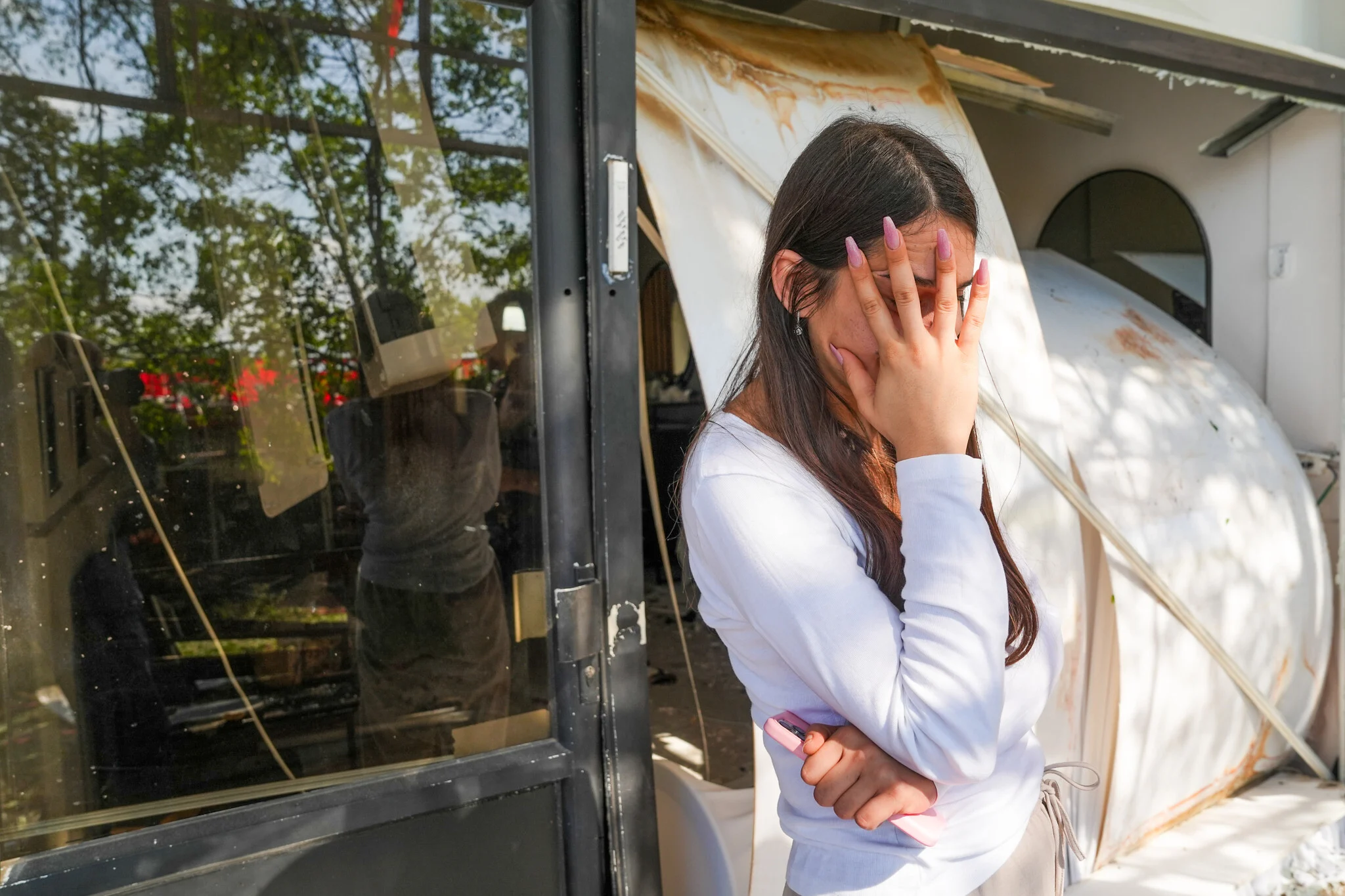
The criticism recently directed at the residents of northern Israel – the outrageous question, “What happened to their resilience?” – is not only a moral injustice, but also reveals a dangerous logical failure in the way Israeli society understands the human psyche. As someone who has cared for northern communities for decades, I would like to offer an argument that has yet to be heard in the public discourse: The residents of the north have become victims of their own competence.
The hero’s paradox
In ancient folk tales, the hero embarks on a difficult journey to find the “spring of life” that will save his village. He battles dragons and crosses abysses thanks to ingenuity and inner resilience. But what happens in a story where the hero returns to the village only to discover that the spring has dried up, not because of a natural drought, but because those responsible for protecting the river diverted its waters elsewhere?
This is the story of northern Israel. For decades, its residents developed a phenomenal ability to live under threat. They became so efficient at “coping” that the state grew accustomed to the idea that they were simply “managing.” And this is the trap: The more resilience a community demonstrates, the more the political leadership and the home front allow themselves to step back from responsibility. The current criticism is, in fact, the system’s angry reaction to the north refusing to cooperate any longer with the illusion that everything is fine.
When residents cry out, they are not showing weakness; they are correcting reality.
Resilience is a limited resource
Working in Kiryat Shmona to understand the psychology of resilience, we have identified a set of coping mechanisms called the BASIC PH model, but there is another critical layer that must be added: resilience is a finite resource.
Imagine a psychological bank account. The residents of the north spent years depositing “savings” into this account through coping with rocket fire and constant threats. Over the past 940 days, the state has been withdrawing enormous sums from that account without making a single meaningful deposit in return.
Tuesday night’s announcement that the government approved an extra NIS 13 billion ($4.5 billion) to strengthen the north is welcome, but its effect will be felt only in several years, and it cannot make up for the past. The pain is happening now, and the residents of northern Israel need the support and care of their fellow citizens here and now.
It is important to understand: resilience is not immunity. In scientific terms, resilience is the process of recovery after injury. When the body fights an infection, it develops a fever. The fever is not the failure; it is proof that the system is working. When we see exhaustion and erosion in the north, we are witnessing a healthy human response to a sick reality.
Those criticizing the north ask, “Why is the account empty?” instead of asking, “Why has the state failed to replenish it with security, stability, and certainty?”
‘Transparent exile’ and victim-blaming
The evacuated residents of the north are not “guests” in other parts of the country. They are experiencing an internal exile – a total loss of control and of the ability to predict tomorrow. Resilience is built on cognition, on the understanding that there is a plan. The moment the state admits it has no answer to drones or no timeline for return, it is actively dismantling the foundations of resilience with its own hands.
Public criticism, in many ways, serves as a defense mechanism for residents of central Israel: if we blame the people of the north for “lacking resilience,” we can continue believing that this could never happen to us. That this is a problem of “character” rather than structural abandonment.
The bottom line
National resilience is measured by the ability of the home front to support the front lines – not by scolding them.
Instead of asking what happened to the resilience of the north, we should be asking what happened to our mutual responsibility. Stop demanding that these residents continue to be heroes. Their heroism is precisely what enabled the state to ignore them for so many years.
Give them the right to be human, hurting, exhausted, and angry. This, too, is resilience: the ability to say, “Enough. No more.”
Only when their “spring of life” is replenished through physical, economic, and social security will we be able to speak once again about recovery.