


Not Leaving Our Own Behind: Holocaust Memory and a Soldier’s Last Words
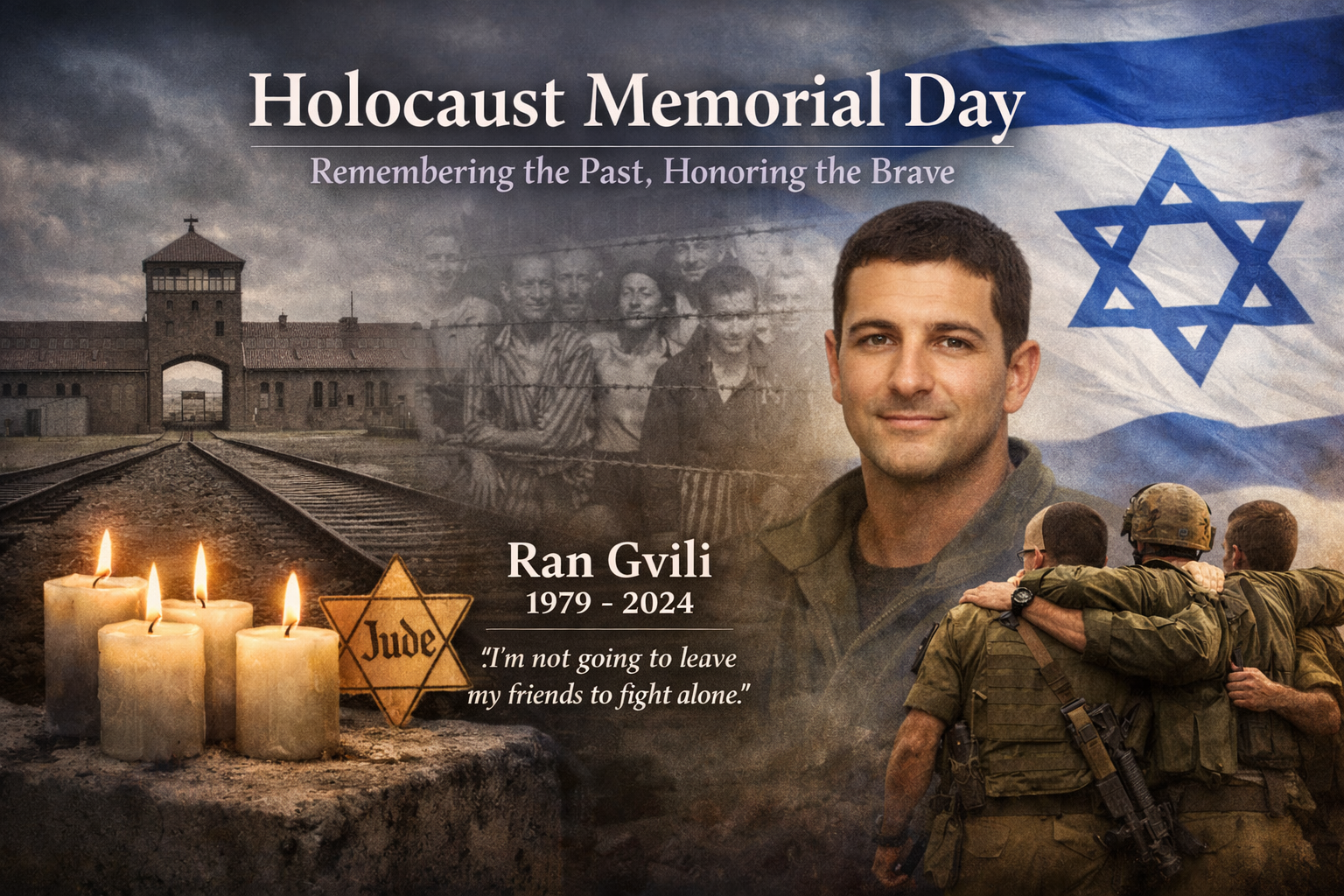
Today is International Holocaust Memorial Day.
Yes, the date was established by a United Nations that has often proven hostile to Israel, and yes, the irony is thick enough to cut with a butter knife. But that is trivia. History does not belong to the institutions that commemorate it. It belongs to the people who carry it.
Holocaust Memorial Day exists to remind the world where indifference leads. To remember what happens when Jews are isolated, dehumanized, and ultimately abandoned. It is about memory, but not the passive kind. Memory with consequences. Memory that demands choices in the present.
Which is why it is impossible to mark this day without also marking the return of the body of Ran Gvili, the final Israeli hostage held in Gaza.
Ran’s last words to his parents were simple and devastating: “I’m not going to leave my friends to fight alone.”
That sentence belongs in the long, painful Jewish archive of moral clarity under impossible conditions. It echoes across generations. From the ghettos where young Jews joined underground resistance movements knowing the odds, to partisans who chose dignity over survival, to soldiers who understand that Jewish history is not something that happens to us. It is something we respond to.
The Holocaust taught the world what happens when Jews are alone. October 7 reminded us what happens when evil is given space again. Ran Gvili’s final act reminds us of something else entirely: that Jewish survival has never been only about being victims of history, but about refusing to abandon one another inside it.
Holocaust Memorial Day asks us to remember the dead. Ran Gvili’s story asks us to honor the living values that made Jewish survival possible in the first place: loyalty, responsibility, and an unbroken sense of collective fate.
Memory is not just about what was done to us.
It is about who we choose to be, even now.