Not Much Will Change After The Elections
Elections 2026
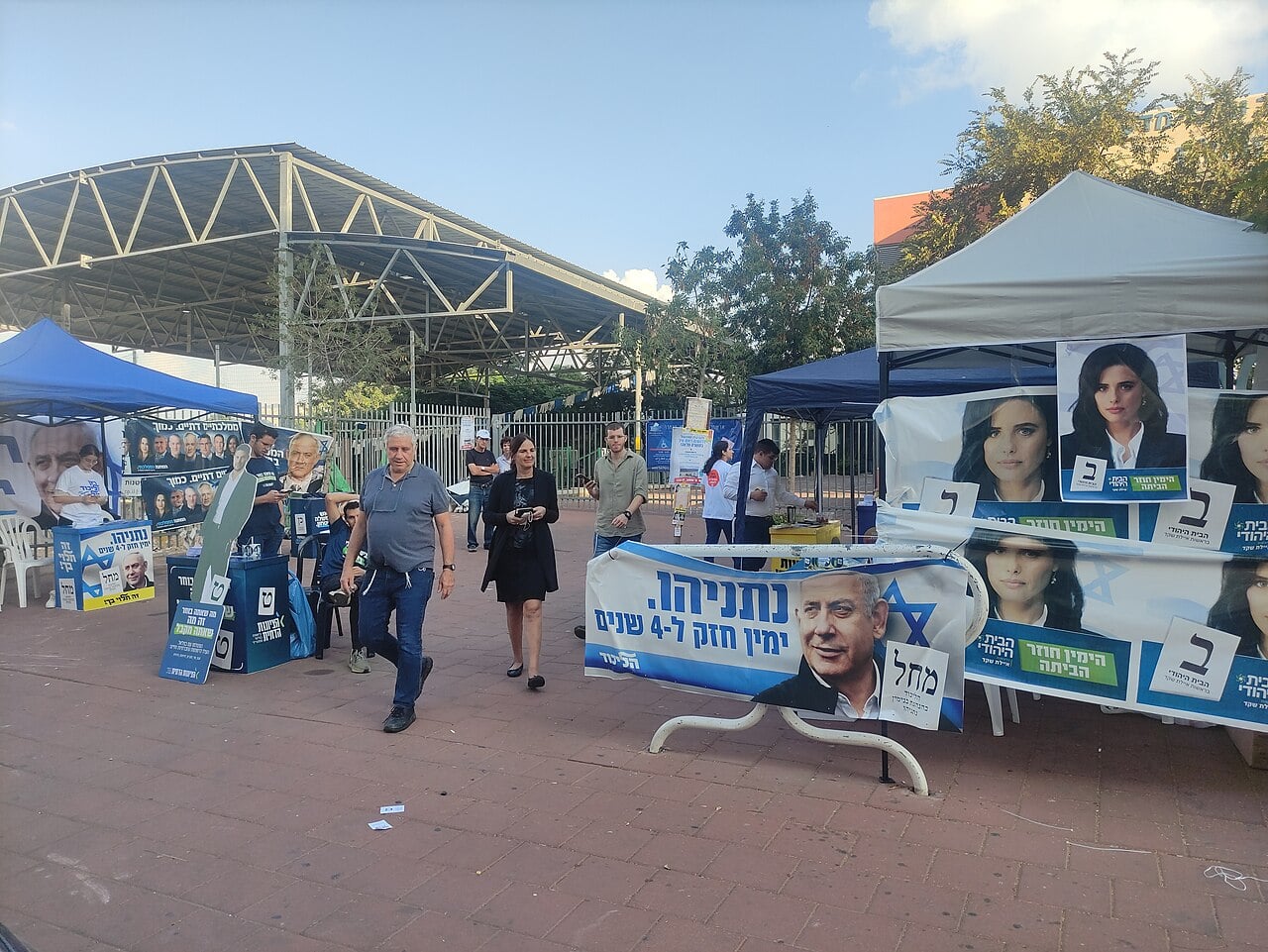
Israel is scheduled to hold new elections on October 27, 2026—the first government in 50 years to serve its full four-year term. The polls currently indicate that, depending on the polling organization, the Netanyahu-led ultra-right-wing bloc will gain about 55 seats, the opposition Zionist/Jewish parties will gain about 54 seats, and the Arab parties will gain about 11 seats. While the poll numbers continue to change, the majority of polls indicate that neither Jewish bloc will gain a majority of 61 seats in the 120-member Knesset without linking up with the Arab parties. Virtually every non Arab (Jewish) party has declared that they will not sit in a coalition with anti-Zionist/Arab parties.
Without debating the rights or wrongs of the non democratic practice of refusing to form a government with legitimately elected non-Jewish parties, it is apparent that the current polls point to a deadlocked election, which will result in the current government continuing until yet another round of elections is held unless either Jewish bloc breaks with their pre-election promises of not forming a coalition with one or more Arab parties.
On the other hand, if we examine the opposition anti-Netanyahu bloc, we can try to predict what a possible future government would look like, made up of opposition parties, excluding the Arab parties. While much can, and probably will, change between now and the elections in less than four months, the parties, their policies, and platforms will not change. Four major areas that impact Israeli life where the various parties may agree or differ are regional warfare, continued occupation of the West Bank, Israeli democracy, and Haredi conscription/national service.
As the polls stand right now (The Economist polo tracker, July 14th, 2026), the following four opposition parties may be able to cobble together a coalition government only by joining with the Arab parties:
-
- Yachad led by Bennet and Lapid: 14 seats
- Yashar led by Eizenkot: 21 seats
- Israel Beiteinu led by Lieberman: 9 seats
- Democrats led by Yair Golan: 10 seats
Total 54/120.
-
- Joint List led by Yousef Janareen: 6 seats
- Ra’am led by Mansour Abbas: 5 seats
Total 10/120
The current coalition polls at 55/120 seats if elections were held today. It should be noted that the polls have sharp differences depending on the polling agencies and the actual elections may differ radically.
Both Yair Golan and Gadi Eizenkot are ex-generals who entered politics after serving in the IDF for decades. The major factor uniting all four parties is their opposition to Bibi Netanyahu.
Continued Occupation versus a Two-State Solution
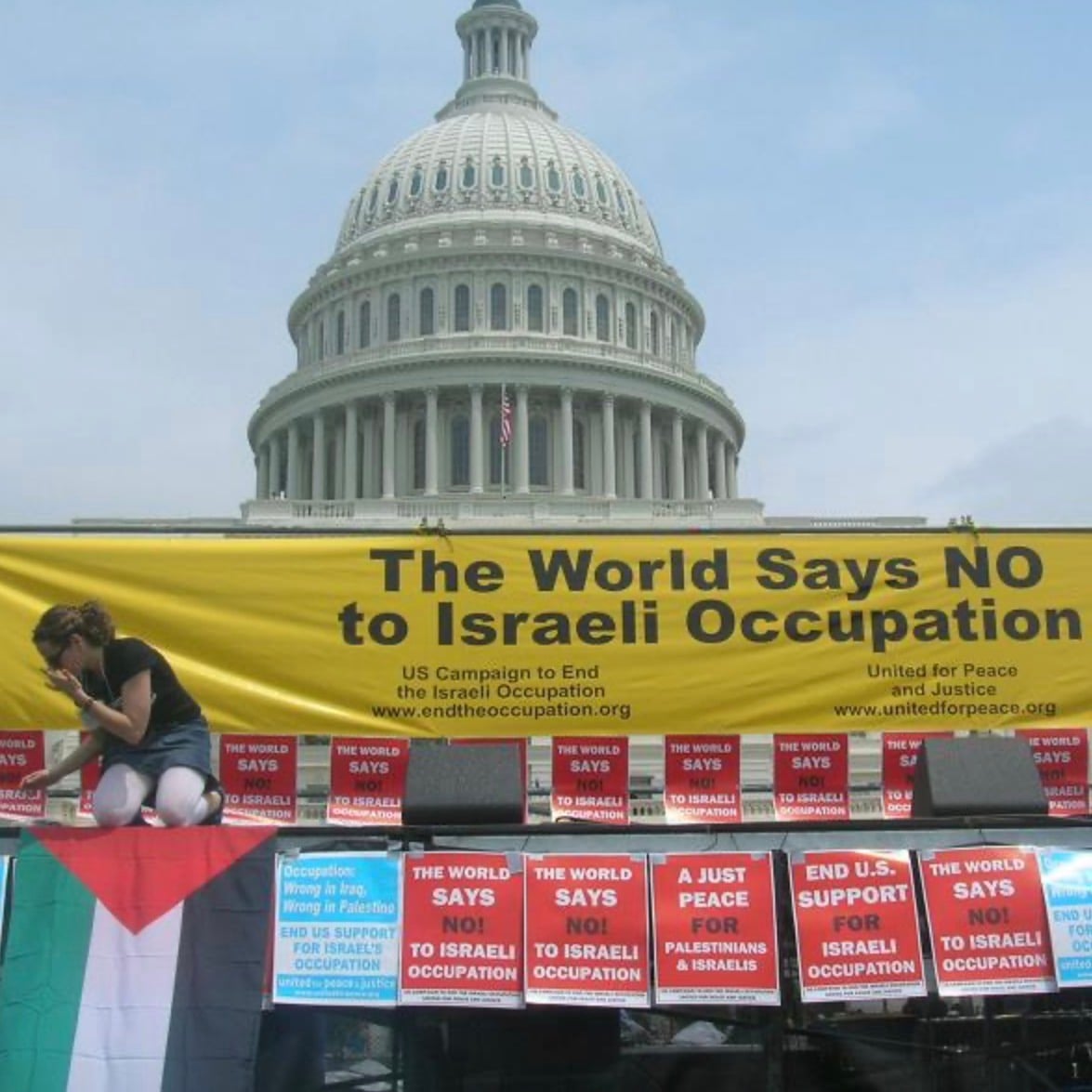
The Democrats, led by a former general, Yair Golan, were formed by merging Labour and Meretz, with a projected 10 seats. It is the only party supporting a two-state solution (TSS) and the only party that is left of center. Meretz, Labor, Raam, and United Arab Party officially support the two-state solution. The rest of the parties officially reject it. Some of those who reject it could be pushed to say they would support it under specific conditions.
Yashar, Gadi Eisenkot, firmly presents a centrist political stance. A former general, he is hawkish when it comes to security matters. He favors diplomatic realism and opposes right-wing religious exemptions, strongly advocating for mandatory military or national service for the ultra-Orthodox community. While he advocates for a broader two-state framework with the Palestinians, he prioritizes the retention and security of major settlement blocs and the Jordan Valley. De facto, this renders a TSS virtually impossible.
Israel Beitenu, Lieberman is a right-winger supporting Israeli settlements, advocating for their expansion within municipal boundaries, and maintaining that they are an “integral part” of Israel. He vehemently rejects international and U.S. calls for building freezes. In practice, dictating against a TSS.
Yachad, Yair Lapid supports the annexation of major settlement blocs—such as Ma’ale Adumim and Ariel—as part of a negotiated two-state agreement, but strongly opposes unilateral West Bank annexation and unauthorized settlement outposts, strongly advocating for a TSS. Bennet strongly advocates for Israeli control of the West Bank and has historically been a champion of settlement expansion, categorically rejecting a TSS. Bennet is firmly in the right-wing camp while Lapid is more centrist, a conflict which is not easily reconciled for the joint leaders of the party.
In short, there is no coherent or unified approach among the opposition parties about the Palestinians, concerning the 100-year conflict. Nonetheless, it is safe to assume that very little, if anything, will change vis-a-vis the Palestinians due to the marked differences between the parties in the opposition regarding a TSS. Overwhelming military superiority alone cannot produce political legitimacy, strategic stability, or durable peace. This has been proven over and over in the nauseatingly familiar endless wars, campaigns, and military operations that Israel has engaged in over the last 78 years.
Regional Warfare
Two opposition parties, Yashar and Democrats, are headed by ex-generals. Golan, the head of the Democrats, is widely considered a dove supporting a two-state solution. Eizenkot, leader of Yashar, is broadly classified as a military and security hawk. Yachad is headed by Bennet – historically known for his right-wing and security-focused stance, and Lapid, a pragmatic centrist. Lieberman, an ex defence minister,l the ultranationalist leader of the Yisrael Beiteinu party, is widely considered a hawk on national security and foreign policy. It is safe to assume that any coalition formed by the four parties will be hawkish and aggressive. Thus, very little, if any, change from the current coalition government regarding relationships and warfare in the region.
What Could Change?
Israeli Democracy
All four opposition parties strongly oppose the current coalition’s efforts to weaken Israel’s limited democracy. One can safely assume that a new government would work to strengthen Israel’s democracy by implementing some or all of the following:
-
- Term limits for a prime minister. This is sorely needed after Netanyahu’s unprecedented nearly 19 years in office.
- Protections and formalization of positions in the High Court of Justice, Israel’s Supreme Court. This is needed after attempts by the current coalition to politicize the High Court.
- Protections and formalization of the comptroller general, attorney general, and legal advisors to government ministries. This is needed after attempts by the current coalition to politicize those positions.
- Strengthen the independence of gatekeeper institutions like the Shin Bet (Israel’s internal security and counterintelligence service) and the Civil Service Commissioner. This is needed after attempts to politicize these positions and after Netanyahu installed a Shin Bet director whose first loyalty is to Netanyahu and not the state.
- Ensure that current proposals to weaken the Police Internal Investigations Department, further expand the authority of the religious courts, curtail freedom of expression, weaken public media, and weaken academia cannot be implemented in the future.
- Review and reform the process of implementing the Basic Laws. Israel’s Basic Laws act as the country’s de facto constitution in the absence of a formal constitution. However, it is all too easy for any government to legislate a new Basic Law or repeal, amend, or replace an existing one by a simple majority in the Knesset of 61/120 members. The process would be immeasurably strengthened by requiring a supermajority support from 80/120 members to pass, repeal, amend, or replace a Basic Law. This would require broad, bipartisan support and would almost guarantee that Basic Laws could not be passed to support narrow sectarian interests, as is the current case.
- Take steps to restore and strengthen the rule of law, which has been severely undermined by the current coalition.
- Formalize the separation of powers via new Basic Laws. Currently, there is little to no separation between the Executive and the Legislative. The prime minister essentially supervises and controls both functions in the current setup.
Ideally, a new government would create a constitutional convention tasked with writing a constitution for Israel, which could be implemented in the time allowed by a new coalition. This is an ideal situation that is unlikely to occur. It does not appear in any party platform, proposal, or discussion as we head into the current elections. If the current government is returned to power we can expect to see further attacks on current institutions and further erosion of Israeli democracy.
Haredi Conscription/National Service

Currently, the Haredi population, an ultra-Orthodox Jewish group of 1.45 million or 14.3% of Israeli citizens, does not serve in the IDF as obligated under the law. With their current high annual birth rate of 4.2%, they are projected to constitute about 20% of Israel’s population by 2040 and 24.4% by 2050. Today, Haredim constitute 23.5% of all those designated for military service, and their share is expected to rise to 25% by 2030, to 33% in 2040, and to 40% by 2050.
Under Israel’s current military conscription rules, slightly less than 50% of 18-year-old youth serve in the IDF. Approximately 7% to 10% of eligible Israeli youth choose to perform civilian National Service (Sherut Leumi) instead of mandatory military service. Overall, about one-third of the total youth population receives formal exemptions from the Israel Defense Forces (IDF), with the vast majority of these individuals entering the workforce or pursuing higher education rather than alternative service.
Haredi youth shirking military or national service have become a hot topic for Israel in the light of the last thirty-three months of endless warfare, where non-Haredi Jews have had to serve lengthy periods in defense of the country. Traditionally, Haredi youth were exempt from serving in the army while devoting their time to formal Torah studies. Several High Court decisions ruled this illegal and unfair and directed the government to either pass legislation formalizing the situation or conscript Haredi youth. All government attempts to legislate Haredi exemption either failed to pass or were struck down by the High Court, leaving us with the current situation where extremely few Haredi youth respond to conscription calls, and there are ongoing Haredi demonstrations and civil unrest when the police or the IDF attempt to enforce conscription.
14,000 Haredi boys out of approximately 62,000 Israeli boys turn 18 every year. From a civil society perspective, it has become broadly unacceptable that the public should fund Torah study and the Haredi lifestyle while Haredi boys do not share in the national burden of military service.
One can expect drastic changes in this area from a new government, including reduced funding for the Haredi educational and support systems, as well as increased efforts to conscript Haredi boys. On the other hand, if the current government is returned to power we can expect to see little to no changes in this arena.
Conclusion
All projections are based on current polls, and these may change drastically in the more than 100 days from now till election day. However, if the current government is re-elected, then obviously very few, if any, of the changes discussed above will occur.
If, on the other hand, the opposition gains power, we can expect to see changes in strengthening Israeli democracy, and changes in the benefits, status, and obligations of Haredi society, while there will be few changes in the status concerning a settlement with the Palestinians, relationships with the Arab world, and an end to continuous warfare.