Nothing Went Wrong: A Rereading of Eden and the Architecture of the Torah
The Threshold, Not the Fall
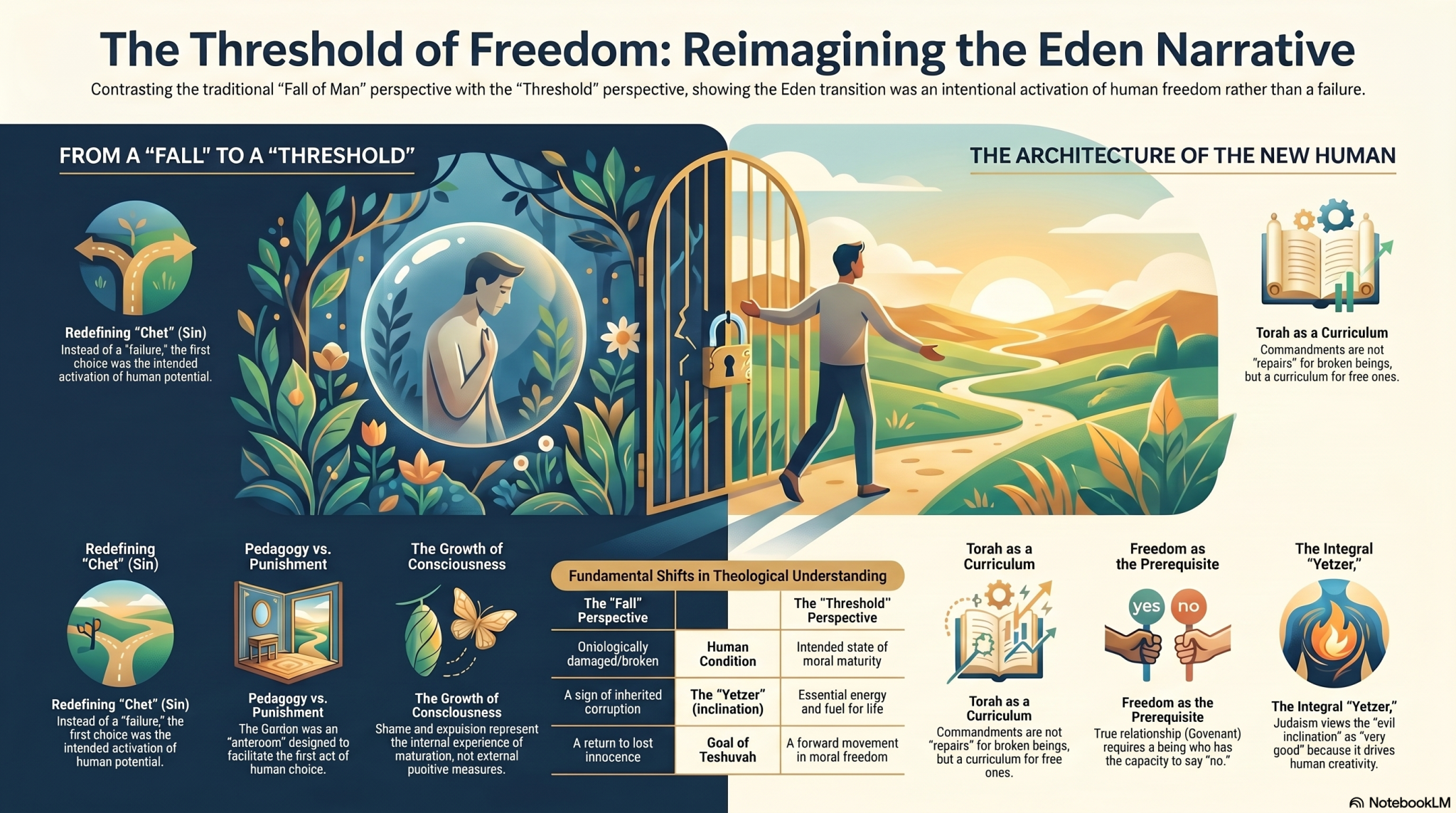
For most of the history of this reading, a single word has quietly poisoned the well: sin. The Hebrew chet means, at its root, to miss the mark — a deviation from a target, a departure from a correct path. It carries inside itself, before any analysis begins, a verdict: something went wrong. What happened in the Garden was a failure. The ideal was not followed. The remainder of human history is the long, painful consequence of that failure.
This framing has shaped everything — the theology of repentance, the structure of commandment, the reading of covenant, the posture of the human being before God. It has produced a quiet but persistent diminishment at the center of the tradition: the implication that what should have happened is that we remained in the Garden. That the best possible human existence was the one foreclosed in the third chapter of Genesis. That all of history is bedi’eved — after the fact, making the best of a bad situation.
This article argues that framing is not merely incomplete. It is structurally incoherent — and that its incoherence, once exposed, opens a richer and more honest reading of Eden, of the Torah that follows, and of the human condition that both describe.